
NEW DELHI: On Saturday, mixed signals from the Iranian regime prompted Indian crude tankers to turn back abruptly, deepening uncertainty at the crucial energy chokepoint amid inconclusive negotiations between the U.S. and Iran, Bloomberg reported. The confusion emanating from Tehran has raised concerns for shipowners about the safety and status of passage through the Strait of Hormuz. Along with Indian vessels, several Greek tankers also made U-turns earlier the same day.
In a separate incident, at least two merchant ships came under gunfire while attempting to transit the troubled waterway, according to Reuters. This busy oil route has faced significant disruptions following seven weeks of heightened tensions, triggered by U.S. President Donald Trump’s “Operation Epic Fury” against Iran, with Tehran responding forcefully.
Recent hopes for easing tensions arose during a 10-day ceasefire window linked to de-escalation efforts involving Israel and Hezbollah in Lebanon, leading some vessels to attempt passage. Trump claimed credit for achieving this temporary truce.
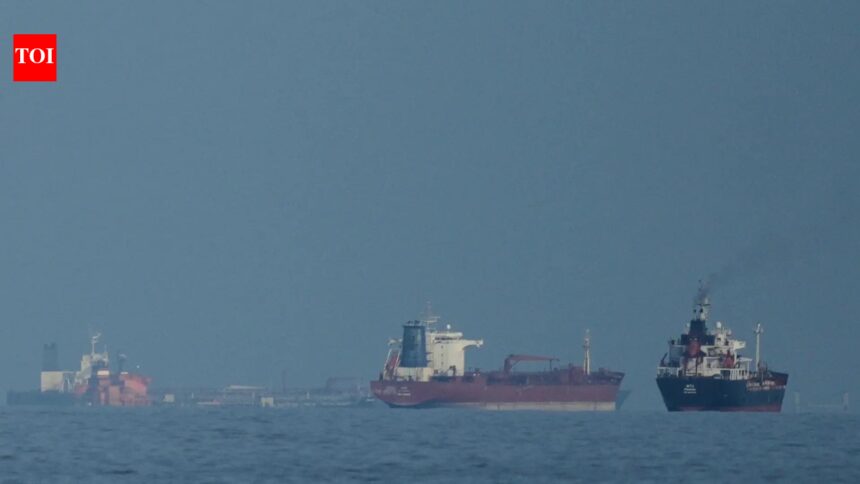
The FPMC C Lord, a very large crude carrier transporting Qatari and Saudi oil, was navigating south of Iran’s Larak Island heading toward the Gulf of Oman, with Fujairah in the United Arab Emirates as its declared destination. Several other oil carriers are also heading toward the strait. Earlier in the day, three liquefied petroleum gas carriers and an oil products tanker, some under U.S. sanctions, moved east into the Gulf of Oman, closely followed by a Pakistan-flagged tanker. Additional liquefied natural gas carriers are also approaching the strait.
Iranian Foreign Minister Abbas Araghchi stated on Friday that the Strait of Hormuz was “completely open” for commercial shipping during the ceasefire with Hezbollah, providing vital reassurance to global shipowners and energy markets. However, Fars news agency later reported that the strait would remain closed should a U.S. naval blockade continue. Shipowners operating in the Persian Gulf have indicated they received radio advisories advising vessels to obtain permission before crossing.
State-run Nour News highlighted on Saturday that the waterway was “under strict management and control by the armed forces,” but did not explicitly confirm if it had been closed again. Amid these uncertainties, shipowners expressed hesitation. Greek and Indian crude tankers made sudden U-turns early Saturday after initially heading northeast toward Hormuz from waters off Dubai while fully loaded. As a result, several vessels are now idling near Iran’s Qeshm Island, close to where they turned back, and one ship has not transmitted its geolocation for several hours.