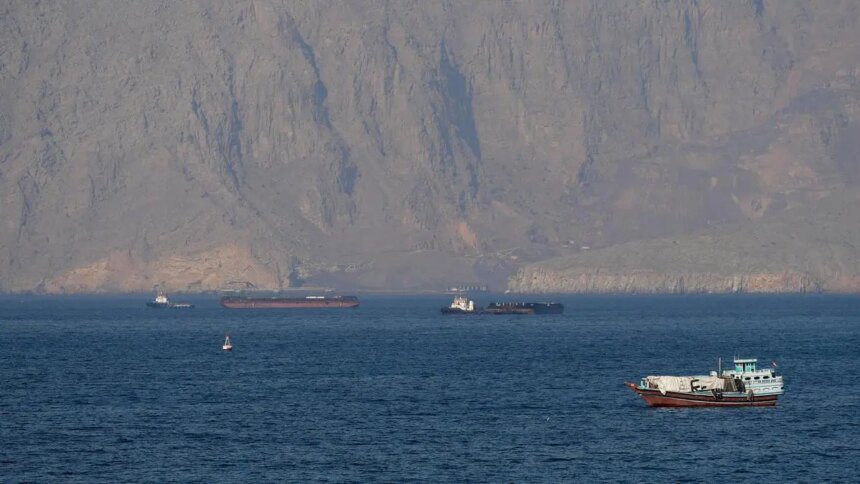

One Indian-flagged oil tanker successfully traversed the Strait of Hormuz on Saturday, while at least four others opted to turn back after Iran announced the strategic waterway was closed once again.
The oil tanker Desh Garima has reportedly crossed the Strait, according to ship tracking data. This vessel marks the 10th India-flagged ship to navigate the Strait since early March. By Saturday evening, Desh Garima was reportedly sailing in the Gulf of Oman, as tracked by the maritime data and intelligence platform MarineTraffic.
However, the oil tankers Sanmar Herald, Desh Vaibhav, and Desh Vibhor, along with the bulk carrier Jag Arnav, reversed their courses near the chokepoint, bringing the total number of India-flagged ships in the Persian Gulf to 14. State-run Shipping Corporation of India (SCI) owns Desh Vaibhav and Desh Vibhor, while Sanmar Herald is operated by Sanmar Shipping and Jag Arnav by Great Eastern Shipping Company.
According to the United Kingdom Maritime Trade Operations, a tanker reported an encounter with two Iranian Revolutionary Guard Corps gunboats, which opened fire approximately 20 nautical miles northeast of Oman. This incident may have influenced the decision of the Indian vessels to turn back.
In a related development, the Ministry of External Affairs in New Delhi summoned the Iranian envoy to formally protest the reported targeting of Indian vessels. Shipping monitor TankerTrackers.com indicated that two India-flagged ships, including a supertanker carrying Iraqi crude, were compelled to turn around after coming under fire.
These disruptions have occurred amid a backdrop of commercial vessels and thousands of seafarers stranded in the Persian Gulf since the onset of conflict in the region on February 28, drastically limiting movement through the Strait of Hormuz. The Strait plays a crucial role in global oil and liquefied natural gas transportation, handling about one-fifth of these flows, which positions it as one of the world’s critical energy conduits. Iran’s capability to disrupt traffic in this narrow passage has become a significant bargaining chip in the ongoing conflict.
The halt in maritime transit has led to higher energy prices, supply shortages in certain regions, and compelled some countries to implement fuel rationing, underscoring the global ramifications of this standoff.
Published on April 18, 2026.