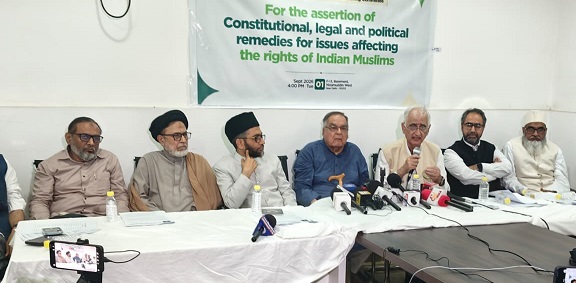

The formation of a National Monitoring Committee by a group of prominent Indian Muslims marks a significant initiative aimed at addressing ongoing issues of discrimination, social exclusion, and political marginalization affecting the community. Established in response to recent concerns regarding rights and representation, this 51-member committee aims to engage with lawmakers and civil society to champion constitutional rights and civil liberties.
Formation of the National Monitoring Committee
In a notable gathering in New Delhi, a coalition of influential Muslim leaders announced the creation of a National Monitoring Committee composed of 51 members. This committee emerged following a national consultation on July 24, where discussions highlighted the pressing political and social challenges faced by Muslims in India. The committee’s role will span monitoring developments affecting the community and advocating for constitutional and legal remedies.
At the core of its mission is to identify civil rights issues, evaluate potential interventions, and collaborate with relevant institutions. The group plans to reach out to communities experiencing discrimination and document incidents of social exclusion, as exemplified by concerns raised regarding evictions, electoral processes, and the protection of religious sites, particularly in states like Assam and Gujarat.
Focus on Social Justice and Participation
The committee’s agenda emphasizes fostering a collective voice among Indian Muslims to assert their citizenship rights. Prominent figures like former Union minister Salman Khurshid stressed that the initiative is not about seeking favors but ensuring equal treatment under the law for all citizens. “This is not about asking for charity. Every citizen of this country has rights,” Khurshid stated, echoing a broader desire for inclusion and justice across diverse communities.
The committee intends to extend its outreach beyond urban centers, reaching rural areas where marginalization may be more pronounced. Suggestions for a nationwide engagement strategy highlight the need for inclusivity in discussions around civic and constitutional issues, allowing historically underrepresented voices to contribute to the conversation.
Concerns Regarding Marginalization and Discrimination
Members of the committee have raised alarm over several incidents reflecting discrimination against Muslims, including demolitions and displacements. Nadeem Khan lamented the alleged targeting of Bengali-speaking Muslims in Assam, emphasizing the need for equitable engagement among different community members. Others, like SQ R Ilyas, catalogued systemic issues such as the National Register of Citizens (NRC) and the Uniform Civil Code (UCC), calling for unity across communities to safeguard constitutional rights.
These conversations reflect a growing concern regarding not only the marginalization of Muslims in India but also potential societal ramifications stemming from policies perceived as discriminatory. The committee’s formation and focus highlight a well-organized response to facilitate dialogue aimed at dismantling barriers to equality and justice.
Why It Matters
The establishment of the National Monitoring Committee is significant in the broader context of civil rights in India. Recognizing and responding to structural inequalities can foster a more inclusive democracy, ultimately reinforcing societal stability. For industries and developers, acknowledging these dynamics allows for the creation of solutions that cater to diverse community needs and support equitable representation in democratic processes. This initiative can serve as a model for civic engagement and advocacy that goes beyond mere representation, fostering genuine community participation and rights assertion within legally established frameworks.
Frequently Asked Questions
What is the purpose of the National Monitoring Committee?
The committee aims to address issues affecting Indian Muslims through constitutional, legal, and political channels by monitoring developments, identifying matters requiring intervention, and engaging with government institutions.
Why was Uttarakhand chosen for the committee’s first outreach?
Uttarakhand was selected as the first destination to directly engage with affected communities, civil-society groups, and local leadership, aiming to understand and address emerging challenges at the grassroots level.
How does this initiative relate to other Muslim organizations?
The National Monitoring Committee is intended to complement existing organizations like the All India Muslim Personal Law Board, focusing specifically on political, civic, and constitutional issues affecting the community.
What are some of the concerns raised by committee members?
Concerns include ongoing evictions, the impact of the NRC and UCC, and incidents of discrimination affecting religious sites. The committee intends to document such occurrences and seek necessary legal or institutional remedies.