
14 Sentenced to Life for Lynching of Muslim Man in Madhya Pradesh
A recent verdict delivered by an Additional District and Sessions Court in Seoni Malwa, Madhya Pradesh, has sentenced 14 men to life imprisonment for the lynching of a Muslim man, Nazir Ahmad, accused of cow smuggling. This case has highlighted ongoing issues of violence and discrimination faced by Muslims in India, raising concerns about mob justice and the influence of vigilante groups.
The Incident: A Mob Attack in 2022
The lynching of Nazir Ahmad took place on August 2, 2022, while he was traveling with two companions, Shaikh Lala and Sayed Mushtaq. They were returning from transporting 28 cattle when their vehicle was intercepted near Brakhad village by a group of cow vigilantes, who attacked them with sticks and iron rods. Ahmad sustained severe injuries and eventually succumbed to his wounds, while his companions also suffered injuries during the assault.
This incident reflects a troubling trend in India, where self-styled cow protectors often take the law into their own hands, targeting individuals based on allegations of cow smuggling. Such acts of violence have been publicly condemned by civil rights groups and Muslim organizations, which characterize the attacks as mob lynchings carried out in the name of cow protection.
Response and Protest Following Sentencing
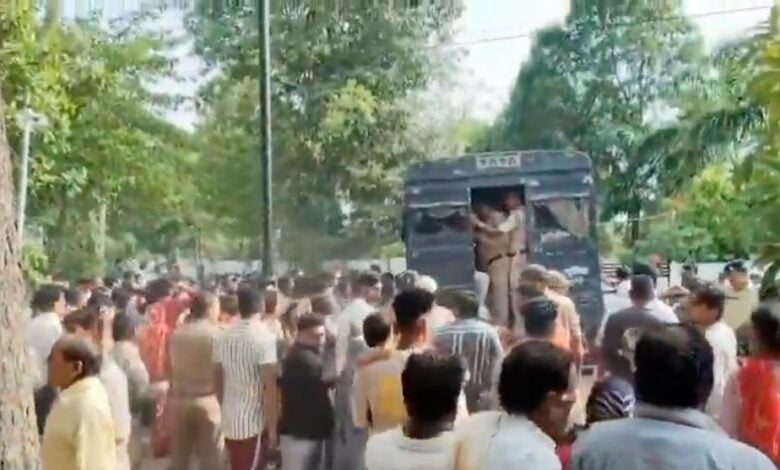
Following the court’s sentencing on this case, families of the convicted individuals protested outside the courthouse, attempting to obstruct police efforts to take the men into custody. Such responses illustrate the societal divisions and tensions surrounding religious and communal identities in India. Despite the legal repercussions of the verdict, the protest signifies ongoing challenges in addressing the communal stigma associated with the Muslim community in the region.
The public backlash against the court’s decision highlights the influence of religious affiliations on perceptions of justice and accountability in contemporary India. As these issues permeate social discourse, they continue to exacerbate the marginalization of certain communities, particularly Muslims.
Why It Matters
This incident sheds light on broader societal trends in India concerning discrimination and violence against Muslims, particularly under the current political climate influenced by the Bharatiya Janata Party (BJP) and associated groups. The vigilantism exhibited in the Ahmad case can be seen as part of a larger pattern of social exclusion faced by religious minorities. Such acts not only erode trust in legal institutions but also provoke fear within affected communities, complicating any path toward reconciliation and harmony in increasingly polarized environments.
Moreover, analyzing these events through a legislative lens raises essential questions about the justice system’s ability to protect vulnerable populations and uphold the rule of law. Understanding the deep-rooted socio-political dynamics at play is crucial for addressing the anti-Muslim sentiment and ensuring equitable treatment for all citizens in India.
Frequently Asked Questions
What triggered the lynching of Nazir Ahmad?
Nazir Ahmad was lynched by cow vigilantes who accused him of smuggling cattle. This incident occurred as Ahmad and his companions were traveling in a truck with cattle, which has become a contentious issue in many parts of India.
What was the outcome of the court’s ruling?
The Additional District and Sessions Court sentenced 14 men to life imprisonment for their involvement in the lynching, reinforcing legal consequences for acts of mob justice.
How do civil rights organizations view such incidents?
Civil rights organizations and Muslim advocacy groups have condemned such lynchings as mob violence, emphasizing that they are often carried out under the guise of cow protection, thereby reflecting systemic discrimination against Muslims.
What are the implications of societal protests following the verdict?
The protests by the family members of the convicts indicate a significant societal divide regarding perceptions of justice and community solidarity. These reactions complicate efforts to foster a cohesive society, as they reveal deep-seated communal tensions in response to judicial outcomes.