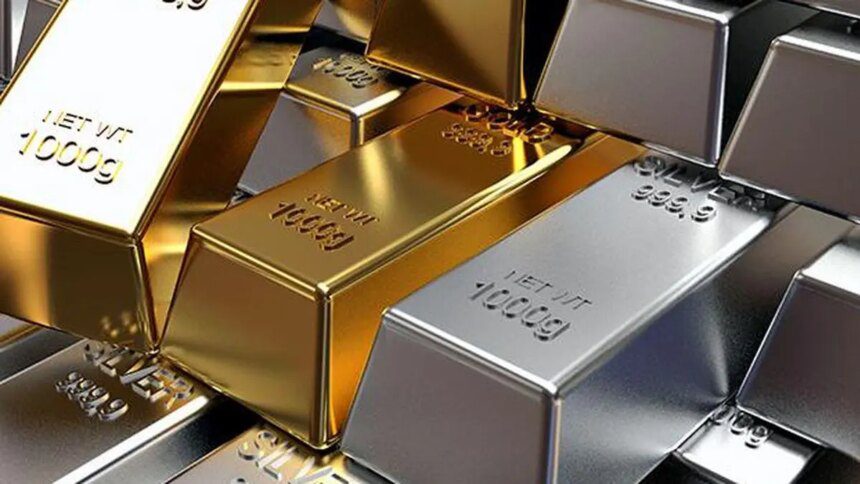

Indian banks have suspended gold and silver import orders from overseas suppliers, with substantial quantities of the metals currently stuck at customs due to the lack of a formal government directive authorizing bullion imports, according to trade sources.
As the world’s second-largest gold consumer and the leading silver buyer, India heavily relies on international purchases to satisfy its demand. The halt in imports raises concerns about potential supply shortages, which could negatively impact global gold and silver prices. Conversely, it may also help narrow India’s trade deficit and bolster the rupee, which has been among the poorest-performing Asian currencies this year.
Authorities have implemented several measures to alleviate pressure on the currency, the latest being a recommendation for refineries to limit their spot dollar purchases. Reports indicate that the suspension of gold and silver import orders and the backlog of metals at customs have not been previously disclosed.
Typically, the Directorate General of Foreign Trade (DGFT), under the Ministry of Commerce and Industry, issues an order at the beginning of each financial year designating banks authorized by the Reserve Bank of India to import gold and silver. The last such order, issued in April 2025, expired at the end of the financial year on March 31, leaving banks awaiting a new DGFT directive.
Banks had anticipated receiving the DGFT order by early April, as has been customary, but as of now, more than five tons of gold remain stuck without customs clearance. A Mumbai-based bullion dealer at a private bank, who wished to remain anonymous, stated that the uncertainty regarding the timing of the DGFT order has prompted banks to cease new import orders.
Additionally, around eight tons of imported silver are also reported to be held up at customs. Another bullion dealer noted the inefficacy of placing new orders when previous consignments remain uncleared.
India’s gold demand in 2025 plummeted to 710.9 metric tons, marking the lowest level in five years, according to the World Gold Council. Current inventories from past imports are depleting, with the market increasingly dependent on sales from exchange-traded funds that are experiencing redemptions.
Surendra Mehta, secretary at the India Bullion and Jewellers Association, emphasized the need for clarity to facilitate the resumption of imports. He warned that without these imports, supply shortages will arise, resulting in higher premiums following Akshaya Tritiya, one of India’s significant gold-buying festivals.
In light of the ongoing conflict in Iran, which has increased prices for oil, gas, and fertilizer, India’s import bill is anticipated to rise in April. This situation may have led the government to slow down gold and silver imports in an effort to manage the trade deficit, a bullion dealer in Kolkata commented.