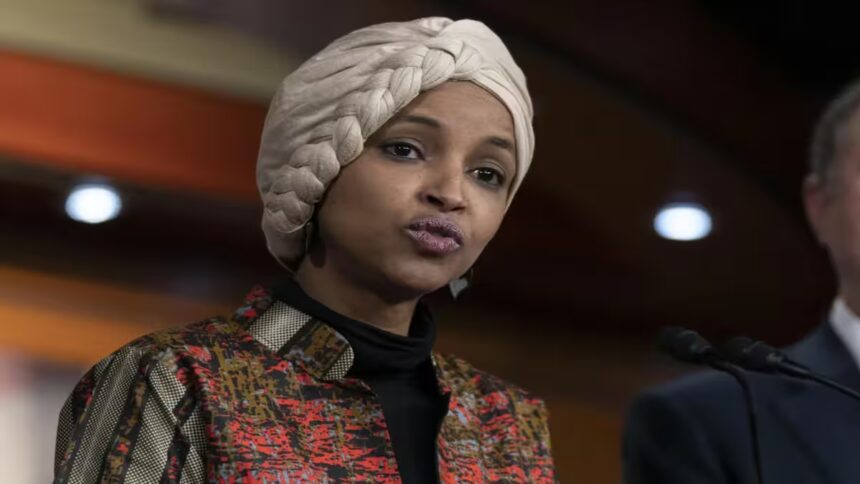

Recent remarks by US Congresswoman Ilhan Omar have reignited discussions about the treatment of minorities in India, particularly regarding accusations of systematic repression faced by Indian Muslims. During an event organized by the Indian American Muslim Council, Omar asserted that India has entered the “eighth stage of genocide,” provoking responses from various Indian voices who contest her claims and underscore their own experiences of communal harmony and governance.
Context of the Claims
At a gathering in Minnesota, Ilhan Omar presented her case grounded in Gregory Stanton’s framework of the ‘Ten Stages of Genocide,’ particularly referring to the eighth stage, which involves persecution. This framework categorizes systemic actions leading to mass violence against a group. Omar’s past statements and actions have often reflected her focus on presenting India in a negative light, especially targeted accusations related to actions taken by the Modi government. Historically, she has criticized India’s positions on Kashmir, the Citizenship Amendment Act (CAA), and its military actions during different domestic unrests.
Responses from Indian Muslims and Society
The backlash from India has been significant. Prominent voices from the Indian Muslim community have expressed their discontent with Omar’s portrayal. Arshia Malik, a noted writer, documented the growth of the Muslim population in India, noting that from 35 million at the time of Indian independence, the number has swelled to more than 200 million today. Many assert that they experience a significant degree of freedom and participation in the societal framework due to India’s pluralistic ethos, countering claims of oppression.
Social media has played a crucial role in broadcasting these sentiments, with ordinary citizens sharing their narratives and interactions with governance. Many Muslims emphasized how they have been included in numerous facets of political and civil life, from local governance to higher offices, allowing them agency in shaping their communities’ destinies.
Long-standing Political Strategies
Omar’s comments echo a continued effort by some political figures to leverage minority narratives for electoral or fundraising gains. Critics argue that her claims are less about genuine concern for Indian Muslims and more a tactic for political capital, with her constituency comprising a large Somali-Muslim immigrant population in Minnesota. This political strategy resonates with certain activist circles, intertwining her image with global Muslim advocacy, which, some claim, further fuels her political aspirations but, in reality, risks polarizing communities instead of fostering meaningful dialogue.
This strategy manifests through her affiliations with groups like the Council on American-Islamic Relations (CAIR) and the Indian American Muslim Council (IAMC), organizations that some observers criticize for having links to Islamist movements. Both entities have faced scrutiny regarding their alleged objectives and methodologies, particularly how they purportedly operate under an Islamist network’s influence.
Why It Matters
The ongoing debates surrounding Omar’s statements illustrate the broader geopolitical landscape and the framing of India in international discourse. Understanding claims of discrimination or persecution not only has implications for India’s global reputation but also fuels international conversations on religious and societal tolerance. These discussions can significantly affect diplomatic relations between countries and the global Muslim community, shaping narratives that may influence policy and advocacy efforts.
For tech developers and AI experts, the implications are two-fold. The ongoing polarization of these narratives in social media necessitates enhanced analytical capabilities in understanding community sentiments and the spread of misinformation. In essence, navigating these complex socio-political narratives examines the role of technology in shaping discussions and public perceptions about global minority rights.
Frequently Asked Questions
What are the Ten Stages of Genocide?
The Ten Stages of Genocide is a framework developed by Gregory Stanton that outlines a systematic approach to understanding the phases leading to genocide, with the eighth stage focusing specifically on persecution.
How has the Muslim population in India changed since independence?
The Muslim population in India has grown from approximately 35 million at the time of independence to over 200 million today, indicating significant demographic expansion since 1947.
What is the Indian American Muslim Council (IAMC)?
The IAMC is an organization that claims to represent the interests of Indian Muslims in the U.S., though it has faced criticism for alleged affiliations with pan-Islamist agendas, including connections with Turkish and Qatar-based Islamic disenfranchisement efforts.
What kind of perceptions does Ilhan Omar’s narrative create?
Omar’s narrative has led to polarized perceptions of India, painting it as a place of systemic discrimination against Muslims, which some argue could hinder genuine dialogue and cooperation between communities and governments.