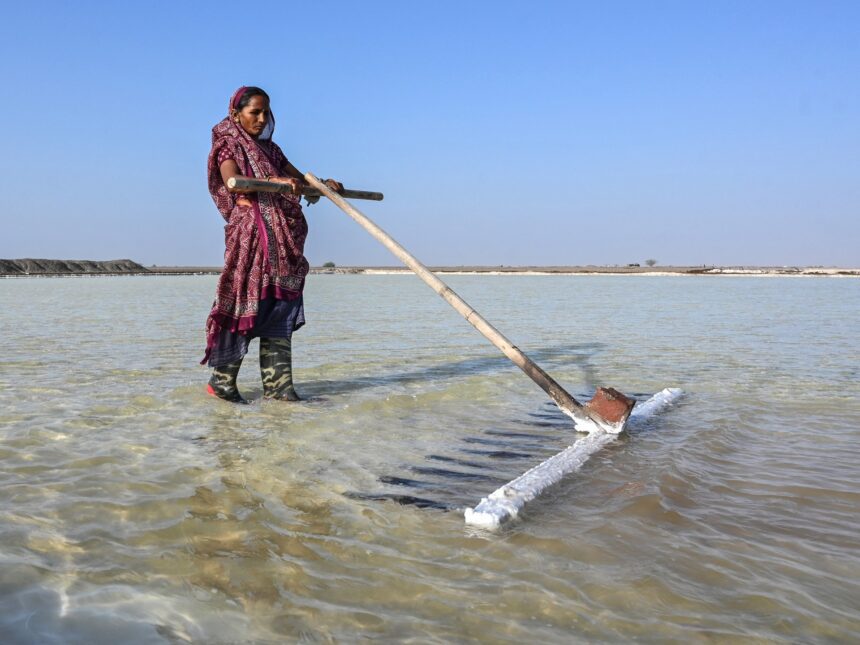

Each year, India endures extreme heatwaves, particularly in the salt pans of Gujarat, where approximately 50,000 seasonal workers face exceedingly harsh conditions. In the remote Little Rann of Kutch, these workers migrate for around eight months, living in the unforgiving salt flats without access to electricity, healthcare, or permanent shelter. A water tanker arrives only once every 25 days, and summer temperatures routinely exceed 45 degrees Celsius (113 degrees Fahrenheit), occasionally reaching 47-48C (117-118F). The region’s dry heat is ideal for salt production, with Gujarat contributing to about three-quarters of India’s salt output. The salt harvesting process involves pumping saline water into shallow pans for evaporation, while workers employ strategies to cope with the oppressive heat, such as working during early mornings and after sunset. However, the shift from diesel to more economical solar-powered systems has extended their working season into the peak heat months. This climate continues to create severe health risks, with reports of dehydration, heat stress, and signs of kidney malfunction among the workers. Despite these challenges, many return each year as they have few alternatives for their livelihoods.
Original Tweet: [source_url]
Hashtags: #Indias #salt #workers #brave #brutal #heat #Gujarats #desert #plains