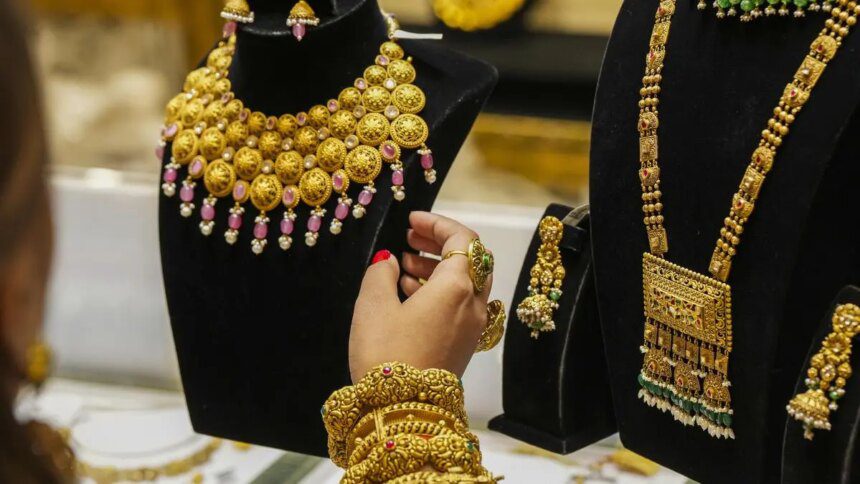

On October 13, 2026, gold prices experienced a modest decline, falling by ₹81 to settle at ₹1,49,462 per 10 grams in futures trading on the Multi Commodity Exchange (MCX). This drop comes as spot demand for the yellow metal weakens, impacting trading volumes and market confidence.
Market Overview of Gold Prices
Gold futures for December delivery reflected a drop of 0.05% on the MCX, with the trading turnover reaching approximately 1,950 lots. This downturn is notable, especially considering that gold prices are sensitive to various factors including demand fluctuations and international market trends. The current price indicates a cautious sentiment among traders amidst changing economic conditions.
Factors Influencing Price Declines
Analysts have linked the recent fall in gold prices to a decrease in spot demand across domestic and international markets. Spot demand typically reflects immediate retail purchases, and a downturn here often signifies weakening consumer interest or a potential shift in market dynamics. As gold is a critical asset for many Indian investors, changes in its price can signal shifting economic conditions.
On the global front, despite a slight decline in local futures, gold futures climbed by 0.37% to reach $4,187.66 per ounce in New York. This divergence highlights the intricate relationship between local demand and global market trends, which can lead to varied outcomes in commodity pricing.
Investment Patterns in India
In India, gold has traditionally been a favored investment option, particularly during festival seasons and weddings. The ongoing fluctuations in gold prices can impact buying patterns, often leading consumers to either expedite their purchases or hold back in expectation of better rates. Retail gold sales can be significantly affected by such price movements, impacting jewelers and small businesses tied to the gold market.
Furthermore, the Indian government has been aiming to improve transparency in the gold market to better guide consumers. Initiatives to monitor market trends and establish a gold spot exchange are under discussion, which could provide more stability and predictability in future pricing.
What This Means
The decline in gold prices could reflect broader economic trends that merit close attention from both investors and consumers in India. A drop in spot demand may indicate reduced consumer confidence, particularly in an economy looking to stabilize post-pandemic. Additionally, the global increase in gold futures suggests investors are turning to gold as a hedge against potential geopolitical risks or inflationary pressures, which may not be fully mirrored in the local market yet.
For Indian buyers, the current price dip might be seen as an opportunity, especially if they believe that gold will hold its value in the long term. However, it is crucial to remain informed about both local and international market dynamics before making any purchasing decisions.
Frequently Asked Questions
Why have gold prices fallen in India recently?
Gold prices have declined due to weaker spot demand and overall market sentiment, which may be influenced by economic factors affecting consumer confidence.
What is the significance of the gold price decline for consumers?
The decline in gold prices could lead consumers to either purchase gold at a lower cost or wait for further declines, impacting retail sales during crucial buying periods like festivals and weddings.
How do global gold prices affect the Indian market?
Global gold prices influence domestic market trends and investor sentiment. Fluctuations in international gold futures can lead to adjustments in local pricing and demand patterns.
Will the current trends continue in the gold market?
While short-term trends in gold prices can be unpredictable, continued monitoring of both domestic demand and global economic conditions will provide better insights into future movements in the gold market.