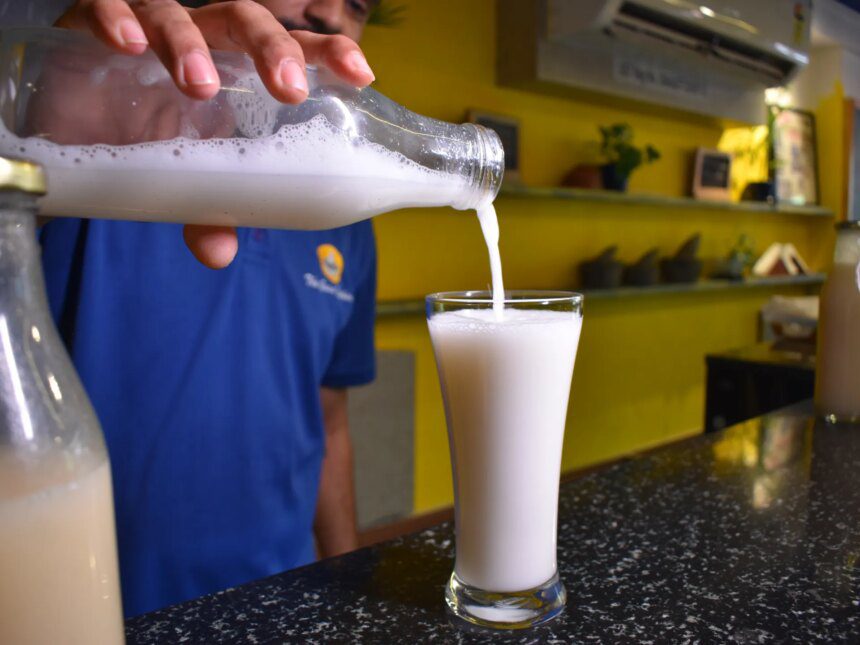

Rediscovering Orchata in Ribandar
Orchata, a beloved drink steeped in nostalgia for many Goans, is experiencing a resurgence thanks to Eunice, a Ribandar resident. After years of absence, Eunice has turned her passion for this almond and cashew-based beverage into a small business, enabling younger generations to reconnect with their roots and the flavours of their childhoods.
A Family Legacy and Forgotten Flavours
Eunice’s journey with orchata began in her early teens. “We would especially buy it during summer, and drink it with lots of ice,” she recalls. Her family’s ritual involved sourcing bottles from Panaji’s renowned shops, such as Cappuccina Bar and Restaurant and Lija Camotim. These moments were more than just about the drink; they were intertwined with family bonds and shared experiences.
After a three-decade hiatus, the craving for orchata led Eunice to experiment in her kitchen, which turned into a dedicated small business during the COVID-19 pandemic. The drink, made from a blend of almonds and cashews, has now become a pre-order sensation among locals yearning for a taste of tradition.
The Cultural Significance of Orchata
The significance of orchata goes beyond mere ingredients; it encapsulates the essence of Goa’s culinary history and social fabric. As Guilhermina Vas, Eunice’s friend, pointed out, “Ice makes all the difference,” hinting at how this refreshing element can evoke deep memories. For many, drinking orchata serves as a time machine, transporting them back to joyous childhood afternoons spent with family. “It makes me happy,” Eunice shared, revealing how the drink reminds her of her mother’s nurturing presence.
This beverage not only reflects personal histories but also represents changing dynamics within Goan society. Traditional recipes, once confined to privileged households, have become more accessible as ingredients and culinary traditions evolve. However, the rapid development in Goa, marked by resorts replacing fields, calls into question the sustainability of such traditions.
The Future of Orchata and Cultural Preservation
As Goa undergoes rapid urbanization and overtourism, traditional food practices like the making of orchata face the threat of dwindling relevance. Historical connections to colonialism, caste, and economic privilege shape the narrative around foods like orchata. Nevertheless, its revival in homes like Eunice’s showcases the resilience of cultural practices in modern settings.
While younger generations leave for better economic opportunities, the return to such roots through culinary experiences becomes more significant. Eunice’s venture acts as a bridge between the past and present, reminding the community of their heritage through taste. Themes of nostalgia and cultural identity resonate strongly, indicating both a challenge and an opportunity for culinary preservation in India.
What This Means
For Indian readers, the resurgence of traditional foods like orchata serves as a reminder of the importance of keeping culinary heritage alive. As globalization continues to influence local cuisines, there is an emerging need to explore and preserve regional specialties that contribute to national identity. Understanding these connections fosters greater appreciation for the diversity within Indian cuisine, encouraging a balance between modern lifestyles and historical practices.
Frequently Asked Questions
What is orchata?
Orchata is a traditional Goan beverage typically made from a blend of almonds and cashews, often enjoyed cold and served with ice, especially during hot summer months.
How is orchata prepared?
Orchata is prepared by blending almonds and cashews into a concentrate, which is then mixed with milk and diluted with water for a silkier texture.
Why has the popularity of orchata diminished over the years?
The popularity of orchata has diminished due to changing lifestyles, urbanization in Goa, and the migration of younger generations for better economic prospects.
Can I still find orchata in Goa today?
Yes, while it may not be as commonly found on family tables as before, Eunice’s small business and other local initiatives aim to bring orchata back to the forefront of Goan culinary culture.