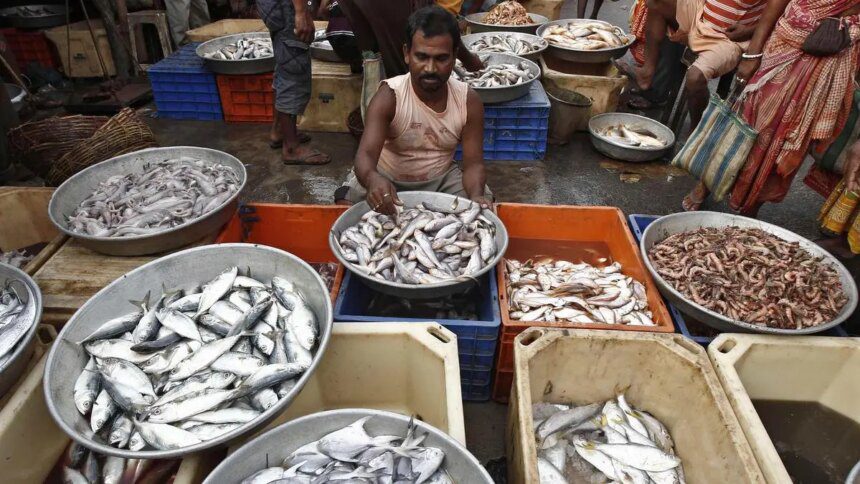

What was once deemed useless, a foul-smelling byproduct of fish markets, is being transformed into a valuable resource for advanced healthcare applications. Scientists at the ICAR-Central Institute of Fisheries Technology (ICAR-CIFT) in Kochi have developed a patented technology to convert fish scale waste into nanofibre-based graft materials that promote bone and dental healing.
The research team, led by Senior Scientist Binsi PK, collaborated with Sobi K Chacko from Catholicate College, Raneesh B from Pushpagiri College of Dental Sciences, and Nebu George Thomas from Pushpagiri Medical College.
India’s annual fish production exceeds 19 million tonnes, resulting in an estimated 4-6 million tonnes of waste. Traditionally, this biomass has been utilized for low-value applications such as fish meal or discarded. However, scientists have begun to recognize it as a rich biological resource, containing collagen, calcium compounds, and bioactive molecules.
Fish scales, in particular, are now identified as a significant source of hydroxyapatite, a mineral that closely resembles human bone and tooth enamel. Utilizing an advanced electro-spinning technique, researchers have successfully transformed this material into ultra-thin nanofibres that serve as scaffolds for tissue regeneration.
Unlike conventional graft materials that merely fill defects, these nanofibres actively enhance healing by facilitating the attachment and growth of bone-forming cells. They also permit the controlled release of antimicrobial and anti-inflammatory agents, decreasing infection risks and improving recovery outcomes in dental and orthopedic procedures.
The innovation reflects a broader shift in the perception of fish waste. Components such as skin, bones, scales, and shellfish residues contain unique compounds that can be harnessed for specialized industrial uses.
Countries such as Japan and Norway have successfully tapped into the economic potential of converting fish waste into high-value products through effective segregation and processing systems. In India, however, fragmented supply chains and limited value addition present significant challenges to such prospects.
The development from CIFT highlights the potential of a circular bio-economy model, reintegrating waste streams into productive uses. Even partial conversion of fish waste into biomedical-grade materials could yield substantial economic benefits while alleviating environmental burdens.
Moreover, this innovation opens new avenues for research, entrepreneurship, and employment in coastal areas, where fish processing plays a crucial role in livelihoods. By converting fish waste into advanced medical materials, researchers are addressing a longstanding environmental issue while fostering new possibilities in healthcare innovation.
Published on April 20, 2026.