
Muslim Cleric Faces Backlash for Criticism of Kanwariyas
The Muzaffarnagar police in Uttar Pradesh have filed a case against Sajid Rashidi, a prominent Muslim cleric and president of the All India Imam Association, after he made comments perceived as derogatory towards kanwariyas—Hindu devotees participating in the annual Kanwar Yatra. Rashidi’s remarks have ignited tensions as Hindutva activists demand accountability, raising questions about societal divisions and religious sentiments in India’s current sociopolitical climate.
Remarks Spark Controversy and Legal Action
During an interview with IANS, Rashidi questioned the devotion of those kanwariyas who engage in disruptive behavior, stating, “Can those who sit on roads consuming alcohol and intoxicants be called devotees of the Hindu deity Shiva?” He also referred to a reported incident where a group of kanwariyas attacked police personnel and damaged a school van, suggesting that such actions dishonor the sacredness of their pilgrimage.
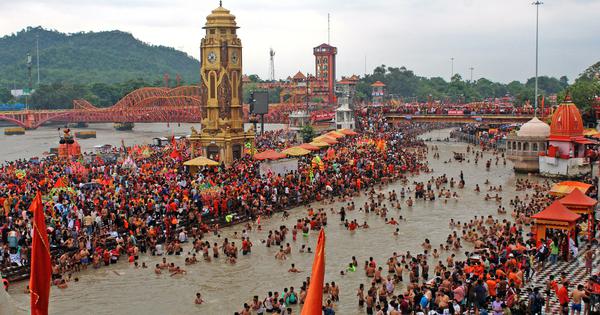
In response to his comments, a complaint was filed by Narendra Panwar, leader of the Hindutva organization Hindu Sangharsh Samiti. The authorities have charged Rashidi under provisions aimed at preventing acts that outrage religious feelings, further fueling tensions between communities. The Kanwar Yatra, which draws millions of participants walking long distances to collect sacred water from the Ganges, runs from July 30 to August 11, emphasizing the religious context of this ongoing dispute.
Religious Processions and Community Relations
The Kanwar Yatra involves a significant mobilization of devotees who seek spiritual merit. However, recent events, including the violent disputes involving kanwariyas, have spotlighted broader issues surrounding community interactions. Rashidi attempted to clarify that his criticism was not aimed at all participants of the Yatra but rather at those who engage in unruly behavior.
Such public grievances have exacerbated societal fractures, especially in a politically charged environment where religious identities are often politicized. The growing tensions indicate an urgent need for dialogue and understanding amid rising discrimination against Muslims in various sectors, including socio-economic spaces.
The Role of Hindutva Activism
The recent protests led by Hindutva activists point to a broader trend of rising nationalism that often marginalizes minority voices in India. The demands for action against Rashidi encapsulate the challenges faced by Muslims in India today, where public commentary on Hindu rituals can lead to swift backlash and legal ramifications.
The dynamics reveal how existing societal tensions can be exploited by political actors. As Rashidi’s comments thread into a legal narrative, it opens discussions on the implications of free speech, religious tolerance, and community relations in an increasingly polarized society.
Why It Matters
The situation highlights the complexities of navigating religious identities in a diverse and pluralistic society like India. It sheds light on how societal norms can shape interactions and perceptions across religious lines. For the global community, understanding these dynamics is essential to engage meaningfully with issues of human rights and social justice, especially concerning minority populations facing discrimination. The discourse surrounding Rashidi’s comments may serve as a cautionary tale about the fragility of interreligious harmony in contemporary India.
Frequently Asked Questions
What sparked the legal case against Sajid Rashidi?
Rashidi faced legal action after he made comments questioning the devotion of kanwariyas involved in disruptive behaviors during the Kanwar Yatra, particularly referencing incidents of violence.
Who filed the complaint against Rashidi?
The complaint was filed by Narendra Panwar, the chief of the Hindutva organization Hindu Sangharsh Samiti, who demanded action against Rashidi for his remarks.
What is the significance of the Kanwar Yatra?
The Kanwar Yatra is an annual pilgrimage where devotees travel to collect sacred water from the Ganges River, reflecting deep religious devotion among participants. It is a major event that involves millions of devotees across India.
How do Rashidi’s comments reflect broader societal issues?
The backlash against Rashidi underscores ongoing tensions between Hindu and Muslim communities in India, raising important questions about free speech, interfaith relations, and the implications of public critique in a religiously diverse society.