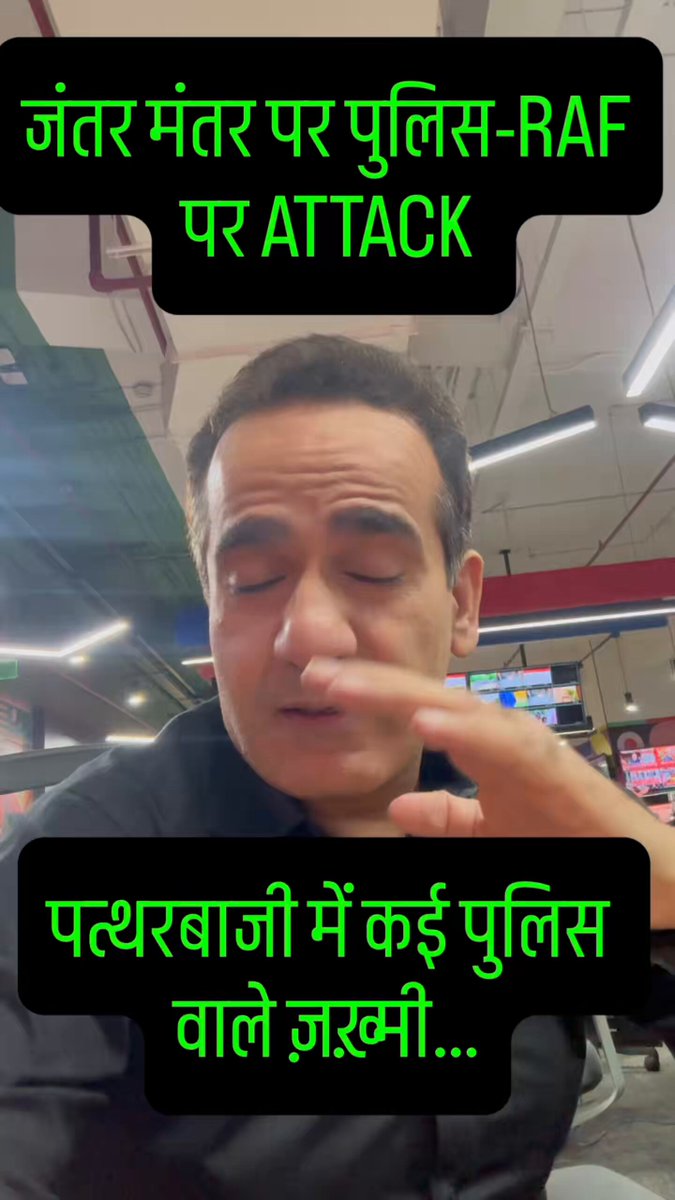

In a recent tweet, political commentator @AmanChopra_ made claims that several Delhi Police personnel were injured due to stone pelting by protesters at Jantar Mantar. However, these assertions were met with allegations of being fake news, with critics calling for evidence to support the claims.
Context: The Incident at Jantar Mantar
The incident reportedly took place during a protest at Jantar Mantar, a location known for various political demonstrations in New Delhi. The protest in question was likely organized by supporters of the Citizens for Justice and Peace (CJP), who were previously on a hunger strike. According to Chopra’s tweet, the situation escalated with stone pelting, which he claims resulted in injuries to multiple police personnel.
This assertion needs careful examination, as protests in India can often become flashpoints for violence, and the stakes are high when it comes to public perception of law enforcement’s role in such situations. Notably, the police have a history of being both protectors of public order and, in some cases, the subject of accusations regarding excessive force. The complexity of these dynamics necessitates vigilance in the reporting of incidents involving police and protesters.
The Response from the Public and Media
Following Chopra’s claims, there has been significant pushback on social media, particularly from figures who question the veracity of his statements. Critics are arguing that there is no concrete evidence to substantiate the claim of injuries among police personnel. Context is crucial here; in political discourse, especially in India, claims can easily spiral into misinformation if not properly validated.
Many users have demanded concrete evidence, pointing out that unverified claims can exacerbate tensions and further polarize public opinion. The phenomenon of spreading ‘fake news’ or unsubstantiated claims poses a risk not just to the individuals involved but to societal harmony at large. The circulation of such narratives can lead to significant repercussions, including public outcry and even governmental inquiry.
The Nature of Political Discourse in India
This incident also highlights a broader trend in Indian political discourse, where social media serves as a double-edged sword. While it has democratized access to information and given voice to often marginalized perspectives, it has also become a platform for misinformation, sensationalism, and political manipulation.
In India, where political polarization is extreme, dissenting voices often face backlash, and narratives can be constructed to either vilify dissidents or exalt authority. For example, if claims of police injuries are exaggerated or unproven, they might serve to justify stronger crackdowns on protests, effectively silencing dissent. Alternatively, discrediting the media or individuals involved in reporting these claims could embolden irresponsible communication practices.
Why This Matters
This situation is significant in the context of Indian democracy, where the right to protest is enshrined in the Constitution. The potential misuse of police power to quell dissent not only threatens democratic freedoms but also influences public trust in law enforcement agencies. If citizens believe that facts are being manipulated, it can lead to a further erosion of trust in both governmental institutions and the media.
As India grapples with growing dissent about issues like human rights, police brutality, and freedom of speech, the stakes for accurate information become even higher. It is essential for journalists and political commentators to maintain integrity in reporting and for the public to cultivate critical thinking skills when consuming information.
Frequently Asked Questions
What was Aman Chopra’s claim regarding the Jantar Mantar protests?
Aman Chopra claimed that several Delhi Police personnel were injured due to stone pelting by protesters at Jantar Mantar.
Why has there been criticism of this claim?
Critics argue that there is no concrete evidence to support Chopra’s claims, suggesting that they may be unfounded and potentially inflammatory.
What is the significance of the Jantar Mantar location in political protests?
Jantar Mantar is a prominent site for political demonstrations in New Delhi, often used by various groups to express dissent and advocate for causes.
How does misinformation affect political discourse in India?
Misinformation can polarize public opinion, justify excessive governmental responses to dissent, and undermine trust in media and institutions.