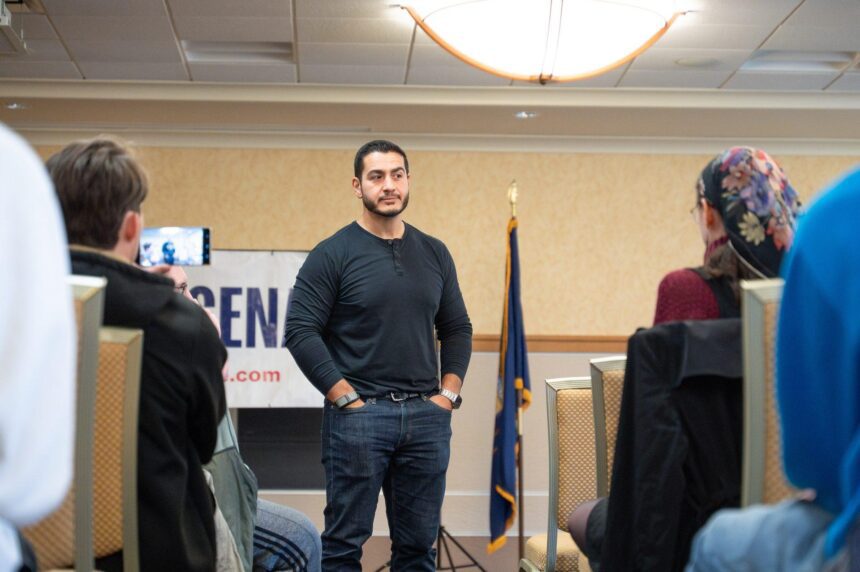

Summary
Abdul El-Sayed, Michigan’s Democratic Senate nominee, has criticized the Republican Party for resorting to Islamophobic attacks rather than engaging in substantive discussions about policy. This tactic, he argues, not only distracts from critical economic and social issues but also perpetuates discrimination against Muslim and Arab American individuals.
Identity Politics in Campaigns
Following his primary victory, El-Sayed’s political rivals have increasingly focused on his identity as a Muslim-American. The National Republican Senatorial Committee has referred to him using his full name in an attempt to paint him as a radical figure. This strategy taps into historical patterns of targeting Muslim and Arab American leaders, using their names to create suspicion rather than engaging in political debate grounded in facts.
Notably, the campaign has resurrected unfounded claims linking El-Sayed to the Muslim Brotherhood, an accusation he firmly rejects. Critics argue that these tactics aim to paint him as a security threat, a method that echoes wider trends of marginalization seen in numerous political contexts around the world.
Accusations and Counteraccusations
El-Sayed’s Republican opponent, Mike Rogers, has also waded into this fraught terrain by accusing El-Sayed of holding extreme views related to national security and the September 11 attacks. El-Sayed’s supporters have countered these claims, asserting that they serve to link a Muslim candidate with terrorism in an unfounded manner.
In response to these attacks, El-Sayed has emphasized that he wants to redirect the conversation toward pressing issues like healthcare, wages, and foreign policy, arguing that his ethnic background does not hinder his ability to represent the diverse needs of Michigan residents effectively. By framing the debate around factual issues rather than identities, El-Sayed hopes to engage voters on a common ground revolving around crucial social and economic challenges.
Impact of Islamophobia on Public Discourse
The focus on identity politics in El-Sayed’s campaign illustrates broader concerns regarding Islamophobia, especially in a state with one of the largest Arab and Muslim populations in the United States. Civil rights activists highlight the dangers of campaigns that utilize religious or ethnic stereotypes, pointing out that this behavior risks normalizing discrimination and discouraging participation from minority communities in public life.
However, some argue that candidates should still be scrutinized over their stances on national security, a discussion that is often colored by preconceived notions rooted in the Islamophobic sentiment prevalent in various spheres of society. The race has thus brought Islamophobia and questions of representation to the forefront, demonstrating how identity can significantly impact political opportunities for minority candidates.
Why It Matters
Understanding the implications of identity politics and Islamophobic rhetoric is essential for recognizing how they can shape public perceptions and influence electoral outcomes. For tech developers and users aiming to foster inclusivity in AI and other technologies, addressing biases linked to race, religion, and ethnicity is crucial. Data sets used in AI training should reflect diverse perspectives and narratives, countering stereotypes and promoting equity. The discourse surrounding candidates like El-Sayed serves as a case study for how technology and social media can amplify or mitigate discrimination, highlighting the importance of ethical considerations in digital spaces.
Frequently Asked Questions
What accusations has Abdul El-Sayed faced during his campaign?
El-Sayed has faced accusations from Republican opponents linking him to Islamophobic stereotypes and claiming he has extreme views on national security and the September 11 attacks, all of which he has firmly rejected as unfounded.
How do these campaign tactics affect public perception of Muslim candidates?
Tactics that focus on identity rather than policy can perpetuate negative stereotypes, leading to greater discrimination against Muslim candidates and discouraging minority participation in politics.
Why is the focus on identity in political campaigns problematic?
Focusing on identity can distract from substantive issues such as healthcare and economic policies. It also risks normalizing discrimination, which can have long-term effects on community representation and voter engagement.
What broader patterns can be seen in the treatment of minority candidates in politics?
Minority candidates often face heightened scrutiny based on their identities, which can manifest as unfounded allegations of extremism or terrorism, reinforcing negative stereotypes and diverting attention from their policy proposals.