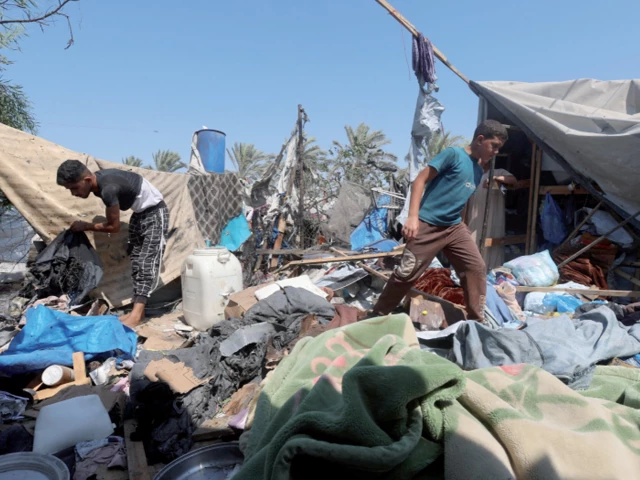

A coalition of eight Muslim-majority countries has accused Israel of obstructing peace efforts in Gaza, claiming its stance against a U.S.-backed roadmap and Palestinian statehood implicates it in the ongoing conflict. The foreign ministers from Pakistan, Egypt, Türkiye, Indonesia, Jordan, Qatar, Saudi Arabia, and the UAE issued a strong statement linking Israel’s actions to the deterioration of the humanitarian situation in Gaza.
Background on the U.S.-Backed Roadmap
The conflict in Gaza has drawn significant international attention, requiring diplomatic mediation from various countries. A comprehensive 15-point roadmap, which includes input from the United States, Egypt, Qatar, and Türkiye, aims to stabilize the region and restore peace. This roadmap represents a culmination of elaborate negotiations aimed at ending the hostilities and is backed by the UN Security Council through Resolution 2803.
Adopted in November 2025, this resolution provided a framework for peace by advocating for the formation of the Board of Peace and the deployment of an International Stabilization Force in Gaza. These entities would oversee a phased disarmament of Hamas and other factions while ensuring Israeli military withdrawal as progress was verified.
However, the Israeli government has rejected this roadmap. Prime Minister Benjamin Netanyahu has firmly stated that Israeli forces would only withdraw once Hamas is entirely disarmed, presenting a significant barrier to peace negotiations. This deadline has raised concerns regarding the feasibility of reaching a peaceful resolution.
The Joint Ministers’ Statement
The foreign ministers of the aforementioned Muslim countries have expressed frustration over Israel’s obstructionist policy. In a joint statement, they emphasized that Israel’s rejection of the roadmap demonstrates a refusal to comply with international mandates supporting Palestinian statehood and undermines the U.S.-led effort to resolve the Gaza conflict.
The ministers pointed out that the responsibility for the ongoing humanitarian crisis and potential further escalations lies squarely on Israel. They reiterated that the Palestinian factions have accepted the roadmap, adding weight to their argument that Israel’s position is a significant roadblock to implementing the broader Comprehensive Plan.
They also highlighted the critical nature of U.S. involvement, urging Washington to ensure Israel adheres to the roadmap provisions. Their statement included a direct warning that Israel would bear “direct and full responsibility” for any worsening conditions stemming from non-compliance.
The Broader Implications for Palestinian Statehood
In their declaration, the eight nations emphasized the intrinsic link between resolving the immediate Gaza crisis and the long-term issue of Palestinian statehood. They advocate for a two-state solution based on pre-1967 borders, making East Jerusalem the capital of a prospective Palestinian state. This demand aligns with numerous United Nations resolutions advocating for Palestinian rights and sovereignty.
The ministers rejected any moves to negate Palestinian statehood, particularly through unilateral Israeli actions. Their insistence on immediate action to ensure Palestinian self-determination underlines a fundamental perspective that a sustained peace cannot be achieved without addressing this critical issue.
The backdrop of these discussions reflects a broader confrontation between Israel and nations that advocate for Palestinian rights, showcasing the difficulty in reconciling peace efforts with established international expectations for statehood.
Why It Matters
The implications of this diplomatic struggle extend beyond regional politics, resonating with global humanitarian concerns. The failure to address these issues not only exacerbates existing conflicts but also complicates international relations involving major powers. The U.S. position is particularly precarious; its ability to stabilize the situation hinges on managing Israeli actions while maintaining relationships with its Arab allies. This situation warrants critical attention from global stakeholders, especially as it affects peace, security, and humanitarian conditions in the Middle East.
Frequently Asked Questions
What is the significance of the U.S.-backed roadmap for Gaza?
The U.S.-backed roadmap aims to facilitate peace in Gaza through a structured process of disarmament and international oversight, promoting stability and reconstruction.
What are the major objections raised by Israel regarding the roadmap?
Israel has fundamentally opposed the roadmap, insisting on complete disarmament of Hamas before considering any withdrawal of its forces from Gaza.
How do the Muslim countries view Israel’s actions?
The coalition of eight Muslim countries views Israeli rejection of the roadmap as an obstruction to peace and a direct violation of international mandates supporting Palestinian rights and statehood.
What are the broader implications of denying Palestinian statehood?
Denying Palestinian statehood not only undermines the political standing of Palestinians but also poses risks to peace and security across the Middle East, threatening regional stability.