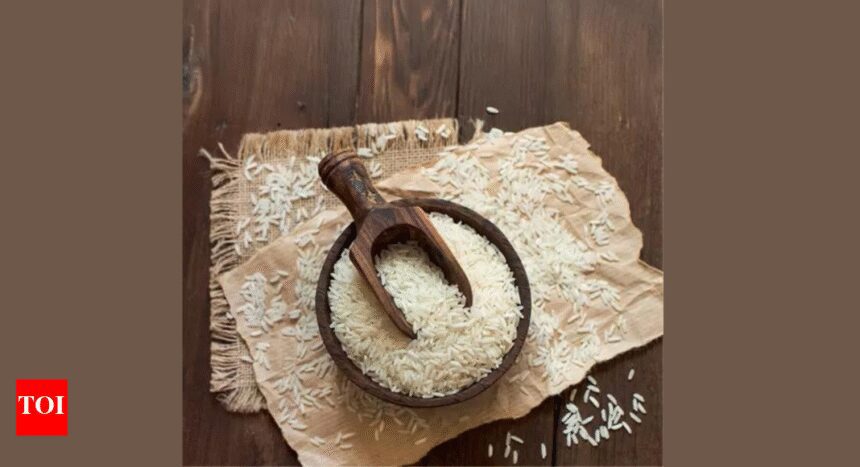

Basmati rice, lauded as the ‘best rice in the world’ by Taste Atlas, is described by farmers as a ‘karza faad’ or ‘debt-breaker.’ This aromatic variety is integral to Indian cuisine, featured in dishes ranging from biryanis and kheers to international fare like sushi. However, the prominence of basmati rice has ignited a conflict between India and Pakistan, particularly with the 50% duty on Indian exports imposed by the Trump administration.
Despite its popularity, a critical issue lies beneath the surface: traditional varieties of basmati and non-basmati rice, once prevalent across India, are rapidly disappearing from farms and dining tables. Agrarian scientist Debal Deb, who has spent two decades focusing on rice seed conservation, estimates that 60-80% of rice sold in markets is not the variety indicated on the packaging. “The biggest challenge today is that farmers use cross-pollination and don’t maintain genetic purity,” stated Deb, based in Odisha.
The rise of hybrid varieties can be traced back to India’s pursuit of food self-sufficiency, leading agricultural scientists to develop stronger strains, such as Pusa Basmati (PB) 1121 and PB 1509. These hybrids are resilient against pests and diseases like bacterial blight, and they respond effectively to chemical fertilizers, resulting in increased yields and reduced losses for farmers with even small landholdings. Consequently, regions like Punjab, Haryana, and Uttar Pradesh transitioned to these hybrid varieties, helping India account for 65% of the global basmati rice supply, with Pakistan covering much of the remainder.
However, this shift has resulted in a dramatic decline in traditional rice varieties, plummeting from approximately 100,000 in the 1970s to fewer than 6,000 today—a loss of 93%. Varieties such as Veliyan rice, drought-resistant and grown in Kerala, or Jengoni rice known for its medicinal properties in Assam, are seldom cultivated anymore.
Umendra Dutt, founder of the Kheti Virasat Mission dedicated to conserving indigenous seeds and traditional farming techniques, noted that Punjab has lost all its native paddy varieties. Upon establishing the mission in 2005, he had to source seeds from elsewhere in India to reintroduce traditional varieties. Over the past two decades, the Malwa region of Punjab has seen a significant uptick in cancer cases, linked to excessive pesticide and chemical fertilizer use. “We only realized the extent of the damage after thorough examination, which promoted a shift towards organic practices and traditional crops,” Dutt explained. The mission currently conserves and distributes 10 to 12 traditional rice varieties.
Deb also highlighted that while the decline of traditional varieties isn’t solely attributable to the rise of basmati, its dominance in traditional cultivation areas has intensified this trend. “Farmers act like businessmen seeking profit, showing little interest in conservation,” he remarked.
At Basudha, a 1.7-acre farm located in Odisha’s Rayagada district, Deb has focused on conserving 1,492 rice landraces sourced from both Indian farmers and international regions including Sri Lanka, Thailand, Korea, Italy, and the US. Alongside seed preservation, he promotes awareness of genetic purity and crop diversity. The Vrihi Seed Exchange Network, which he established, now connects over 8,000 farmers across 12 states for seed cultivation and exchange. The network also documents varieties rich in vitamin B complex, omega-3 fatty acids, and those resilient to drought, flooding, salinity, or pests.
In Assam’s Jorhat district, Mahan Chandra Borah has dedicated the last two decades to seed conservation and criticized the profit-centric approach dominating agriculture. “Monoculture is erasing our living heritage. Conserving these seeds is essential for maintaining food security in the future,” Borah emphasized. He reminisced about how his village, Meleng Kathgaon, used to cultivate 10 to 12 rice varieties, with neighboring villages growing different kinds, fostering seed exchange. “Now, only a few landraces remain,” he noted, as he conserves over 500 varieties through the Annapurna Seed Library.
Borah underscored the advantages of conservation efforts, indicating that farmers growing traditional varieties can regain control over food production and lessen reliance on expensive commercial seeds. Nevertheless, he cautioned that the impact of individual farmers is limited without government support for conservation initiatives. “All government research institutes focus on genetic engineering,” he said.