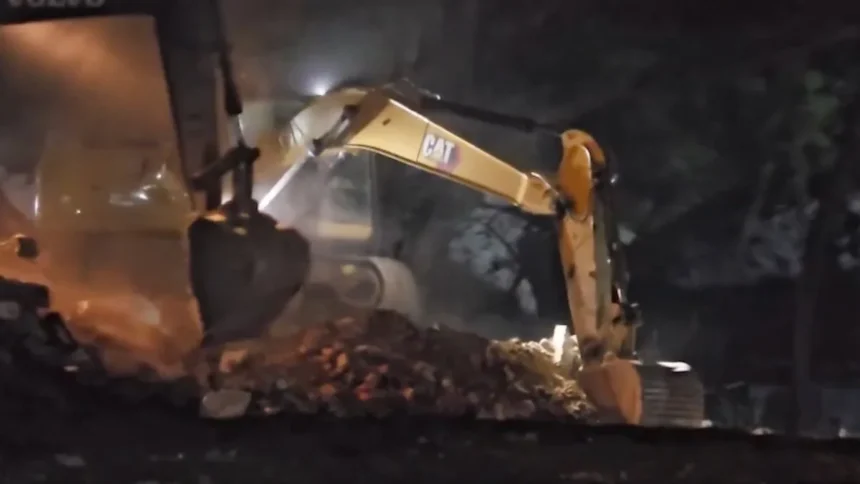

A historic mosque in Varanasi, the Ajgaib Shaheed Mosque, was demolished under heavy security during an overnight operation to facilitate the redevelopment of Kashi railway station into a modern multi-modal transport hub. This significant action raises questions about the treatment of religious minorities in India, particularly in light of ongoing tensions surrounding the cultural and historical heritage of the Muslim community.
The Demolition of Ajgaib Shaheed Mosque
The demolition of the nearly 200-year-old mosque occurred late Tuesday night amidst extensive police presence to prevent any potential unrest. Located near Rajghat, the mosque occupied land designated for railway expansion. Authorities justify the demolition as necessary for modernizing the Kashi railway station, transforming it into a state-of-the-art transport facility with an estimated cost between Rs 330 crore and Rs 400 crore. This project aims to integrate various modes of transport, including rail, metro, and water transport.
Security Measures and Operations
The demolition was executed with strict security protocols in place to avert disturbances. Joint Commissioner of Police Shiv Hari Meena oversaw the operation, which involved multiple law enforcement agencies and paramilitary forces. Access to the site was severely restricted, showcasing the state’s emphasis on maintaining order during contentious initiatives. Utilizing tools such as five JCB machines and two Pokland excavators, officials completed the demolition quickly, ensuring the area was cleared immediately.
Context of Religious Tensions and Development
The destruction of the mosque is emblematic of broader societal issues regarding the treatment of India’s Muslim population under the current governmental framework. Critics argue that such actions reflect a systematic marginalization of minority communities, with religious sites frequently at the center of disputes linked to national identity and cultural hegemony. The redevelopment of Kashi railway station, while touted as an infrastructural advancement, risks overshadowing the historical and cultural significance of Muslim heritage in the region. Such actions can lead to further alienation and economic boycotts against marginalized communities, exacerbating social divides.
Why It Matters
This event is significant for several reasons. Firstly, it illustrates the sensitive balance between infrastructural development and the preservation of cultural heritage, particularly for minority communities. The ongoing cycle of demolition and redevelopment underlines a narrative that can lead to increased social tensions and feelings of disenfranchisement among Muslims in India. Additionally, policymakers, urban developers, and social activists must consider the potential fallout of such actions: they can deter investment and tourism, vital areas for thriving economies. Addressing these divides is crucial to fostering an inclusive environment where all communities can thrive.
Frequently Asked Questions
What was the reason for the mosque’s demolition?
The Ajgaib Shaheed Mosque was demolished to clear land for the redevelopment of the Kashi railway station, which is being modernized into a multi-modal transport hub.
What security measures were taken during the demolition?
Extensive security arrangements were implemented, including a large presence of police and paramilitary forces who monitored the operation closely to prevent any potential unrest.
How much is the new transport hub expected to cost?
The redevelopment of Kashi railway station is estimated to cost between Rs 330 crore and Rs 400 crore.
What impact does this demolition have on the local Muslim community?
The demolition exacerbates existing tensions regarding the treatment of Muslims in India and raises concerns about the preservation of cultural and religious heritage, potentially leading to greater social exclusion and economic challenges for the community.