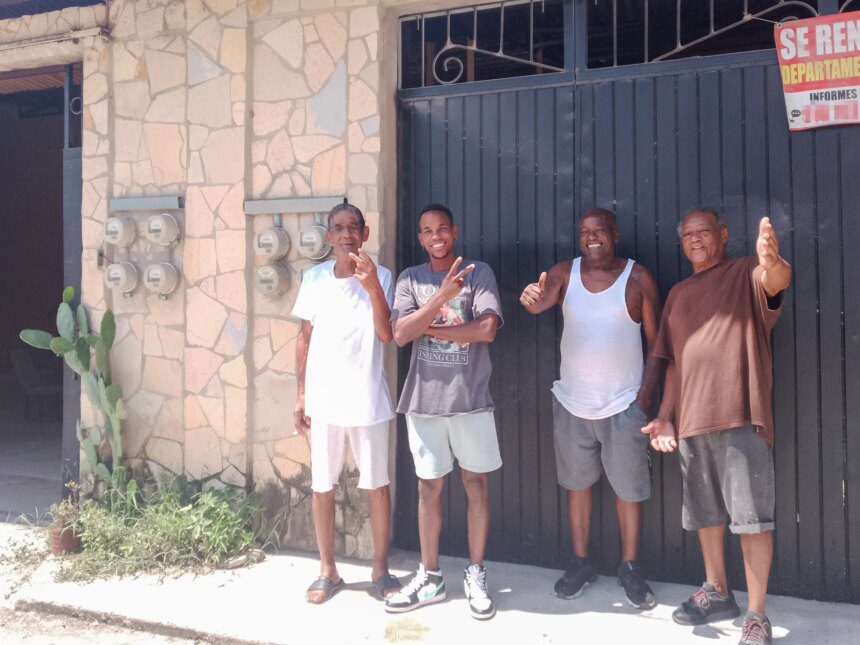

US Deportation of Cuban Nationals Raises Concerns
The ongoing deportation of Cuban migrants from the United States has sparked significant discussion around immigration policies, individual rights, and human dignity. The experiences of individuals like Scull Delgado and Orlando Martinez Mendoza highlight the harsh realities faced by those seeking refuge and the complexities involved in the US immigration system.
Escaping to Freedom: The Mariel Boatlift
Scull Delgado’s journey began during the Mariel boatlift in 1980, a pivotal moment wherein around 125,000 Cubans fled to the US. This migration was largely propelled by political oppression and economic hardship in Cuba. Many, like Delgado, sought to escape military service and a bleak future under a communist regime.
Despite arriving without formal documentation, the US accepted the “marielitos” as part of its long-standing opposition to Cuba’s government. President Jimmy Carter proclaimed in support of these refugees, underscoring a commitment to provide opportunities for those fleeing oppression. Over the decades, Delgado built a life in California, married a US citizen, and became a father and grandfather, embodying the American Dream.
A Slip-Up Leads to Consequences
However, Delgado’s life took a dramatic turn due to a past mistake. He has openly acknowledged a crime committed in the 1990s that led to prison time, which has haunted him ever since. Although he steered clear of legal issues post-incarceration, annual check-ins with US immigration officials became a routine that eventually led to his arrest.
In a shocking twist, just one month prior to his anticipated retirement, immigration agents apprehended him during one of these appointments. Feeling betrayed by the system he had integrated into over nearly 46 years, Delgado found himself deported to Mexico, far from his family and the life he had established.
Guards, Cameras, and Legal Limbo
Delgado’s situation mirrors that of another Cuban émigré, Orlando Martinez Mendoza, who faced his own harrowing experiences after arriving in the US in 2015. Initially transported to three detention centers in Tennessee following a minor court appearance, he was eventually moved to the notorious Angola prison in Louisiana. Martinez Mendoza claimed the transfer was orchestrated to portray him and others as serious criminals to the public.
Upon deportation, he recounted the humiliation of being unceremoniously “dumped” outside the Mexican Commission for Refugee Assistance, further emphasizing the lack of compassion shown to migrants. This reflects a broader narrative of how the US government handles individuals, often prioritizing political optics over humane treatment.
What This Means
The plight of Cuban deportees reveals deep-seated issues within the immigration system not only in the US but also in prospective countries like India. As nations grapple with migration and refugee crises exacerbated by regional instability, the principles guiding immigration policies become crucial.
India, too, has its share of migrant communities, including those fleeing persecution from neighboring countries. Lessons learned from the experiences of Cuban migrants could inform India’s approach to refugee policy, ensuring humane treatment while balancing national security concerns. The emotional and psychological toll on individuals facing deportation cannot be ignored, as it intertwines with global human rights considerations.
Frequently Asked Questions
What is the Mariel boatlift?
The Mariel boatlift was a mass exodus of approximately 125,000 Cubans to the United States between April and October 1980, primarily driven by desire for political asylum and economic opportunity.
Why were Scull Delgado and Orlando Martinez Mendoza deported?
Both men were deported due to their past criminal records, with Martinez Mendoza facing action after serving a two-year sentence for drug-related charges, while Delgado had a criminal history from earlier in his life.
How does the US handle deportations of migrants?
The US immigration system can be punitive, often detaining migrants before deportation and often highlighting criminal records, regardless of the circumstances of their migration.
What can be done to improve the treatment of deported migrants?
Addressing the humanitarian aspects of immigration policy is crucial, including clearer communication, legal support, and humane treatment during deportation processes, ensuring rights are respected for those seeking refuge.