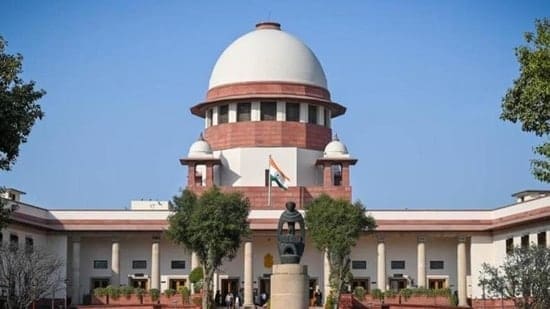
Calling the Delhi High Court’s order suspending the life sentence of Unnao rape case convict Kuldeep Singh Sengar “contrary to law” and “perverse,” the Central Bureau of Investigation (CBI) on Friday moved the Supreme Court of India, challenging the High Court’s finding that Ex-BJP MLA Kuldeep Sengar was not a public servant at the time of committing the offence, Live Law reported.
In its appeal against the December 23 order, an order that sparked widespread public outrage and protests, including by the survivor and her family, the CBI argued that the Delhi High Court failed to recognise that a sitting MLA, by virtue of holding a constitutional office, is vested with public trust and authority over the electorate. Such a position, the agency said, carries heightened responsibility arising from duties owed to the State and society.
The CBI contended that the High Court erred in law by not adopting a purposive interpretation that advances the object and intent of the Protection of Children from Sexual Offences (POCSO) Act, a special victim-centric legislation enacted to protect children from sexual abuse and exploitation.
It further submitted that suspending Sengar’s sentence and releasing him on bail during the pendency of his appeal would not only be against the law but would also seriously endanger the safety and well-being of the survivor and her family.
Seeking an immediate stay on the High Court’s order, the agency warned that Sengar remains a highly influential individual with considerable muscle and financial power, capable of causing further harm to the victim and her relatives.
The High Court, while allowing Sengar’s plea for suspension of sentence, had observed that it was “satisfied” at this stage that an offence under Section 5(c) of the POCSO Act was not made out, as Sengar did not fall within the definition of a public servant.
Challenging this reasoning, the CBI argued that the High Court failed to appreciate the core objectives of Section 5(c) of the POCSO Act, which go beyond recognising children’s constitutional rights to care, safety, and dignity, and extend to protecting them from sexual abuse by persons wielding power, authority, or status.
A comprehensive reading of the provision, the agency said, leads to the inescapable conclusion that it seeks to punish sexual exploitation by public servants and other persons in authority, whether political or otherwise, who misuse their position.
The agency stressed that a sitting MLA occupies a position of trust and authority over the general electorate and therefore squarely falls within the legislative intent underlying Section 5(c).
Drawing parallels with anti-corruption laws, the CBI argued that the Prevention of Corruption Act, 1988, and the POCSO Act, 2012, share a common legislative purpose, regulating and penalising abuse of authority.
Both statutes impose enhanced accountability on individuals in positions of trust and adopt a purposive interpretation of terms such as “public servant” or “person in authority” to advance public protection. A harmonious reading of these laws, it said, ensures that misconduct by office-holders does not escape accountability.
The agency emphasised that offences under Section 5(c) of the POCSO Act are graver than corruption offences involving MPs or MLAs, as they involve direct physical and psychological harm to children.
Recognising this, Parliament has provided for stringent penalties, enhanced liability, and strong procedural safeguards under POCSO, reflecting the higher societal interest in protecting vulnerable children.
Referring to Section 42A of the POCSO Act, the CBI pointed out that the law has overriding effect over any inconsistent provisions in other statutes, reinforcing its primacy in cases involving child sexual abuse.
The agency also criticised the High Court for misapplying Supreme Court precedents. It cited the 1997 judgment in L K Advani v. CBI, where an MLA was held to be a public servant under the Prevention of Corruption Act, as well as the ruling in P V Narasimha Rao v. State (CBI), which held that MPs and MLAs are public servants under Section 21 of the IPC and are not immune from prosecution merely due to their legislative status.
A purposive and harmonious construction of Section 21 of the IPC, Section 2(c) of the Prevention of Corruption Act, and Section 5(c) of the POCSO Act, the CBI argued, ensures that MPs, MLAs, and others exercising public authority are held accountable wherever abuse of office or trust occurs.
Pointing to Sengar’s conviction for culpable homicide not amounting to murder in connection with the custodial death of the survivor’s father, the agency submitted that criminal antecedents and the impact on public confidence in the justice delivery system are crucial factors when considering suspension of sentence.
In post-conviction cases, the CBI concluded, imprisonment is the rule and suspension of sentence or bail remains the exception.
Meanwhile , Unnao rape survivor’s mother, along with activists, on Friday staged a protest outside the Delhi High Court against its order.
Holding placards and raising slogans like “balatkariyo ko sanrakshan dena bandh karo” (stop protecting rapists) and “gunehgaron ko bachana band karo” (stop protecting rapists and convicts), activists of the All-India Democratic Women’s Association (AIDWA) participated in the protest along with activist Yogita Bhayana and the survivor’s mother.
The Indian Youth Congress (IYC) also held a candlelight march at Jantar Mantar in New Delhi, with leaders including Manish Sharma and Uday Bhanu participating. Protesters held candles and placards bearing slogans such as “Save the Survivor! Give her respect, safety & justice”, alongside anti-BJP banners accusing the government of shielding rapists.
Sengar is also serving a 10 year sentence imposed on him in 2020 in a separate case related to the culpable homicide of the survivor’s father.
The post CBI moves SC against Delhi HC order suspending Sengar’s sentence in Unnao rape case appeared first on Maktoob media.