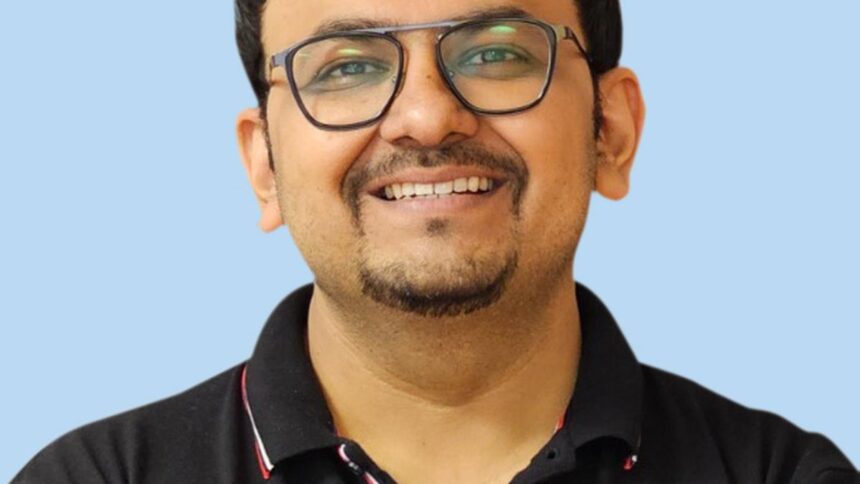
Founder & Lead Investor at Capital A
Kedia, who previously built a packaging manufacturing business that supplied to Unilever, Nestle and Philips before divesting it to PE investors, bet early on India’s industrial backbone at a time when manufacturing wasn’t yet a buzzword in venture capital. Today, as India doubles down on the China+1 strategy and deep tech hardware, his manufacturing-led fund is suddenly right where the action is.
The VC firm has an AUM of ₹550 crore and has backed Manastu Space, Matchlog, Agrileaf, Frigate, Oorja, among others.
You position Capital A as India’s first manufacturing-led VC. What does that mean in practice?
Most VCs treated manufacturing as one section of their portfolios; nobody went all-in. We decided to exclusively back industrial, hardware, and advanced manufacturing ventures. Manufacturing isn’t just assembly; it includes integrating technology, speed to market, distribution, dealer networks, and execution capability. Even in deep tech, our metric is readiness, how version four of the product compares to version one. Technology alone isn’t the moat; execution is.
What’s the fund size? How are you planning the deployment?
Fund I was ₹120 crore – fully proprietary capital – invested across 20 start-ups with average cheque sizes of $0.5 million. Fund II is ₹400 crore, and we plan to deploy it across 17–20 start-ups, investing $1 million–$1.5 million in each firm. Our thesis spans semiconductors, nanomaterials, polymer science, aerospace, defence and electronic components. In semiconductors, for example, we back satellite-lab models where start-ups design chips or develop vertical-specific IP rather than fabrication. In aerospace and defence, start-ups indigenising systems like air-data components for drones and helicopters are very exciting.
Do you prefer to be the lead investor? What role do you play on boards?
We prefer to be the lead or co-lead investor, though in some rounds we may participate as co-investors. We have the right to appoint board seats, but we don’t always exercise it immediately. We play very active board-style roles, PE-style involvement, really, working closely with founders operationally. Manufacturing is so unique and has never been done in such a structured manner that we believe additional resources and deeper support are essential. If anything, we will define the benchmarks.
What qualities do you look for in founders before investing, especially in early manufacturing start-ups?
We rarely invest pre-product or pre-revenue unless the technology readiness level is visible. We look for founders who demonstrate progress, if version four of a product is radically ahead of version one, we know serious engineering has happened. We also look for operational founders who understand factories, supply chains, and execution. Speed to market, frugality, and the willingness to listen and evolve are bigger moats than just technology patents.
What’s the exit strategy like for manufacturing-led start-ups, which traditionally have longer gestation cycles?
Exits will come from strategic players who understand manufacturing cycles. These businesses build revenue and profitability early, so they do not depend only on valuation-led exits. A lot of our companies are already attracting interest from industrial groups who value growth plus strong fundamentals. We play an eight-year horizon and take a PE-style approach.
Published on December 8, 2025