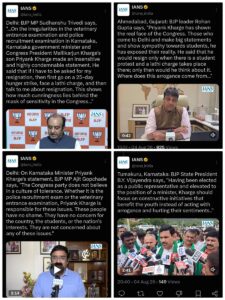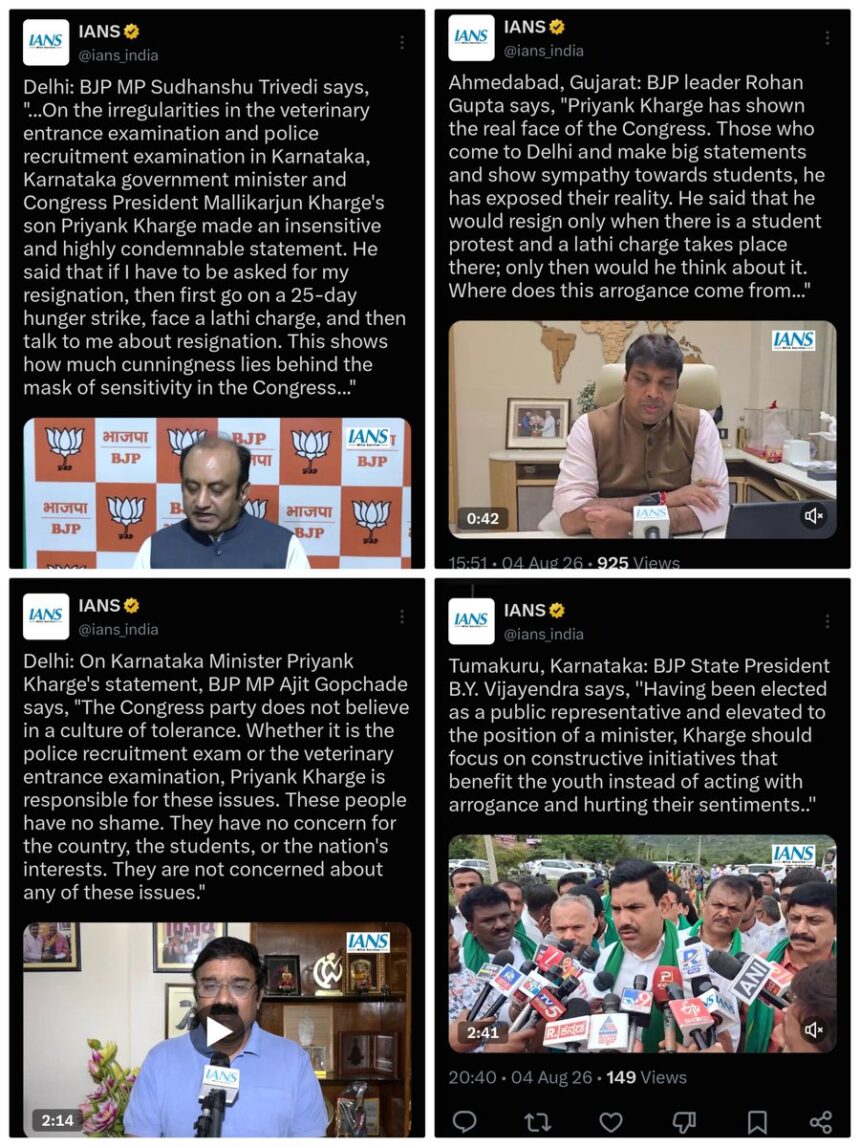

In the wake of a misleading headline that circulated for 24 hours, the video in question has been widely shared by advocates of the ruling party. Following this, various news agencies have sought responses from multiple leaders of the Bharatiya Janata Party (BJP) based on the misleading tweet. The situation has raised questions about the impact of misinformation in Indian political discourse.
Context of the Misleading Tweet
The controversy began with a post by prominent Indian political commentator, @zoo_bear, which was perceived as misrepresenting a statement by Priyank Kharge, the president of the Karnataka Pradesh Congress Committee. The tweet suggested that Kharge had mentioned “aspirants” in a context that purportedly criticized certain actions or policies, which sparked widespread discussion. However, the post was later clarified and corrected by the Press Trust of India (PTI), leading to a retraction and apology for the misinterpretation.
Response from Political Leaders
Multiple BJP leaders have since been approached to provide their reactions to the originally misleading portrayal. This has led to a flurry of defensive statements aimed at countering the narrative generated by the initial tweet. As political parties navigate these allegations, the need for responsible communication becomes evident, with BJP leaders emphasizing the importance of factual reporting and the potential consequences of misleading headlines.
The Role of Media in Political Discourse
This incident highlights the growing influence of social media platforms in shaping public opinion and dialogue surrounding political matters in India. The rapid spread of misinformation can easily incite confusion and even panic among the public and party supporters alike. This situation exemplifies how a single misleading headline can have substantial ramifications, necessitating a critical approach to media consumption and dissemination.
Why This Matters
The political ramifications of misinformation in India are significant as they can alter voter perceptions, impact party reputations, and even influence election outcomes. With social media’s pervasive reach, the line between factual reporting and sensationalism often blurs, making it essential for both media outlets and political entities to commit to transparency and accountability. Understanding the implications of miscommunication helps to foster a more informed electorate, which is crucial for the health of Indian democracy.
Frequently Asked Questions
What was the original claim that sparked the controversy?
The controversy stemmed from a tweet by @zoo_bear suggesting that Priyank Kharge criticized certain policies using the term “aspirants,” which was later clarified to be a misinterpretation.
How did PTI respond to the misinformation?
The Press Trust of India issued a correction and an apology regarding the misinterpretation of Kharge’s statement, acknowledging the mistake and retracting the earlier post.
What has been the reaction from the BJP?
BJP leaders have been approached for comments on the misleading tweet and have issued statements emphasizing the need for responsible media reporting and the potential dangers of misinformation.
Why is this incident significant in the context of Indian politics?
This incident underscores the growing concern regarding media responsibility and the impact of false information on public perception and political discourse in India, demonstrating the need for greater discernment among voters and media providers alike.