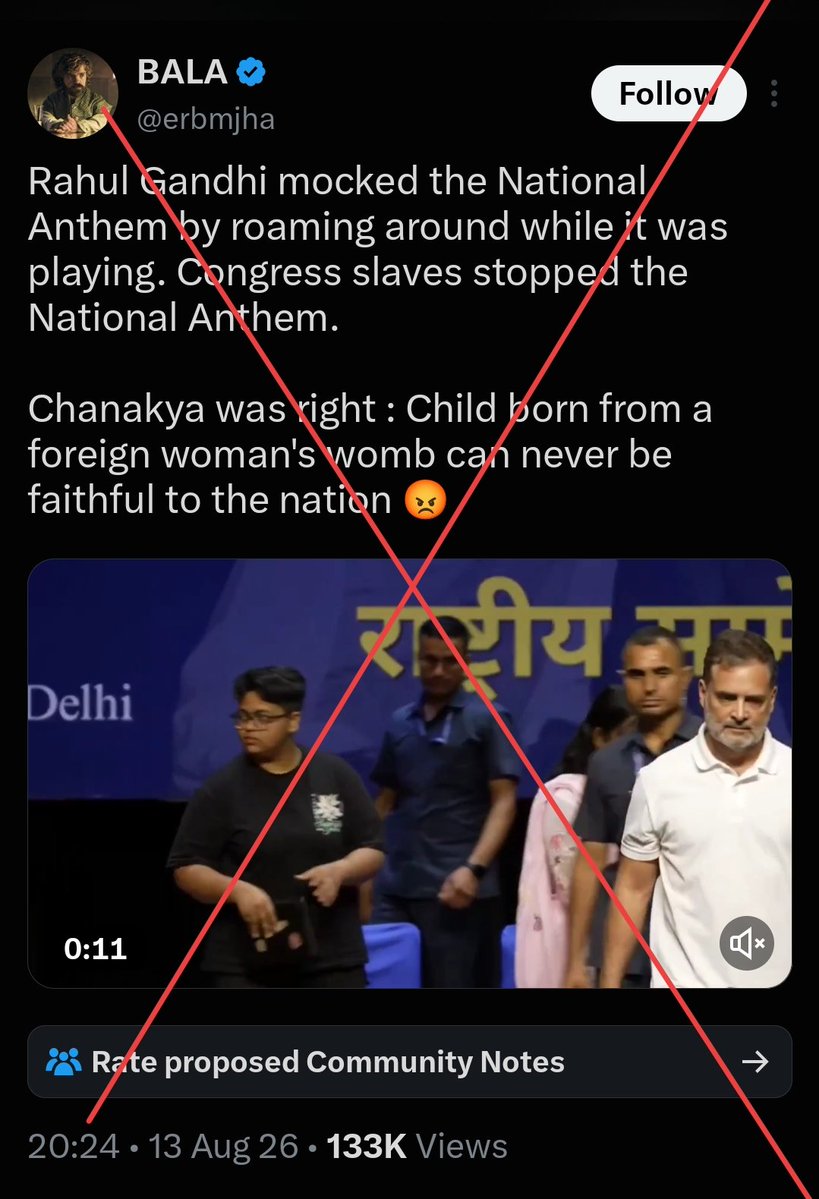

The tweet from BJP IT cell member BALA (@erbmjha) claimed that Congress leader Rahul Gandhi disrespected the National Anthem by moving around while it played. The video linked in the tweet was purported to show this incident, accompanied by a provocative remark regarding loyalty to the nation based on origins. However, the context of the video raises questions about the authenticity of this portrayal.
Context of the Claim
The controversy began when BALA shared a video clip along with his assertion that Rahul Gandhi had mocked the National Anthem. This allegation comes against a backdrop of heightened political tensions in India, especially surrounding the ruling Bharatiya Janata Party (BJP) and the opposition Congress party. Accusations of anti-national behavior are common in political discourse, particularly during election cycles or significant national events.
Understanding the Video
The shared video purports to show Gandhi moving during the National Anthem, which BALA suggests is a sign of disrespect. However, viewers pointed out that the clip may have been edited or captured in a misleading manner. In such politically charged environments, context is often lost, leading to sensationalism. Observers stressing the need for accountability in political discourse have raised concerns regarding the selective use of video footage to serve a narrative.
Political Nostalgia and Statements
BALA’s tweet invokes the legacy of Chanakya, an ancient Indian philosopher and strategist, to imply that someone born of foreign descent cannot be loyal to the nation. This reflects a deeper narrative often exploited in Indian politics, where lineage and nationality become subjects of scrutiny in a polarized environment. Such statements resonate with certain voter bases who value nationalistic sentiment, thereby amplifying division and deepening existing ideological biases.
Why This Matters
This incident highlights the modern intersection of social media and politics in India, where a single tweet can swiftly escalate into a nationwide debate. The power of narratives around nationalism and identity politics influences voter perceptions significantly. By framing opposition leaders as unpatriotic, ruling parties consolidate support from their base while further alienating dissenting voices. This trend raises concerns about the future of democratic discourse in India, as political engagement becomes increasingly polarized and transactional.
Frequently Asked Questions
What exactly did BALA claim about Rahul Gandhi?
BALA claimed that Rahul Gandhi mocked the National Anthem by moving around while it was played, calling him unpatriotic and invoking Chanakya’s philosophy regarding loyalty to the country.
Was the video shared by BALA verified?
The authenticity of the video has come under scrutiny, with many pointing out that the context may have been manipulated to portray a misleading narrative against Gandhi.
What is the political significance of this incident?
This incident underscores the utilization of social media in Indian politics to shape narratives that resonate with specific voter demographics, particularly around issues of nationalism and identity.
How does this reflect broader trends in Indian politics?
The use of selective narratives and emotional appeals is increasingly common in political discourse in India, contributing to a more polarized environment and impacting public opinion significantly.