
West Bengal BJP President Samik Bhattacharya’s Vision for the Future
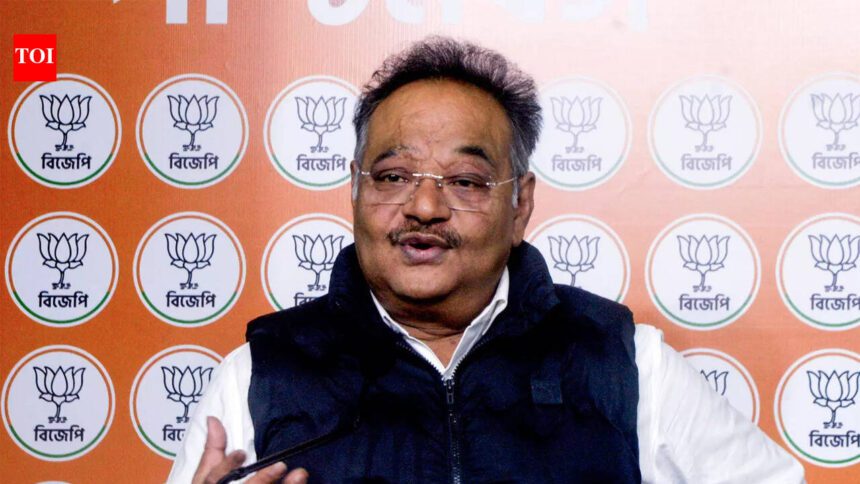
In a recent interview, Samik Bhattacharya, West Bengal BJP president, initially seemed taken aback when asked if he was a film buff. While discussing celebrities campaigning for the BJP, he shifted the focus to his affinity for theatre and poetry, specifically mentioning his admiration for poet Shakti Chattopadhyay. This preference for theatre reflects a broader cultural engagement that may distinguish him from some of his party colleagues.
Bhattacharya advocates for a “Bengal model of development,” which draws from the legacies of prominent figures such as Syama Prasad Mookerjee and Bidhan Chandra Roy, the state’s first chief minister after Independence. He envisions building on Bengal’s historical strengths rather than adopting a confrontational approach. He respects opponents, referring to Abhishek Banerjee as “smart and articulate,” which echoes a spirit of mutual respect often lacking in political discourse.
In his Salt Lake apartment, Bhattacharya has been diligently strategizing for the upcoming elections, welcoming streams of party workers seeking to refine campaign approaches. When comparing the BJP’s ground game to that of the Trinamool Congress (TMC), he points to the 2011 elections, when the TMC successfully displaced the Left despite facing its own organizational challenges. He expresses confidence, asserting that the BJP will claim a strong presence in North Bengal and cites the slogan “Janata versus Mamata.”
Bhattacharya acknowledges the BJP’s historical struggles in the Kolkata Presidency region but claims an improved performance is on the horizon, even identifying Mamata Banerjee’s Bhowanipore constituency as a tough contest. He suggests that Banerjee may have filed her last nomination, a statement that underscores his party’s ambition for a significant electoral shift. He predicts the BJP could achieve a comfortable majority, potentially winning more than 175 seats.
The politician articulates that West Bengal’s narrative may change with this election, citing slow development projects in Ashoknagar as victims of “vendetta politics,” a familiar critique aimed at the TMC. Additionally, Bhattacharya expresses frustration with the electoral roll revision process, alleging that TMC pressures have influenced poll officials and hindered voter registration efforts.
Looking ahead, Bhattacharya’s priorities for a future BJP government are clear: improving law and order, restoring democracy, and upholding constitutional norms. He characterizes infiltration as an “international conspiracy” and emphasizes the need for public awareness to tackle the issue, while carefully clarifying that no Indian Muslim’s name should be removed from electoral rolls.
On welfare initiatives, he asserts that programs like Lakshmir Bhandar would continue under BJP governance, promising to double its benefits and rebrand it as Annapurna Bhandar. When questioned about the party’s stance on cultural issues, he reassures constituents that fish will remain a staple of Bengali cuisine, humorously adding that if the BJP wins, fish would be sent to the Chief Minister.
Despite internal controversies surrounding party candidates, Bhattacharya remains unfazed, indicating that such decisions will not affect the broader electoral landscape. His message is both straightforward and layered; he aims to establish a firmer governance model while remaining within constitutional boundaries, particularly regarding education and health sectors.
With over four decades of experience in the BJP, Bhattacharya reflects on the party’s journey from its formative years to what many perceive as its most significant opportunity to gain power in Bengal. Pollsters currently estimate around 120 seats for the BJP in the 294-member Assembly, but Bhattacharya remains optimistic, referencing Haryana and Delhi’s electoral outcomes to suggest that a final push from leaders like Modi and Shah could propel the party past the halfway mark.
Unlike mass crowd-pullers such as Suvendu Adhikari or organizational strategists like Dilip Ghosh, Bhattacharya offers a civil approach to politics, quoting literary figures to navigate challenging questions. He aims to claim Bengal’s cultural icons for the BJP’s narrative, insisting that nationalist politics and cultural legitimacy can coexist.
The TMC has often depicted the BJP as an outsider seeking to disrupt Bengal’s political landscape. With Bhattacharya at the forefront, the BJP hopes to soften this perception and enhance its cultural resonance, vital for effectively challenging Mamata Banerjee’s long-standing dominance.