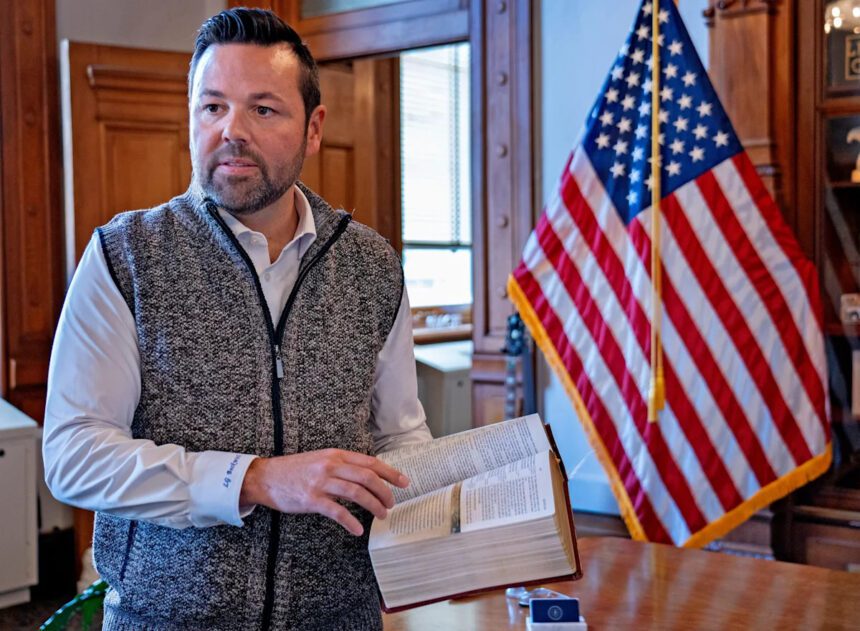

Recent comments by Indiana Lt. Gov. Micah Beckwith have sparked concern over religious freedom in the United States, particularly for Muslim communities. During a podcast, Beckwith publicly called for a ban on the Islamic call to prayer, also known as the Adhan, marking a significant departure from constitutional protections for religious practices.
Beckwith’s Stance on Muslim Practices
In a discussion hosted by conservative commentator Daniel Horowitz, Beckwith criticized Islam and advocated for prohibiting public calls to prayer. He suggested that if mosques wished to use loudspeakers to announce the Adhan five times a day, the state should intervene. Beckwith stated, “We’re not going to let you put these words of death and destruction throughout the city streets in any of our cities,” a remark that has drawn sharp criticism for its inflammatory rhetoric.
The Legal Implications of Beckwith’s Comments
Beckwith’s proposed ban runs counter to the First Amendment’s free exercise clause, which guarantees individuals the right to practice their religion freely. Legal analysts point out that while the government may intervene if a religious practice violates existing laws, they typically cannot enact laws that directly impede religious expression. This situation raises important questions about government overreach and the potential for discrimination against minority faiths, such as Islam.
The Broader Context of Religious Discrimination
Beckwith’s remarks reflect a growing trend of anti-Muslim sentiment in some parts of the United States, often fueled by political rhetoric. In recent years, Muslim communities have faced various forms of social exclusion and economic boycotts driven by a climate of fear and misunderstanding. These challenges add layers of complexity to the already precarious position of Muslims living in America, who often feel marginalized in public discourse and through policy decisions.
Why It Matters
Understanding the implications of such comments is crucial for evaluating the current state of religious freedom in the U.S. As individuals and organizations advocate for their rights, the response from government officials can serve as a barometer of broader societal attitudes towards religious diversity. If allowed to progress unchecked, this rhetoric could lead to further marginalization of Muslim communities, diminishing their ability to participate fully in civic life.
Frequently Asked Questions
What is the Adhan?
The Adhan is the Islamic call to prayer, traditionally announced five times a day from a mosque’s minaret, calling Muslims to perform their obligatory prayers.
What does the First Amendment protect?
The First Amendment protects the rights of individuals to practice their religion freely without government interference, as well as the right to free speech and assembly.
How have other U.S. cities handled similar situations?
Several U.S. cities have established regulations governing sound ordinances for public announcements, which can include calls to prayer. However, these regulations must balance public order with the protection of religious practices.
What actions can communities take against discrimination?
Communities can engage in dialogue, educate the public about different faith traditions, and advocate for policies that protect religious freedoms. Legal challenges can also be pursued in cases of overt discrimination.