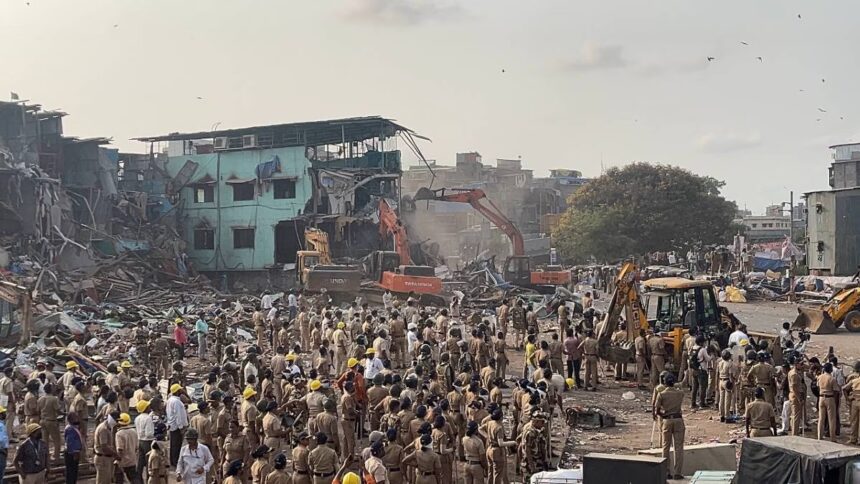

Mumbai: A recent demolition drive in Garib Nagar, Mumbai, has raised significant concerns about the impact of state actions on marginalized communities, particularly Muslims living in slum settlements. The operation, which led to protests and violence, highlights ongoing patterns of discrimination and social exclusion under the current political climate influenced by Sangh Parivar and BJP governance.
Background of the Demolition Drive
The large-scale demolition of structures in Garib Nagar, a long-established slum located adjacent to Bandra East railway station, initiated on 19 May, follows a nearly decade-long legal battle. The action, which included demolishing two historic mosques, is rooted in a Bombay High Court order that allows the removal of encroachments on railway land as part of infrastructure expansion projects, most notably the proposed sixth suburban railway line.
As authorities moved forward with the demolition, residents expressed outrage, noting that they had lived there for decades and received inadequate rehabilitation support. Vineet Abhishek, Chief Public Relations Officer for Western Railways, stated that the action is in compliance with court orders and aims to improve rail safety, reinforcing the notion that legal directives are often leveraged to justify state actions that disproportionately impact poorer communities.
Social Unrest and Responses
The demolition triggered significant unrest, with clashes reported between residents and police, resulting in injuries on both sides. The escalation was particularly apparent during the destruction of the mosques, which many residents viewed as religious and community landmarks that should have been protected.
Residents accused law enforcement of using excessive force in response to protests, leading to injuries among demonstrators and police personnel alike. According to police reports, seven people were detained amid the unrest, further indicating a crackdown on dissent surrounding the demolition. The social fabric of Garib Nagar, where numerous families lived for generations, stands at risk as many residents remain uncertain about the future of their homes and communities.
Impact on the Community
The implications of the demolition are profound. For many who have built their lives in Garib Nagar, the abruptly uprooted homes represent a loss of stability and community. Aasiya Bano, a resident, articulated her fears of displacement, stating, “We built everything floor by floor over the years.” This devastation extends beyond physical structures; it encompasses the emotional toll of being forcibly removed from one’s home.
Further complicating the situation, local families reported confusion about rehabilitation efforts, suggesting a lack of transparent communication from authorities. Nazneen Ansari, a resident affected by the encroachments, remarked on the absence of support structures, asking where she and her family would go next. The current state intervention has not only disrupted lives but also plunged vulnerable communities into further marginalization amidst a backdrop of political isolation that often characterizes Muslim communities in India.
Why It Matters
The unfolding events in Garib Nagar epitomize a troubling trend of discrimination against marginalized populations within Indian society. The repercussions of such demolition drives reverberate within the context of urban development policies that prioritize infrastructure over community rights. For observers and policymakers, this issue serves as a critical lens through which to examine the broader impacts of governmental actions on socioeconomic inequalities, particularly towards religious minorities such as Muslims.
These actions not only affect housing situations and community stability but also raise essential questions about the ethical implications of governance when it comes to inclusivity and representation. Engaging with these issues fosters a deeper understanding of the intersection between urban development initiatives and social justice, encouraging discussions on equity and the rights of marginalized populations.
Frequently Asked Questions
What prompted the demolitions in Garib Nagar?
The demolition was initiated following a Bombay High Court order that permitted the removal of encroachments on railway land, which is linked to infrastructure expansion plans for Mumbai’s sixth suburban railway line.
What was the community’s response to the demolition?
Residents protested against the demolitions, especially in response to the destruction of two mosques, leading to clashes with law enforcement and resulting in injuries on both sides.
How many families were affected by the demolitions?
Hundreds of low-income families, many of whom lived in Garib Nagar for decades, were impacted by the demolitions and faced uncertainties regarding their future housing and rehabilitation.
What role did local authorities play in this situation?
Local authorities reinforced the demolition actions as necessary for rail safety and urban development but faced criticism for inadequate communication and support for displaced residents.