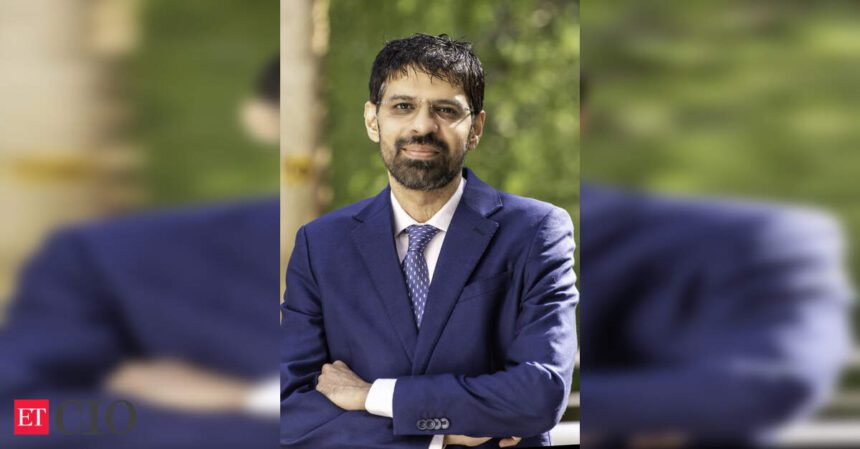

In the fast-moving consumer goods (FMCG) sector, competitive advantage emerges not just from groundbreaking innovations but from enhanced execution of standard practices like selling, stocking, and forecasting. Rajesh Gopal, the Global Chief Digital Officer at Tata Consumer Products, underscores that the industry has matured past the debate over the value of digital technologies. The central question now is how to prioritize various digital and AI opportunities.
At Tata Consumer Products Limited, the focus is on two critical areas: the initial customer interaction and the extensive decision-making chain that supports it. “In FMCG, there’s always a disproportionate focus on two specific areas: execution in the market and the supply chain behind it,” Gopal explained. While these priorities are longstanding, the methods of management and execution have evolved to be more precise and quicker.
Consumer companies today function in a constantly shifting landscape where trends can emerge swiftly, whether globally or within specific market segments. “There are always newer ideas coming in… you want to latch on to it,” Gopal noted, highlighting the urgency in responding to evolving consumer preferences, particularly in beverages and consumption patterns. The primary constraint is time: “The biggest challenge… is the speed of execution to reach the market and the right consumer.” Strain from geopolitical tensions, sourcing challenges, and fluctuating costs further complicate supply chain management. Gopal stressed the importance of building a supply chain that is not only efficient but also resilient and agile.
Implementing alternative sourcing, production, and distribution strategies is crucial in maintaining flexibility, and Gopal indicated that digital systems provide the necessary recalibration at a pace that manual processes cannot achieve. Furthermore, the demand forecasting is redefined from static predictions to a dynamic, context-aware approach. Understanding consumer wants and delivering products at the right time and place remains a significant challenge as well.
The success of speed in strategy depends heavily on the effectiveness of front-line execution. Within Tata Consumer, a platform named MAVIC, built on Salesforce, is transforming sales processes. It provides AI-driven guidance to salespeople at retail outlets based on historical sales data and current buying patterns, effectively turning each interaction into a data-informed decision. This system also monitors sales activities, allowing for real-time insights into sales processes.
The implications are subtle yet impactful: the role of the salesperson now collaborates with technological insights. Additionally, AI is employed to address inconsistencies in field sales, optimizing routes to reduce travel time. In instances where a salesperson is unavailable, the system can autonomously engage with retailers to replicate typical sales conversations.
A parallel development involves a more responsive supply chain that shifts its focus from static averages to signals from various data sources. “We are getting better with the entire demand forecasting,” Gopal stated, emphasizing how e-commerce and quick commerce data can inform broader operational decisions. For instance, shifts in demand during specific events, like festivals or local activities, can affect supply chain dynamics significantly.
Not all advancements are visible to the consumer; many occur in earlier stages like sourcing and quality control. In tea procurement, for example, Tata Consumer is integrating machine-based inspection technology. “We have introduced an AI machine… to actually be able to look at and then say, is this genuine? Not genuine?” This machine capability transforms the scope and accuracy of quality checks, allowing for comprehensive evaluations beyond manual sampling.
Moreover, traceability initiatives are being reinforced to track ingredient origins and their journey through the supply chain. “We have the capability… to get details right from the source of every material going into that product,” Gopal noted, illustrating a commitment to transparency and quality.
Despite these technological advancements, Gopal recognizes that the greatest challenge lies in change management rather than technology itself. “The most expensive one is getting the change management done,” he stated. Building, acquiring, or adapting technology is comparatively easier than achieving widespread adoption. The organization employs small, focused teams called pods—about seven to eight members each—to address specific issues such as forecasting or routing, promoting incremental advancements over sweeping transformations.
Ultimately, Gopal envisions a broader ambition beyond isolated use cases: “How do we step up our GTM and make it best in class, AI enabled?” he said, highlighting both immediate and long-term priorities. The aim is to cultivate an AI-first culture within the enterprise, embodying both capabilities and a shift in mindset. While progress is evident, Gopal acknowledges that there remains considerable work ahead. In an industry characterized by tight margins and relentless speed, the ongoing evolution—subtle yet deeply embedded—could drive the most meaningful transformation.