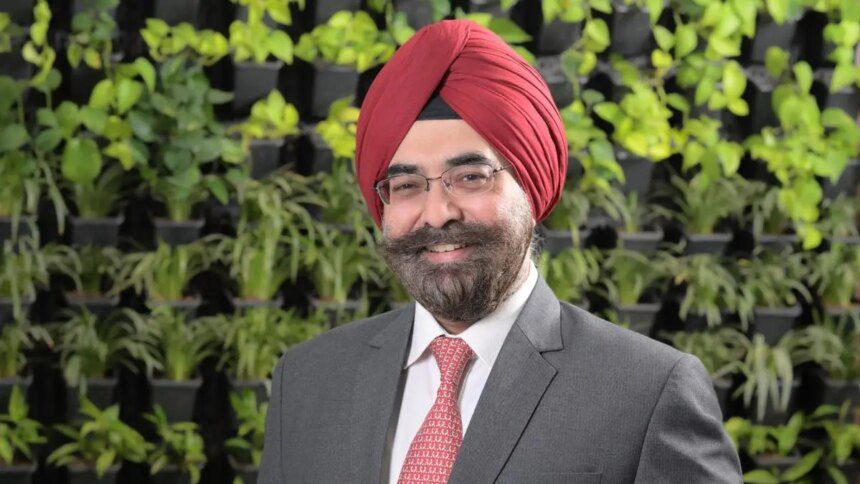

As Indian firms ramp up mergers and acquisitions (M&A) to enhance their market presence and capabilities, multinational companies (MNCs) are increasingly viewing India as a strategic manufacturing and export base. PD Singh, CEO of Standard Chartered Bank India & South Asia, cites record-level corporate confidence, aiding the surge in deal-making across various sectors.
Record M&A Activity
According to PD Singh, this year has seen an unparalleled level of M&A activity among Indian corporates, with strategic purchases both locally and internationally. “We have never seen so much M&A activity happening as we have seen in this calendar year,” Singh noted in a recent interview with businessline. The uptick in acquisition efforts comes from diverse motivations, including securing new distribution networks and enhancing manufacturing capabilities.
This trend is particularly pronounced in sectors such as automobiles, chemicals, and manufacturing, where companies are focused on acquiring assets that can bolster their operational capacities. Corporate confidence is growing, as evidenced by capacity utilization levels nearing 75-80% in multiple industries—a clear signal that firms are aggressively pursuing expansion.
International Investment Trends
The changing landscape of global geopolitics has also favored India, with many MNCs showing a keen interest in establishing or expanding their operations in the country. Singh pointed out that more than two Global Capability Centres (GCCs) are registering in Karnataka every week, showcasing the influx of foreign firms eager to tap into Indian talent in engineering, digital services, and artificial intelligence.
Furthermore, Standard Chartered identifies that one in every four MNCs operating in India relies on its services, reflecting strong demand for acquisition financing, market-entry advisory, and capital-raising activities. This increasing international interest in Indian markets corresponds with a significant rise in foreign currency funding, estimated at approximately $15.5-16 billion this year, highlighting the strategy shift away from traditional bank loans toward overseas bond markets for financing.
Evolution of Financing Patterns
With the evolution in financing methods comes an opportunity for banks like Standard Chartered to diversify their advisory services beyond conventional lending. Corporate clients are exploring avenues such as bond markets for efficient capital-raising solutions. Singh noted that the Indian debt capital markets remain underutilized, accounting for merely 16-17% of GDP compared to China’s 36-37%. “I think there’s a long runway there as well,” he remarked on the growth potential in this sector.
As Indian corporates continue to expand, they are likely to engage in more complex financial strategies, tapping into various markets and leveraging global relationships. This presents a prospect for financial institutions to provide comprehensive support in areas such as risk management and M&A advisories.
What This Means
The surge in M&A activities among Indian firms reflects a maturing corporate landscape that is becoming more aggressive in pursuing growth opportunities. MNCs’ increasing focus on India as a manufacturing base not only boosts local employment but also enhances technology transfer and drives innovation within the country. For investors, the rising trend in bond market usage showcases a shift in how companies are approaching financing, moving away from traditional instruments and signaling a more sophisticated capital market evolving in India.
Frequently Asked Questions
What factors are driving the increase in M&A activity in India?
The increase is driven by corporate desires for market access, technology acquisition, and enhanced manufacturing capabilities, supported by robust corporate confidence and growing capacity utilization in various industries.
How are Indian firms financing their acquisitions?
Indian corporates are increasingly turning to overseas bond markets for financing, moving away from traditional bank loans. This shift is evident in the recent surge of approximately $15.5-16 billion in foreign currency funding raised this year.
What impact does the expansion of Global Capability Centres have on India’s economy?
The growth of GCCs boosts employment and brings advanced skills and technologies to the Indian market, enhancing India’s position as a global hub for engineering and digital services.
Why is Standard Chartered focused on advisory services for M&A?
With the increase in M&A activity, there’s greater demand for specialized advisory services, allowing banks like Standard Chartered to support clients in more complex financial deals beyond traditional lending methods.