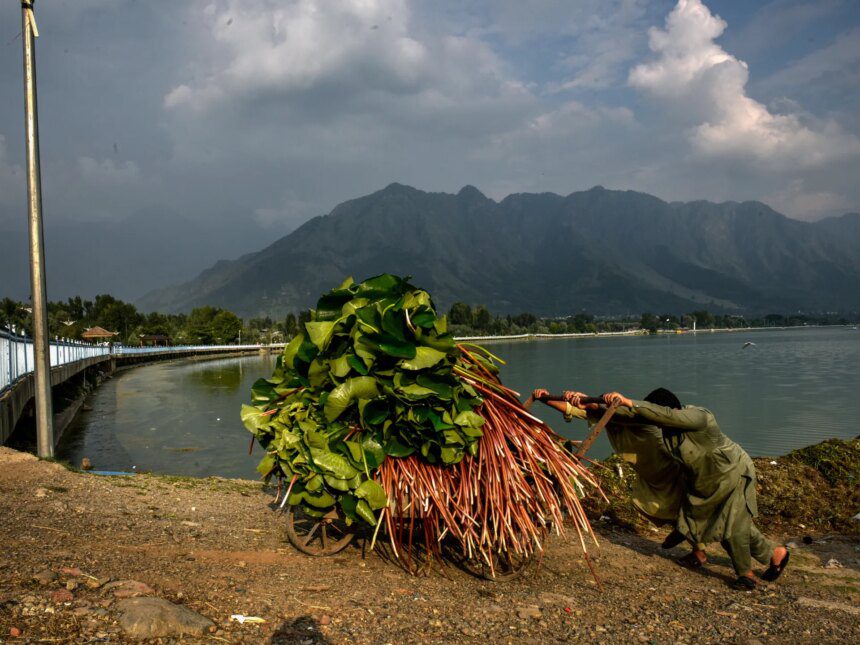

Dal Lake, once the crowning jewel of Srinagar and a pillar of Kashmir’s tourism, is facing severe degradation due to environmental pressures and human activities. The lake, which played a key role in the region’s culture and economy, is now under threat from pollution, unregulated development, and climate change, making its future increasingly precarious.
Environmental Crisis: Pollution and Overpopulation
Dal Lake has long been celebrated for its breathtaking beauty, clear waters, and unique floating gardens. Today, however, it is suffering from a variety of environmental issues. The inflow of untreated sewage and plastic waste has transformed its waters, turning them murky and unhealthy. With a significant part of Srinagar’s population depending on the lake for livelihoods, ranging from tourism to fishing, this level of pollution poses critical health risks.
The increase in local population has also led to a surge in demand for infrastructure and housing, further stressing the lake’s ecosystems. As more people settle in the vicinity, the problem of waste management becomes exacerbated. Tourists, who once flocked to admire the lake’s tranquility, now encounter a more polluted and diminished version of this natural wonder.
Impact of Urbanization and Climate Change
The urban sprawl around Dal Lake has contributed significantly to its deterioration. Unregulated construction along its shores and land encroachment have cut down its surface area and disrupted its delicate ecological balance. In recent years, numerous reports highlight the rise of illegal constructions that compromise not only the lake’s area but also the livelihoods of those who rely on it.
Simultaneously, climate change is acting as a catalyst for this decline. Increasingly erratic weather patterns, including unpredictable rainfall and higher temperatures, are affecting the hydrology of the region. The growth of invasive weed species, fueled by higher temperatures and nutrient inflow from pollution, has further complicated the lake’s recovery. Stakeholders, including environmentalists, local residents, and governance bodies, are left grappling with threats that compound both local ecological and socio-economic challenges.
Conservation Efforts and the Road Ahead
Despite the looming crisis, there have been several initiatives aimed at cleaning and conserving Dal Lake. Periodic clean-up drives organized by the local government and community groups reflect a growing awareness of the lake’s plight. However, these efforts are often hampered by short-term focus and lack of sustained funding. The government has launched conservation schemes, yet the execution of these plans has often been hindered by bureaucratic inefficiencies and inadequate public involvement.
The future of Dal Lake requires integrated strategies combining ecological restoration, stricter pollution regulations, and community participation. Engaging local stakeholders in the decision-making process can ensure that both economic needs and environmental sustainability are balanced effectively.
What This Means
The degradation of Dal Lake is emblematic of broader environmental challenges facing India, particularly in regions with high population density and fragile ecosystems. As urban areas expand and climate change impacts grow more severe, the need for effective environmental governance becomes even more urgent. For Indian readers, the situation serves as a critical reminder of the delicate balance between development and conservation. The fate of Dal Lake may well dictate the future trajectory of other natural resources throughout the country.
Frequently Asked Questions
What are the primary causes of Dal Lake’s deterioration?
The primary causes include pollution from untreated sewage and plastic waste, unregulated construction along its shores, land encroachment, and climate change effects such as erratic rainfall and rising temperatures.
How does Dal Lake contribute to the local economy?
Dal Lake is crucial for local economies, providing livelihoods through tourism, fishing, and boating activities. Many residents rely on the lake for their daily transportation and commercial activities.
What conservation efforts are currently in place for Dal Lake?
There are periodic clean-up campaigns and government conservation schemes aimed at restoring the lake’s ecosystem. However, these efforts often lack sustained funding and community involvement.
Why is it important to address Dal Lake’s ecological issues now?
Addressing these issues is critical not only for preserving local biodiversity and ecosystems but also for the health and livelihood of the communities that depend on the lake. Long-term neglect could lead to irreversible damage that diminishes both cultural heritage and economic opportunities.