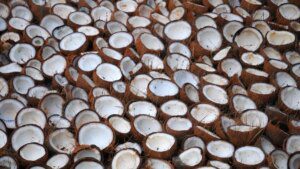
The copra market in Tamil Nadu is poised for an upward trend this October, with prices expected to hover between ₹145-150 per kg. This projection is underpinned by a surge in demand linked to the upcoming festival season, as revealed by the Domestic and Export Market Intelligence Cell (DEMIC) from the Tamil Nadu Agricultural University.
Analysis of Copra Prices
DEMIC has utilized 25 years of data on copra prices from the Anaimalai market to project this month’s pricing. Their insights indicate a favorable outlook for farmers selling quality copra, anticipating prices ranging from ₹145 to ₹150 per kg due to robust demand dynamics initiated by seasonal festivities.
The analysis integrated feedback from traders as part of a comprehensive market survey, further reinforcing the expected price stability and potential increases based on consumer demand driven by upcoming festivals.
The Role of Festivals in Demand Surge
With multiple festivals approaching, including Diwali and Pongal, the demand for copra is expected to see significant escalation. These celebrations traditionally involve increased culinary activities, wherein copra serves as an essential component in various dishes and offerings.
“According to the trade sources, the ensuing festival occasions firm up the demand for copra,” remarked DEMIC, advising farmers to strategize their selling decisions in line with these market conditions.
Impact on Coconut Farming and Economy
Coconut remains a crucial plantation crop in India, supporting not only the livelihoods of millions of farmers but also an extensive network of processing and value-added industries. India stands as the largest producer of coconuts globally, contributing over 30% of the world’s total production. The Ministry of Agriculture and Farmers’ Welfare’s final estimates for 2024-25 reveal that India produced approximately 139.70 lakh tonnes of coconuts across 21.90 lakh hectares.
In Tamil Nadu alone, the state yielded an estimated 43.04 lakh tonnes from 5.06 lakh hectares, establishing itself as the top coconut-producing state in India. Key districts like Coimbatore, Tiruppur, Thanjavur, Dindigul, Theni, Kanniyakumari, and Erode dominate this agricultural landscape, highlighting the sector’s importance in providing rural employment and bolstering farm incomes.
What This Means
The projected rise in copra prices can provide a much-needed financial boost to Tamil Nadu’s farmers, especially as they prepare for the festival season that typically leads to increased consumer spending. This seasonal uptick not only benefits individual farmers but also enhances the broader economic landscape by positively impacting related industries, from processing to retail. As demand rises, it could foster growth in rural employment, strengthen supply chains, and improve the overall agricultural economy in one of India’s top coconut-producing regions.
Frequently Asked Questions
What factors contribute to the price of copra?
Factors influencing copra prices include supply levels, demand fluctuations due to seasonal factors (such as festivals), and overall global market trends in coconut products.
How does Tamil Nadu’s copra production compare to other states?
Tamil Nadu is the largest producer of coconuts in India, contributing significantly to the national output. Together with Karnataka, Kerala, and Andhra Pradesh, they account for about 92% of the country’s coconut production.
What are the primary uses of copra in India?
Copra is primarily used in the production of coconut oil, which is a staple cooking oil in many Indian kitchens. It is also used in the production of various snacks and desserts during festivals.
Why is this increase in copra prices significant for farmers?
An increase in copra prices is significant as it directly impacts farmers’ income and livelihoods, especially in a rural economy where agriculture is a major source of income. Higher prices during peak demand seasons can enhance financial stability for these farmers.