
Summary of the Hijab Controversy
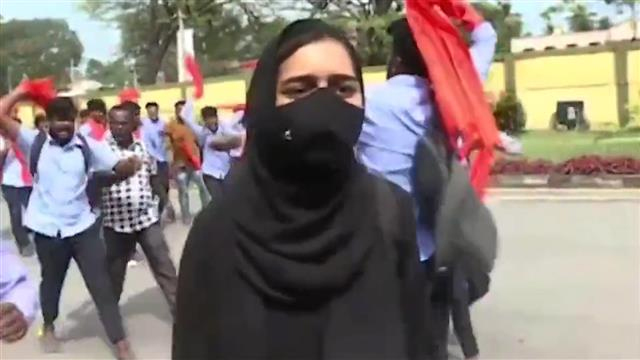
The ongoing hijab controversy in India, particularly in Karnataka, has sparked significant debate after a Muslim student named Muskan boldly confronted a Hindu mob while wearing her hijab. This incident drew international attention, particularly on social media platforms, where her response of chanting “Allahu Akbar” led to widespread support for her stance.
Context of the Incident
The incident took place at PES College in Karnataka, where Muskan faced a mob of students wearing saffron shawls. They were chanting slogans to intimidate her for wearing a hijab, a religious garment significant in Muslim culture. Muskan maintained her composure and countered their taunts with her own chants, effectively showcasing her courage amidst intimidation.
Muskan explained that she was simply on her way to submit an assignment when the harassment began. Despite the hostile environment, she managed to navigate her way into the college. Her determination not only reflects her personal strength but also highlights the ongoing issues faced by Muslim women in India regarding their choice of attire.
Reactions and Social Media Impact
The confrontation quickly gained traction online, especially with the hashtag #AllahuAkbar trending in India and Pakistan. Users praised Muskan for her bravery in standing up against what they saw as communal aggression. This viral moment ignited discussions about the broader implications of wearing religious symbols in educational institutions and the rights of women to express their identity freely.
In a separate but related response, Nobel laureate and education rights advocate Malala Yousafzai condemned the actions against Muslim women. She expressed her horror over the injustice of preventing girls from attending school due to their hijabs, urging Indian leaders to halt the marginalization of Muslim women. Her involvement lends further significance to the discourse surrounding this incident.
The Broader Implications
This incident and the reactions it has spurred resonate deeply within the societal fabric of India. The hijab controversy transcends a mere dress code dispute; it represents a clash between religious expressions and the secular values espoused by educational institutions. The fearlessness displayed by Muskan is emblematic of a growing resistance among marginalized groups against oppressive narratives.
The increasing visibility of such skirmishes raises concerns about communal harmony and the rising tide of intolerance in society. The social media response indicates a potential shift in public sentiment towards greater support for communal rights and freedoms, compelling a reevaluation of the policies that govern educational environments across India.
Why This Matters
The hijab row in India reflects broader themes of religious identity and the rights of women in a diverse society. As political tensions rise around these issues, the incident serves as a crucial marker for understanding communal dynamics in India today. It highlights not only the resilience of individual voices like Muskan’s but also underscores the importance of safeguarding freedoms of expression and faith in educational contexts.
With ongoing debates surrounding secularism and communal rights, public discourse is likely to intensify. It is vital for political leaders to engage constructively with these challenges, ensuring that all communities feel secure in their identity without fear of discrimination or violence.
Frequently Asked Questions
What triggered the hijab controversy in Karnataka?
The controversy was triggered by the harassment of Muslim students wearing hijabs by Hindu students in various educational institutions, culminating in incidents like Muskan’s confrontation.
How did social media react to the incident?
The incident prompted a wave of support for Muskan on social media, with hashtags like #AllahuAkbar trending, indicating widespread recognition of her bravery and the need for communal tolerance.
What is Malala Yousafzai’s stance on the hijab row?
Malala Yousafzai condemned the actions against Muslim women in India and called for leaders to stop the marginalization of Muslim girls who wish to attend school wearing hijabs.
Why is this issue significant for Indian society?
This issue exposes the ongoing struggles surrounding religious expression and women’s rights in India, and it may influence the discourse on secularism, identity, and communal relations in the country.