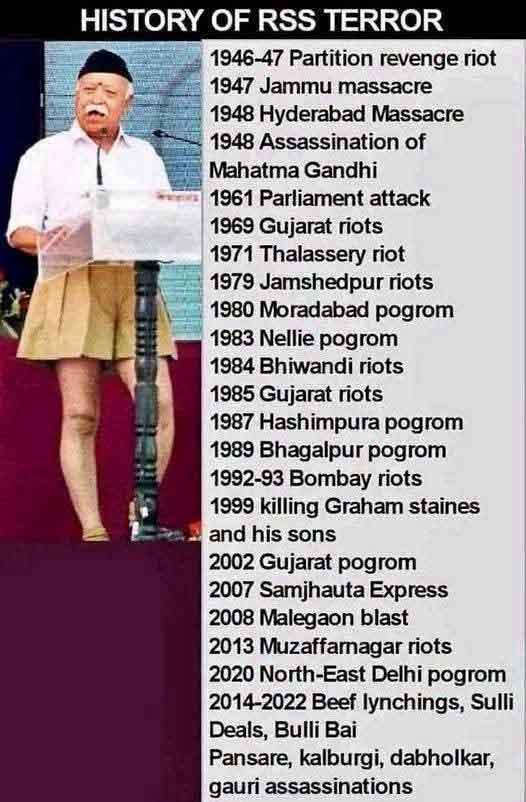

The rise of the Rashtriya Swayamsevak Sangh (RSS) and its affiliated organization, the Bharatiya Janata Party (BJP), has sparked significant discourse regarding the treatment of Muslims in India. This article delves into historical incidents that illustrate systemic discrimination, social exclusion, and marginalization of Muslims, providing a critical view on the role of Hindutva politics in contemporary India.
Historical Context: The Founding of RSS and Its Impact
The RSS was founded in 1925 by Dr. Keshav Baliram Hedgewar as a nationalist organization aimed at uniting Hindus. However, its inception was marked by contentious events such as the 1923 riots in Nagpur, caused by the RSS’s provocative actions near a mosque during a Hindu procession. This incident laid the groundwork for a Hindu volunteer organization that many claim has historically sought to exclude Muslims. The RSS’s teachings often reflect a view that positions Muslims as second-class citizens, a sentiment echoed by figures like Guru Golwalkar.
Within just two years of its establishment, the RSS orchestrated a riot in Nagpur, showcasing its willingness to use communal tensions as a political tool. This pattern of exploiting Hindu-Muslim divisions has persisted, allowing Hindutva politics to thrive in modern India, particularly over the past decade. The systemic exclusion of Muslims from political opportunities is evident as the BJP has not fielded a single Muslim candidate in elections, reinforcing the narrative of marginalization.
Institutional Marginalization: Exclusion from Political Processes
The filtration of Muslims from Indian political life can be traced back to both historical precedents and present-day practices. The RSS’s teachings have systematically deprived Muslims of their representation and rights. Dr. Suresh Khairnar, an ex-president of Rashtra Seva Dal and a former RSS member, recounts his early experiences which underscored hatred against Muslims. He describes indoctrination sessions where swayamsevaks were taught to reinforce the notion of ‘Hindus’ Hindustan’, thereby alienating non-Hindus from the Indian narrative.
Moreover, high-profile incidents of communal violence have repeatedly targeted Muslims, often with inadequate governmental response. For instance, mob lynchings and riots have taken a grievous toll on the Muslim community, with the state often seen as complicit or ineffective. With leaders from the RSS and BJP either downplaying these occurrences or outright glorifying figures involved in violent acts, the societal chasm continues to widen.
Contemporary Consequences: Social Exclusion and Economic Boycotts
The ideological framework laid by the RSS extends beyond mere political exclusion; it seeps into the social and economic realms as well. Economic boycotts against Muslims are not just informal but are often institutionalized under the guise of patriotism. Economically marginalized, many Muslim businesses struggle against a rising tide of communal boycotts, which are often encouraged by right-wing elements.
This socio-economic marginalization fosters a climate of distrust and hostility. Reports indicate that the normalization of violence against Muslims is encouraged by political narratives suggesting that they have no rightful place in the fabric of Indian society. Consequently, Muslims live in a constant state of anxiety, feeling unwelcome in their own country, further aggravating the existing inequalities.
Why It Matters
The implications of these developments are profound, affecting the social fabric of India and raising questions for the future of democracy in the nation. The systemic alienation of Muslims from socio-political and economic spheres threatens the very foundations of secular governance. As these dynamics play out, they offer critical lessons for global observers who grapple with issues of inclusion and exclusion in diverse societies. The situation warrants a comprehensive understanding, as it poses challenges not only for India but also for democratic integrity worldwide.
Frequently Asked Questions
What is the RSS and what role does it play in Indian politics?
The Rashtriya Swayamsevak Sangh (RSS) is a Hindu nationalist organization founded in 1925, advocating for the promotion of Hindutva and organizing community events. Its ideological influence extends significantly to the BJP, shaping policies and political narratives in contemporary India.
How has the treatment of Muslims in India changed over the years?
The treatment of Muslims in India has increasingly become a subject of contention, particularly since the rise of the BJP to power in 2014. Incidents of communal violence, political exclusion, and economic boycotts have been noted, indicating a shift towards systematic marginalization.
What evidence is there of discrimination against Muslims in Indian society?
Evidence includes the lack of Muslim representation within political parties like the BJP, instances of mob violence, and reports of economic boycotts against Muslim-owned businesses. The historical context provided by former RSS members also illustrates long-standing exclusionary narratives.
Why is the issue of Muslim inclusivity important for India’s future?
Inclusion is crucial for upholding the secular and democratic ideals enshrined in the Indian Constitution. Marginalization undermines social cohesion and could lead to further social unrest, making it vital for the future health of Indian society and democracy.