
Asaduddin Owaisi Challenges RSS Ideology on Muslim Inclusion
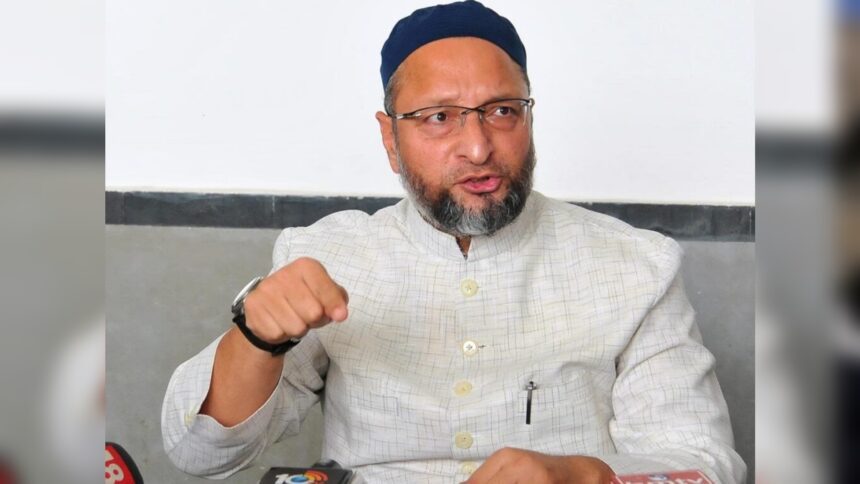
The president of the All India Majlis-e-Ittehad-ul-Muslimeen (AIMIM), Asaduddin Owaisi, has publicly criticized the Rashtriya Swayamsevak Sangh (RSS) following comments by RSS chief Mohan Bhagwat on Hindu-Muslim unity. Owaisi’s critique stems from a historical examination of prominent Hindutva figures, raising questions about the sincerity of the RSS’s call for Muslim inclusion in Indian society.
Historical Context of RSS Ideology
Owaisi sharply pointed out that Bhagwat’s remarks, made in New York, are at odds with the foundational texts of the RSS and its key figures. He highlighted historical writings from leaders such as Vinayak Damodar Savarkar, K.B. Hedgewar, and M.S. Golwalkar, arguing that the organization has a long-standing ideology that does not support Muslim integration. Hedgewar’s active opposition to Congress initiatives aimed at Hindu-Muslim unity during India’s struggle for independence indicates a deep-seated conflict within the RSS regarding communal harmony.
Furthermore, Owaisi referenced Golwalkar’s infamous description of “one flag, one leader, one ideology,” which raises concerns about the depiction of Muslims and Christians as internal threats, as outlined in Golwalkar’s seminal work, Bunch of Thoughts. This perspective, he argues, is mirrored in contemporary issues such as the controversial Uniform Civil Code and the implications of anti-conversion laws that disproportionately impact religious minorities.
Current Political Climate and Response
Owaisi’s assertions resonated amid heightened scrutiny over the treatment of minority communities in India, particularly in the context of the 2002 Gujarat riots, often cited as emblematic of the systemic targeting of Muslims under policies influenced by the RSS and the ruling Bharatiya Janata Party (BJP). He urged Bhagwat to publicly engage with these historical texts, suggesting that an informed interpretation could sway public opinion about the RSS’s true ideological stance.
In contrast, Maulana Khalid Rasheed Firangi Mahali, a member of the All India Muslim Personal Law Board, offered a tempered response, suggesting that Bhagwat’s message of unity must translate into tangible change on the ground. He emphasized the gap between statements made in international forums and the prevailing conditions for Muslims in India.
Credibility and International Outreach
Congress leader Rashid Alvi also raised questions about the appropriateness of Bhagwat’s statements made in the United States. He argued that addressing Hindu-Muslim unity issues abroad may imply that the situation in India is dire, which could undermine the credibility of such proclamations. His concerns reflect the increasing visibility of communal tensions in public discourse, emphasizing that significant differences between official rhetoric and societal realities can erode trust both domestically and internationally.
Why It Matters
The ongoing debate surrounding the RSS’s ideology is crucial for understanding the socio-political dynamics in India today. The implications extend beyond national borders, affecting India’s global image as a secular democracy. The treatment of minority communities, particularly Muslims, raises alarms regarding human rights and communal relations. For stakeholders in international relations, academia, and civil rights organizations, the discourse surrounding Hindu-Muslim unity is indicative of broader societal challenges, making it essential for global audiences to engage critically with these issues.
Frequently Asked Questions
What is the RSS’s historical stance on Muslim integration in India?
The RSS, founded by K.B. Hedgewar, has historically opposed efforts for Hindu-Muslim unity, as indicated in writings by key figures like Golwalkar, who labeled Muslims as internal threats.
How do contemporary policies reflect RSS ideology?
Current policies, such as the Uniform Civil Code and anti-conversion laws, are viewed by critics as extensions of RSS ideology, disproportionately affecting Muslim communities and other religious minorities.
What are the implications of Owaisi’s critique of the RSS?
Owaisi’s critique underscores the ongoing tensions between religious communities in India and highlights the importance of historical context in understanding contemporary political issues.
How is the international community responding to India’s treatment of its Muslim population?
International responses vary, with concern voiced over reports of discrimination and violence against Muslims; statements by Indian leaders abroad may be perceived as disregarding ongoing domestic issues.