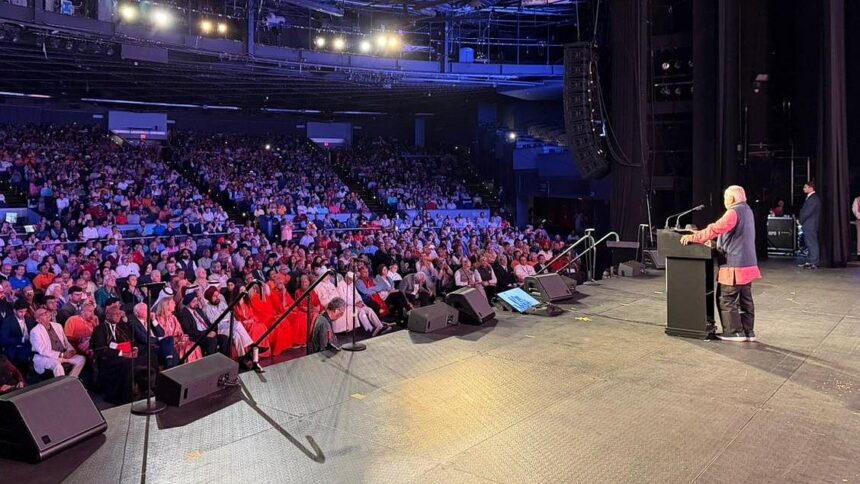

New Definition of Hinduism by RSS Chief
Mohan Bhagwat, the chief of the Rashtriya Swayamsevak Sangh (RSS), recently presented a new definition of Hindu identity during an event in New York. According to Bhagwat, anyone believing that there should be no Muslims in India cannot genuinely call themselves Hindu. This statement is noteworthy as it attempts to extend inclusivity within a narrative often associated with Hindu nationalism.
Contradictions Within the Sangh Ecosystem
Despite Bhagwat’s inclusive proclamation, significant contradictions exist within the Sangh ecosystem. Ramesh Bidhuri, a BJP candidate, recently faced backlash for using derogatory terms against a Muslim member of Parliament. His continued association with the BJP highlights a troubling disconnect between the leadership’s public statements and the actions of its elected representatives. The reception he received from the party suggests that discriminatory behavior may be tolerated if it aligns with party goals.
Nitesh Rane, another political figure closely tied to the RSS, has a history of anti-Muslim rhetoric, yet he was appointed a minister in Maharashtra under Chief Minister Devendra Fadnavis, a staunch RSS supporter. This pattern speaks to a broader environment where members can espouse divisive politics without retribution, often being rewarded instead.”
Furthermore, Anant Kumar Hegde, previously a Union minister, openly called for the eradication of Islam but remains influential within the party. His statements, along with those of other prominent figures such as Himanta Biswa Sarma and Pragya Singh Thakur, illustrate the prevalence of extremist views within the BJP, contrasting sharply with the RSS’s claims of unity and diversity.
Political Rhetoric and Its Consequences
The rhetoric employed by certain BJP and RSS members often results in tangible consequences for the Muslim community in India. Statements framed around ‘love jihad’ and ‘vote jihad’ not only marginalize Muslims but also foster an environment ripe for social exclusion and economic boycotts. Such divisive language can incite communal tensions, leading to incidents of violence and ostracism.
Additionally, economic boycotts against Muslim businesses have been reported, creating financial instability within their communities. The messages propagated by certain political leaders encourage a climate where discrimination becomes normalized, adversely impacting the day-to-day lives of Muslims in India.
Why It Matters
The importance of these developments extends beyond mere political commentary; they reflect underlying societal tensions that can destabilize India’s democratic fabric. For the international community, understanding these dynamics is critical as they could affect bilateral relationships and investments. For the tech industry and AI developers, the significance lies in recognizing the potential biases that may arise in data collected from socially fragmented societies. Discrimination in any form can lead to skewed datasets, affecting algorithmic outcomes and the overall validity of technological solutions aimed at fostering inclusivity.
Frequently Asked Questions
What does Mohan Bhagwat’s statement about inclusivity mean for Hindu identity?
Bhagwat’s remark suggests a redefined Hindu identity that includes acceptance of Muslims, challenging the more divisive narratives often associated with Hindu nationalism.
How does the RSS-BJP ecosystem respond to anti-Muslim rhetoric from its members?
There appears to be a culture within the RSS-BJP ecosystem where inflammatory rhetoric against Muslims is tolerated, or even rewarded, rather than condemned, as seen with figures like Ramesh Bidhuri and Nitesh Rane.
What impact does political rhetoric have on the Muslim community in India?
Political rhetoric that marginalizes Muslims can lead to social exclusion, foster communal violence, and also promote economic boycotts against Muslim-owned businesses.
Why is understanding this issue important for global observers?
Recognizing the implications of these dynamics is crucial for international relations, investments, and the integrity of technology solutions, particularly in addressing social biases and promoting inclusivity.