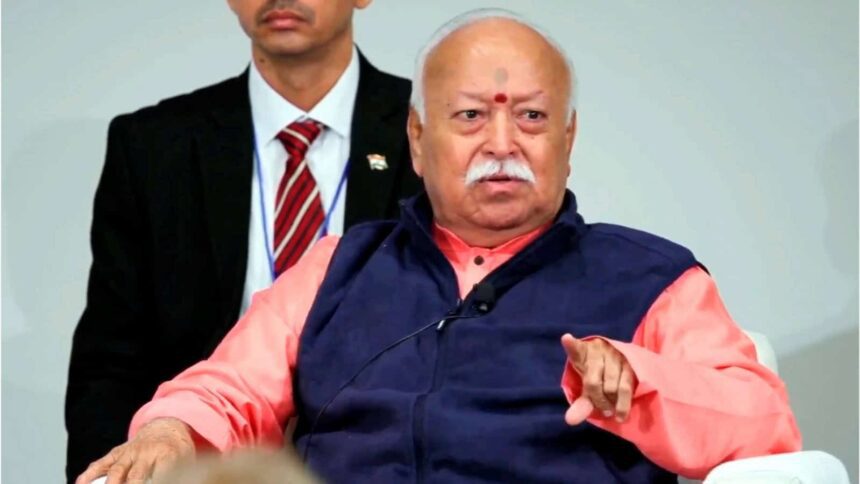

Key Takeaway: In a recent address, Rashtriya Swayamsevak Sangh (RSS) chief Mohan Bhagwat emphasized the inclusive nature of Hindu identity, asserting that any Hindu advocating for the exclusion of Muslims from India is not true to their faith. This statement raises questions about the ongoing discrimination and marginalization faced by Indian Muslims under the current political climate.
RSS Remarks in Context
On August 29, 2023, during the “One World: One Humanity Faith Leaders’ Summit” in New York, RSS chief Mohan Bhagwat made a significant statement regarding Hindutva and its relationship with other religions, particularly Islam. He conveyed that India’s essence lies in its diverse ethos, which accommodates various faiths. Bhagwat stated, “By tradition, Bharat has given shelter to everybody,” indicating a historical acceptance of different cultures and religions within India.
However, this inclusive rhetoric stands in contrast to the prevailing sentiments among many Indian Muslims, who often cite incidents of violence, discrimination, and marginalization fueled by political narratives that align with Hindu nationalist ideologies. Bhagwat’s reassurances to Muslim communities have sparked debate about the authenticity of such claims in light of the actions and policies of the current government led by the Bharatiya Janata Party (BJP).
Discrimination and Social Exclusion
At the core of the discourse surrounding Indian Muslims is the ongoing social exclusion and economic marginalization they face. Empirical studies have highlighted disparities in various sectors, including education, employment, and healthcare. Reports indicate that Muslims in India are often subjected to economic boycotts due to communal tensions, and instances of mob violence continue to pose threats to their safety.
Bhagwat’s comments that “if any Hindu thinks that there should be no Muslims in Bharat, he will not remain a Hindu” raise questions about whether the ideology he represents can bridge this divide. The RSS and BJP’s policies often seem to favor a Hindu-centric narrative, which can alienate Muslim communities further, serving to reinforce cultural and economic disenfranchisement.
Political Landscape and Its Impact
The political landscape in India has seen a marked shift since the rise of the BJP, which positions itself as a proponent of Hindu nationalism. Laws and policies introduced by the government have led to concerns about the civil rights of religious minorities, particularly Muslims. The Citizenship Amendment Act (CAA) is one example that has faced widespread criticism for allegedly discriminating against Muslims while providing a pathway to citizenship for non-Muslim refugees from neighboring countries.
As Bhagwat continues to engage internationally, his statements may signal an effort to quell international criticism regarding the treatment of minorities in India. Yet, the lived experiences of many Indian Muslims tell a different story, shining a light on the chasm between rhetoric and reality.
Why It Matters
The ongoing discourse around the RSS and BJP’s approach to Indian Muslims is significant not just for India, but also for the global community. Understanding this dynamic is vital for recognizing the potential ripple effects on international relations, domestic policy, and social cohesion within multi-ethnic states. For developers and stakeholders involved in the AI industry, policies that marginalize groups can lead to biased data collection, skewed algorithms, and consequently, flawed outcomes. Thus, an inclusive approach to societal representation is essential for fostering equitable technological progress.
Frequently Asked Questions
What is the RSS’s stance on Muslims in India?
The RSS claims to advocate for a Hindu identity that includes respect for all other religions, stating that although it is a Hindu organization, it does not support the exclusion of Muslims from India.
How do Indian Muslims experience discrimination?
Indian Muslims face discrimination in various forms, including social exclusion, economic disparity, violence, and political marginalization, especially under policies perceived as favoring Hindu nationalism.
What are examples of anti-Muslim policies in India?
Policies such as the Citizenship Amendment Act (CAA) have been criticized for discriminating against Muslims while providing easier citizenship pathways for non-Muslims from neighboring countries.
How does international insight influence the situation for Indian Muslims?
International scrutiny can pressurize the Indian government to address human rights issues. Initiatives like Bhagwat’s global outreach aim to counteract negative perceptions but may not address the underlying issues faced by Indian Muslims.