
Former NBA player Royce White made headlines recently as he attended a WNBA game in a bold move to promote his upcoming draft campaign, declaring his intent to identify as a transgender woman. This follows fellow athlete Enes Kanter Freedom’s controversial ejection from a game, sparking discussions about gender identity in sports.
The Bold Statement by Royce White
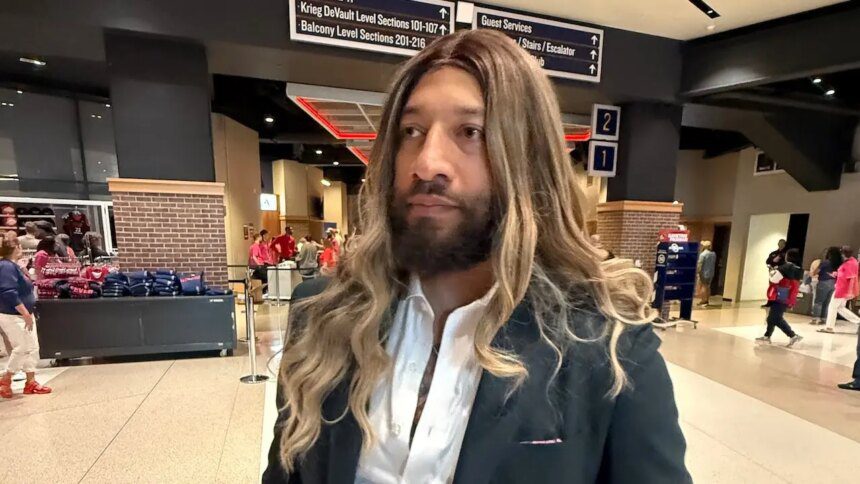
Royce White, who previously played for the Houston Rockets, attended the Indiana Fever game against the Connecticut Sun at Gainbridge Fieldhouse wearing a long blonde wig. His presence at the arena was not just for support; it was a visible announcement of his declaration to enter the 2027 WNBA Draft. White, alongside Kanter Freedom, has announced their eligibility as male athletes wishing to participate in a women’s league, raising eyebrows and prompting discussions around gender identity in professional sports.
While at the game, White received a warm welcome from fans, taking time to engage with them through handshakes and photos. He expressed his support for the WNBA, stating, “I’m just here to support the WNBA and support the Fever.” However, his intent to challenge the league’s definitions of eligibility suggests a deeper social commentary about inclusion and identity in sports.
The Controversy Surrounding Enes Kanter Freedom
Enes Kanter Freedom found himself at the center of a media storm after being ejected from a game, leading to a ban from future Sky games. His situation has become a national topic of discussion, especially in light of White’s declaration. Freedom’s ejection highlights the often contentious relationship between personal beliefs and professional sports, particularly when they intersect with issues of gender and identity.
The ejection and subsequent ban have drawn parallels to White’s own declaration. They both seem to highlight a growing dialogue regarding who gets to participate in women’s sports, especially as various athletic organizations navigate the complexities of gender inclusivity. Freedom’s banned status makes the stakes even higher for White, who is using this moment to question and assert the rights of transgender individuals in sports.
Legal Implications and Community Reactions
White’s declaration was formally submitted through a letter by former Congressman Matt Gaetz, claiming eligibility based on the WNBA’s new collective bargaining agreement. This agreement states that only “players who are women” can compete, but lacks clarity around claims of gender identity. White’s legal team suggests that they have not received a formal response from the WNBA regarding their claims, raising questions about the potential for discrimination lawsuits if denied entry into the draft.
The community’s reactions are mixed, with some viewing this as a necessary step toward greater inclusion, while others characterize it as a publicity stunt. White himself stated, “I’m transgender. I’m a woman,” emphasizing the complexities of identity while calling for clarity from the WNBA regarding its eligibility criteria. His efforts aim to push the league into explicitly defining its policies regarding transgender athletes.
Why This Is Trending
The topic of gender identity in sports has been a significant point of contention globally, and it has recently gained heightened attention in India due to increasing discussions around gender rights and equality. The intersection of sports and social justice attracts Indian audiences who are passionate about league inclusivity and athlete rights. Social media platforms and news outlets are buzzing as citizens engage in debates about fair play and the evolving standards of competition.
Frequently Asked Questions
What motivated Royce White to declare for the WNBA Draft?
Royce White’s declaration appears to aim at challenging and prompting the WNBA to clarify its policies on gender and eligibility, specifically in cases involving transgender individuals.
How has Enes Kanter Freedom’s situation influenced Royce White?
Freedom’s ejection from a game raised discussions about personal beliefs affecting professional sports, creating an environment for White to voice his own intentions and push for inclusion.
What are the legal implications of Royce White’s draft declaration?
Legal experts suggest that if White is denied entry into the draft based on his gender identity claims, he may pursue a discrimination lawsuit against the league.
Why are discussions about gender identity in sports important?
These discussions highlight crucial social issues related to equality, fairness, and representation in sports, making them highly relevant in today’s world, especially in contexts like India, where gender rights are still evolving.