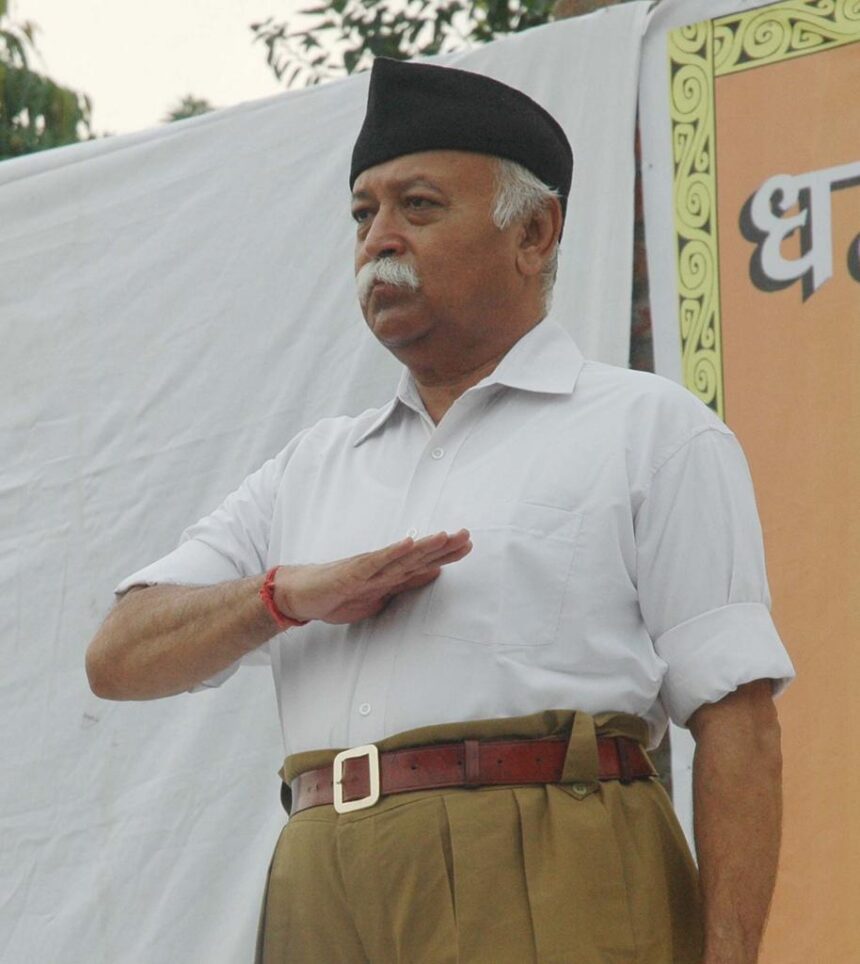

Hindu Nationalism Under Scrutiny: Bhagwat’s New York Visit
Rashtriya Swayamsevak Sangh (RSS) chief Mohan Bhagwat’s keynote address at a gathering in New York sheds light on the growing influence of Hindu nationalism abroad. His presence at the “Universal Oneness Celebration” organized by the American Hindus for Engagement and Dialogue (AHEAD) Forum elevates the discussion around the Sangh’s impact within the Indian diaspora, especially in the context of rising concerns regarding discrimination and marginalization of Indian Muslims.
The Rising Tide of Hindu Supremacy
Bhagwat’s visit comes at a time when the RSS is facing increased scrutiny for its role in promoting a majoritarian narrative in India. Human Rights Watch has branded the RSS as a purveyor of a militant form of Hindu nationalism, fundamentally altering the socio-political landscape. This ideology aims to position Hinduism as the cornerstone of Indian national identity while marginalizing other faiths, particularly Islam and Christianity, which are depicted as alien to India.
This ideological stance has been echoed by bodies like the US Commission on International Religious Freedom, which has accused the RSS of breeding intolerance against minorities. As the Sangh expands its influence, these narratives become increasingly significant—particularly for Indian Muslims, who face social exclusion and economic boycotts encouraged by state policies and societal norms that favor Hindu majoritarianism.
Networking Beyond Borders
A comprehensive investigation by The Caravan has exposed a sprawling network of over 2,500 organizations linked to the RSS. This extensive web includes major entities like the Bharatiya Janata Party (BJP), Vishwa Hindu Parishad, and smaller organizations, schools, and charities. While Bhagwat emphasizes that the RSS does not exert control over these affiliates, the findings paint a different picture, revealing a coordinated structure that allows the Sangh to strategically disseminate its ideology from major urban centers to rural areas, both in India and the diaspora.
This network also extends to international associations, such as the Hindu Swayamsevak Sangh and VHP of America in the U.S., which share common personnel and financial ties with the RSS. For example, a address in Houston is linked to multiple organizations under the RSS umbrella, reflecting the organizational reach of Hindu nationalism even beyond Indian borders.
The Cultural and Political Implications
The event attended by Bhagwat in New York aims to project a message of unity through “oneness”, starkly contrasting its underlying ideology. This façade of inclusiveness is undermined by the pervasive discrimination and marginalization of religious minorities in India, most notably Muslims, who suffer from frequent social and economic repercussions imposed by the dominant narrative propagated by the RSS and BJP-led governments. This contradiction has significant implications, as it potentially influences perceptions and relations within the broader global community regarding India’s commitment to secularism and diversity.
Why It Matters
Bhagwat’s visit raises essential questions about the moral and ethical dimensions of cultural diplomacy. It highlights the delicate balance that organizations advocating for secularism must maintain in the face of rising nationalism. For developers and users in the AI industry, understanding the socio-political context that shapes narratives around religion and identity is crucial. This becomes even more relevant when considering the potential applications of AI in managing data related to social dynamics, religious affiliations, or community interactions in multicultural settings. The implications of algorithmic bias stemming from such socio-political realities necessitate careful consideration and responsible coding practices.
Frequently Asked Questions
What is the RSS and what role does it play in Indian politics?
The Rashtriya Swayamsevak Sangh (RSS) is a Hindu nationalist organization in India that promotes a Hindu majoritarian ideology, closely associated with the ruling Bharatiya Janata Party (BJP). It aims to unify Hindus under a national identity based on Hindu cultural values.
Why is Bhagwat’s New York visit controversial?
His visit is seen as controversial because it brings a leader of a Hindu nationalist organization to a global stage amidst accusations of promoting intolerance and marginalization of religious minorities, particularly Muslims, in India.
What findings did The Caravan’s investigation reveal about the RSS?
The investigation found that the RSS is connected to over 2,500 organizations globally, demonstrating a structured network that facilitates its ideological outreach and influence, contradicting claims that it does not exert control beyond its affiliates.
How does this influence the lives of Indian Muslims?
The rise of Hindu nationalism perpetuated by the RSS and BJP leads to social exclusion and economic boycotts against Indian Muslims, who often find themselves marginalized in both societal and economic avenues as a result of majoritarian policies.