
Tragedy Strikes the Nepal-China Border
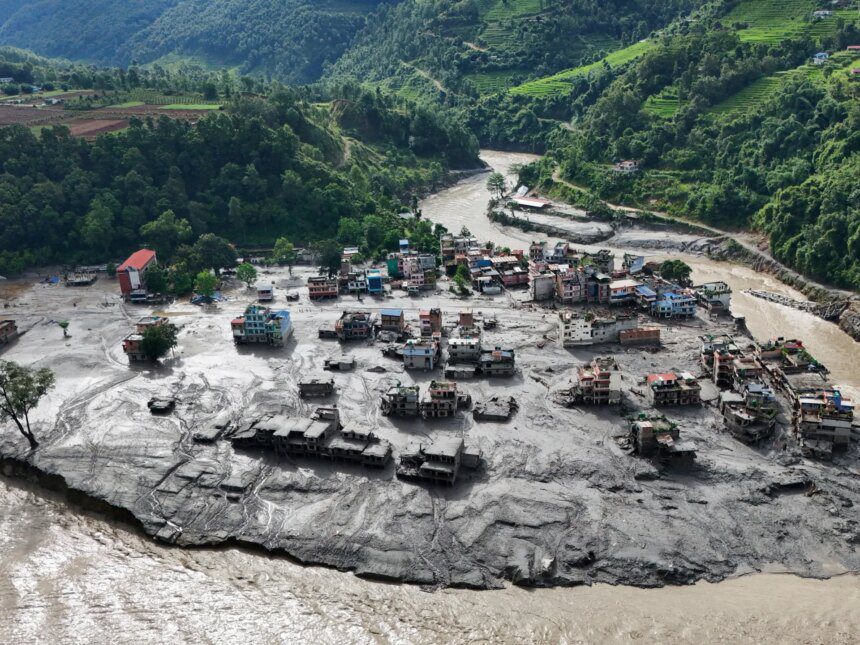
A catastrophic torrent of floodwater and mud, triggered by a glacier collapse, has devastated communities along the border between Nepal and China. The disaster has resulted in at least 270 fatalities and left over 1,300 people missing, including foreign nationals and pilgrims. Rescue teams are working tirelessly to locate the missing individuals while managing the aftermath in several affected regions.
Search and Rescue Efforts Underway
Search operations are facing significant challenges as essential infrastructure, such as bridges, has been severely damaged. Nearly 40 kilometers (25 miles) of roads are impassable, complicating rescue missions. The Nepali Army has been instrumental in recovery efforts, utilizing helicopters to airlift more than 100 people from flood-affected zones. Brigadier General Raja Ram Basnet confirmed that at least eight foreign nationals were evacuated to Kathmandu, some of whom were stranded near the Trishuli hydropower project.
Rescue teams have also discovered bodies approximately 100 kilometers (60 miles) downstream in the Chitwan district. Additionally, the injured are being transported to Kathmandu for advanced medical care, highlighting the critical need for medical facilities in the wake of such a disaster.
Large-Scale Relief Operations Commencing
The focus of authorities has now shifted from immediate rescue to organizing large-scale relief operations for displaced populations. Bishal Kumar Bhandari, chairperson of the Nepal Red Cross Society, reported that approximately 1,200 individuals have been displaced from at least three villages in the region. Efforts are being made to ensure that essentials such as food, shelter, and medical aid reach those affected.
In Tibet, the disaster has similarly impacted local communities; a mudslide near the Gyirong border crossing has covered areas in mud more than 1.5 meters (5 feet) deep on average, with some roads blocked by mud more than 2 meters (6 feet) deep. Images on Chinese state broadcaster CCTV show the extent of the damage, underscoring the scale of this natural disaster in a region sensitive to environmental changes.
What This Means
The recent disaster not only affects the immediate region but also has implications for neighboring countries, including India. The Indian government is closely monitoring the situation alongside humanitarian organizations. With ample experience in disaster response, India may extend aid to Nepal, which has historically had ties and collaborative efforts with India during similar crises. This incident could also prompt discussions on transboundary disaster management, as glacial melt and climate change increasingly threaten the stability of Himalayan ecosystems, a situation that impacts both nations.
Frequently Asked Questions
What caused the flooding and mudslides in Nepal?
The flooding and mudslides were triggered by a glacier collapse, which released a torrent of water and debris into surrounding communities.
How is the Nepali Army responding to the disaster?
The Nepali Army has launched rescue operations utilizing helicopters to evacuate stranded individuals and deliver essential aid to affected areas.
What has been affected in Tibet due to the disaster?
A mudslide near the Gyirong border crossing in Tibet has left surrounding areas covered in deep mud, disrupting local infrastructure and accessibility.
What can Indian citizens do to help?
As the situation unfolds, Indian citizens can support relief efforts through various NGOs and charitable organizations involved in providing aid to those affected in Nepal and Tibet.