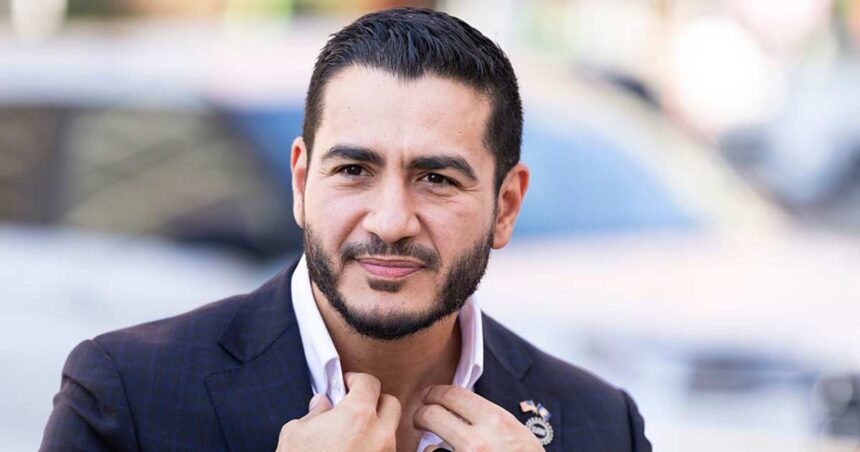

Michigan Democratic U.S. Senate candidate Abdul El-Sayed has sparked controversy following his remarks during a television interview where he compared Muslim sharia law to Catholic canon law. His comments have led to significant backlash, highlighting the complexities surrounding faith, law, and societal perceptions in contemporary America.
Backlash Against El-Sayed’s Comments
During a heated exchange on Fox News’ “Jesse Watters Primetime” on August 24, 2023, El-Sayed faced pointed questions from Watters regarding his stance on sharia law. Watters suggested that opposing sharia could be considered a form of “white supremacy.” This accusation stems from a 2022 speech where El-Sayed criticized an Oklahoma law designed to preemptively ban sharia, likening such laws to historical discrimination against marginalized communities.
In response, El-Sayed defended his beliefs, emphasizing religious freedom and the right to practice one’s faith without persecution. He stated, “Nobody is trying to push sharia law on anyone else,” reinforcing the idea that targeting religious practices of a minority population is discriminatory. The dialogue between El-Sayed and Watters also encompassed broader political issues, including immigration and environmental policies.
Different Legal Frameworks: Sharia Law vs. Canon Law
Sharia law, the legal framework governing Islamic practices, encompasses not only personal and family matters but also public governance and political systems in many Muslim-majority countries. Conversely, canon law governs the internal matters of the Catholic Church, focusing on ecclesiastical norms without imposing on civil law.
Critics of El-Sayed’s comparison, including Catholic media figures and security analysts, argue that such statements improperly conflate distinct legal systems. For example, issues arise when elements of sharia conflict with U.S. legal standards, suggesting that laws rooted in different religious traditions cannot be seen as equivalent.
Responses from Political and Religious Circles
The backlash against El-Sayed’s comments has drawn reactions from various political and religious figures. Conservative commentators have criticized his perspective, arguing that it minimizes the potential risks posed by sharia law within a civil context. Michael Knowles, a prominent Catholic commentator, even mocked El-Sayed’s rationale by questioning the consistency of allowing religious regulations in courts.
As El-Sayed prepares to face Republican nominee Mike Rogers in the upcoming general election, the discussion surrounding his views on religious law will likely play a significant role in shaping public opinion in Michigan, where diversity in beliefs and practices can be a pivotal electoral factor.
Why It Matters
This ongoing debate has broader implications for how society perceives different religions, particularly in relation to laws such as sharia. Understanding the differences and nuances between sharia law and canon law is essential in discussions about religious tolerance and freedom. It sheds light on how marginalized communities can be stereotyped and political discourse can often fuel discrimination, which is critical in fostering a more inclusive society.
Frequently Asked Questions
What is sharia law?
Sharia law is a legal system derived from Islamic principles that govern aspects of personal, family, and community life in several Muslim-majority countries, including political and public law.
How does canon law differ from sharia law?
Canon law applies solely within the Roman Catholic Church, regulating internal matters without extending to civil laws. In contrast, sharia law can impact both Muslims and non-Muslims in certain jurisdictions.
Why are El-Sayed’s comments controversial?
El-Sayed’s comments about sharia law being akin to canon law have been controversial as many believe it conflates significantly different legal traditions and dismisses concerns regarding sharia’s compatibility with U.S. laws.
What impact could this issue have on El-Sayed’s election campaign?
The controversy may polarize voters, impacting his appeal among communities concerned about religious law and its implications, potentially shaping the overall outcome in the general election.