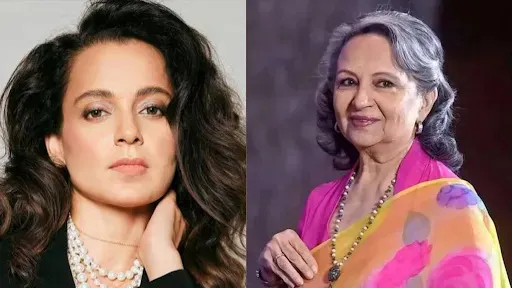

The ongoing debate surrounding the national song Vande Mataram has reignited discussions on religious symbolism in Indian society, particularly its implications for inclusivity in the modern context. Veteran actor Sharmila Tagore’s comments about the song’s Hindu references have prompted a rebuttal from actress Kangana Ranaut, further highlighting the underlying tensions between traditional beliefs and contemporary perspectives in India’s cultural fabric.
Sharmila Tagore’s Concerns on Inclusivity
Sharmila Tagore, aged 81, recently articulated concerns regarding Vande Mataram, suggesting that its later verses—those that reference Hindu deities—might alienate individuals from monotheistic faiths. According to Tagore, the first two stanzas of the song are inclusive and thus more appropriate for wider singing, implying that the explicit mention of multiple gods could lead to discomfort among some communities. This perspective raises critical questions about cultural representation and religious plurality in India’s national identity.
Kangana Ranaut’s Response: A Call for Artistic Interpretation
In response, Kangana Ranaut utilized her social media platform to assert her disagreement with Tagore’s interpretation. She emphasized the importance of viewing Vande Mataram through a poetic lens, suggesting that art often carries symbolic meanings that transcend literal interpretations. Kangana argued that the references to Hindu goddesses in the song should not be viewed solely as religious directives, but as part of a broader artistic expression intended to ignite a nationalistic fervor akin to that experienced during the freedom struggle.
Kangana further articulated her thoughts by invoking historical figures like Bankim Chandra Chatterjee, the composer of Vande Mataram, asserting that his intentions were to inspire empowerment and unity among Indians. She urged the public to recognize the song as a symbol of resilience rather than a religious context limited to Hindu ideology.
The Broader Political Landscape and Its Implications
The debate over Vande Mataram has attracted considerable political attention, especially as it correlates with ongoing discussions about India’s identity amidst rising nationalism. Written in the 1870s, the song became an important cornerstone of India’s freedom movement but has been viewed through different prisms within the contemporary political landscape. The Congress party has historically maintained that only the first two stanzas should be sung, emphasizing a more inclusive understanding of national identity.
Actor Mukesh Khanna’s recent statements advocating for Vande Mataram’s elevation to National Anthem status escalate the conversation, casting a spotlight on the cultural narratives surrounding national symbols in India. His endorsement of the song reflects a growing sentiment within certain political factions that assert Hindu identity within the Indian national framework, which raises concerns about marginalization of non-Hindu communities in the discourse.
Why It Matters
This ongoing dialogue about Vande Mataram is significant as it encapsulates the broader issues of religious discrimination and social exclusion facing Indian Muslims and other minority groups. The interpretations of national symbols can shape public sentiment and affect policy-making under the current Sangh and BJP governments, often leading to a promotion of Hindu-centric narratives. Such trends have implications for communal harmony and social cohesion, thereby impacting the equality of representation in the Indian political domain.
As debates surrounding inclusivity in national identity intensify, discerning how public figures frame these discussions becomes paramount. The treatment of Vande Mataram highlights the challenges ahead regarding balancing historical pride with a commitment to an inclusive society that honors multiple faiths.
Frequently Asked Questions
What are the main concerns regarding Vande Mataram’s religious references?
Sharmila Tagore raised concerns that the references to Hindu deities in the latter stanzas may alienate individuals from monotheistic faiths, suggesting that these portions of the song do not promote inclusivity.
What is Kangana Ranaut’s perspective on Vande Mataram?
Kangana Ranaut contends that Vande Mataram should be interpreted as a work of art, emphasizing its symbolic meanings rather than strictly religious interpretations, and calling on the public to view it in the context of the freedom movement.
How has the political landscape in India influenced the debate over Vande Mataram?
The debate has become a focal point in the larger political discourse about national identity in India, with certain factions advocating for a Hindu-centric interpretation while others argue for a more pluralistic approach, reflecting the challenges of religious inclusivity.
What role do public figures play in shaping the narrative around national symbols?
Public figures, including actors like Kangana Ranaut and Sharmila Tagore, significantly influence public discourse by framing their perspectives on cultural and national issues, affecting how communities perceive their historical and social identities within the country’s evolving landscape.