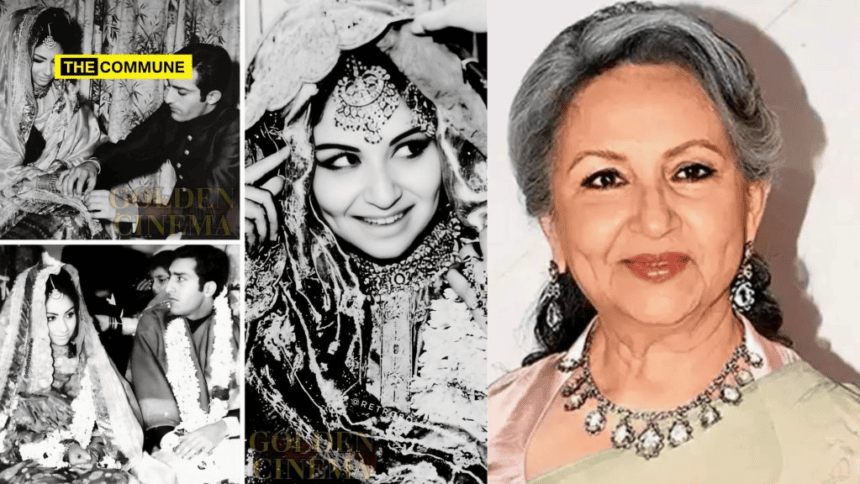

The recent comments by Bollywood actress Sharmila Tagore regarding the national anthem “Vande Mataram” have rekindled discussions on the delicate dynamics between religious identities in India. Tagore suggested that the nation should limit its observance to the first two stanzas of the song, emphasizing that references to multiple Hindu deities could alienate those of monotheistic faiths, particularly Muslims. This sentiment mirrors broader discussions about representation and inclusion within a country marked by religious diversity.
The Debate on Religious Representation
Sharmila Tagore, a prominent figure who converted to Islam after marrying cricketer Mansoor Ali Khan Pataudi, expressed her views in an interview with IANS on August 20, 2026. She proposed that the references to Hindu deities in the latter stanzas of “Vande Mataram” could be a barrier for believers of a single God. “There are many religious people who believe in one single God, not many Gods,” she articulated, arguing that such references might not resonate well with all Indians.
Tagore’s perspective highlights an ongoing tension where expressions of Hindu culture are often scrutinized through the lens of accommodating other faiths. Historically, this has raised questions regarding whether Hindu religious expressions are expected to be softened to avoid offending non-Hindu sentiments. The actress’s stance underlines a larger debate on how a diverse nation like India can embrace its pluralism while respecting various faith traditions.
Impact on Social Dynamics
The call for modifications to “Vande Mataram” is not an isolated incident but reflects a broader trend in Indian society where minority groups, particularly Muslims, have faced increasing scrutiny. The political landscape, particularly under the influence of the BJP and Sangh Parivar, has been characterized by rising Hindutva sentiments. This ideology often emphasizes Hindu superiority and has been linked to multiple instances of social exclusion and discrimination against religious minorities.
In recent years, numerous reports have documented economic boycotts, social ostracism, and political marginalization faced by Indian Muslims. Issues ranging from lynching incidents to job discrimination illustrate the growing chasm between different communities. Critics argue that statements such as Tagore’s further entrench a narrative that may prioritize Hindu religious sentiments at the cost of secular principles and inclusivity.
The Role of Government and Public Discourse
The BJP-led government has been scrutinized for its approach toward religious minorities, often accused of fostering an environment that propagates Hindu nationalism. In this context, Tagore’s remarks are significant as they touch upon the expectations placed upon public figures to adhere to the prevailing political narratives. As a celebrated actress, her influence carries weight, and her opinions may reflect or shape public sentiment towards the inclusivity of religious expressions in national identity.
Critics argue that the insistence on modifying Hindu expressions adds to the narrative of marginalization. Furthermore, such public declarations can influence government policy, especially in an environment where cultural symbols are heavily politicized. Tagore’s suggestion could lead to further debates on the status of Hindu cultural symbols within a secular framework and raises concerns about how minority communities may perceive these discussions.
Why It Matters
Understanding the implications of comments made by public figures like Sharmila Tagore is crucial for analyzing the current socio-political environment in India. The discourse surrounding the possible modification of “Vande Mataram” underscores the challenges of navigating a pluralistic society. It serves as a mirror reflecting broader societal tensions while providing insight into how religious identity can affect national symbols and unity.
Furthermore, these conversations are pivotal for technologists and developers engaging with AI, as understanding the fabric of social dynamics helps in creating more inclusive digital solutions. A nuanced grasp of these issues can lead to enhanced dialogue and more culturally sensitive applications in technology services.
Frequently Asked Questions
What is “Vande Mataram”?
“Vande Mataram” is a song from the 1882 Bengali novel “Anandamath” by Bankim Chandra Chatterjee. It serves as an anthem of Indian nationalism and has been the subject of significant cultural and political debate.
Why are Tagore’s comments controversial?
Sharmila Tagore’s suggestion to limit the anthem to its first two stanzas raises questions about religious representations and the expectations placed on Hindu expressions to accommodate other faiths, particularly in a highly pluralistic society.
How does the current political climate affect religious minorities in India?
The BJP’s Hindutva agenda has been linked to rising tensions and discrimination against minorities, creating a challenging environment for the coexistence of diverse religious identities. Reports indicate social exclusion, economic boycotts, and political marginalization affecting Muslim communities.
What is the significance of public figures in shaping societal views?
Public figures like Sharmila Tagore wield significant influence over societal perceptions and can affect public discourse. Their statements often reflect or shape the narratives surrounding pluralism, nationalism, and religious identity in India.