
Political Tensions Over “Vande Mataram” Highlight Divide
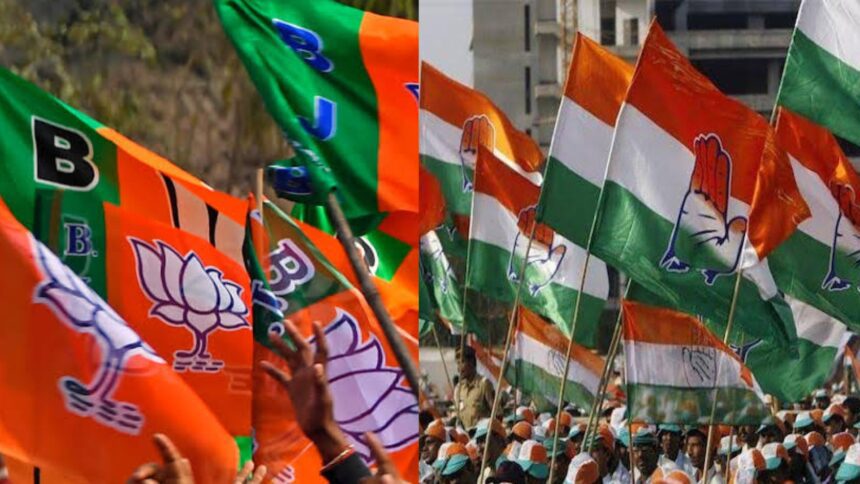
The recent controversy surrounding the Congress party’s decision to sing only two stanzas of “Vande Mataram” has triggered intense criticism from the Bharatiya Janata Party (BJP). BJP leaders have accused Congress of compromising national sentiment for electoral gains, drawing strident parallels to historical appeasement politics. This incident underscores the enduring political rift between the ruling party and its opposition, especially regarding national identity and religious inclusivity.
BJP’s Strong Reaction and Historical Context
The BJP’s vehement response to Congress’ decision stems from a perceived insult to national symbols. BJP President Nitin Nabin characterized the move as a formalization of disrespect towards “Bharat Mata,” suggesting that it diminishes the sacrifices of countless freedom fighters. He stated, “This insult to the sacred invocation of ‘Bharat Mata’ is a disdain for those thousands of martyrs who sacrificed their lives for the nation.”
Union Home Minister Amit Shah further elaborated, stating that historical precedents of similar decisions have led to detrimental consequences for the nation. He referred to the Congress’ actions in 1937, alleging that the party fragmented the song for political gain and thus lent strength to divisive ideologies. The ramifications of such historical missteps are still felt today, as the nation grapples with issues of identity and unity.
Allegations of Vote-Bank Politics
Critics from the BJP, including National General Secretary Vinod Tawde, described the Congress as the “new Muslim League,” accusing it of prioritizing vote-bank politics over national sentiment. This rhetoric implies that Congress is sacrificing its allegiance to national values in favor of appeasing particular electoral demographics. Tawde asserted, “The Congress has once again shown that its priority was vote-bank politics rather than national sentiment.”
Moreover, BJP MP Anurag Thakur scrutinized the Congress for what he termed a distortion of the national ethos, questioning why Congress leaders could not adhere to a complete rendition of a song emblematic of Indian identity. Thakur’s remarks suggest a broader concern about how political maneuvering around communal lines may affect national unity.
Responses from Congress and Broader Implications
In defending its stance, Congress has referred back to its 1937 resolution, suggesting that it aims to preserve the song’s integrity in a way that resonates more broadly across diverse Indian communities. However, this defensive position has not quelled criticisms from the BJP. Congress faces an uphill battle in clarifying its intent and maintaining party unity amidst escalating political backlash.
The BJP’s allegation of appeasement politics is compounded by historical narratives of division within the country, including the partition. Union Health Minister J.P. Nadda posited that historical mistakes should be acknowledged and rectified. He insinuated that failing to remember the historical implications of such decisions could lead to a repeat of past errors, particularly concerning the national identity.
Why It Matters
This controversy over “Vande Mataram” reflects a crucial intersection of politics, identity, and religion in India today. It underscores the ongoing struggle between secular values and religious identity in policymaking and public discourse. For developers and AI industry stakeholders, understanding these socio-political dynamics is critical. It highlights the importance of developing technologies that facilitate inclusive dialogue, promote understanding, and address the complexities of identity politics. Additionally, such events impact market dynamics and consumer behavior in a diverse country like India.
Frequently Asked Questions
What is “Vande Mataram” and why is it significant?
“Vande Mataram,” written by Bankim Chandra Chattopadhyay, is a song that became a rallying cry for India’s independence movement. It is considered a national song and symbolizes patriotism, making its complete rendition significant for national identity.
Why did Congress decide to sing only two stanzas of “Vande Mataram”?
The Congress party’s decision was rooted in a historical resolution from 1937 that limited the performance of the song to its first two stanzas, which they believe increases inclusivity among diverse religious communities.
What criticisms has the BJP leveled against Congress regarding this decision?
The BJP has accused Congress of engaging in appeasement politics, sacrificing national identity for electoral gains, and repeating historical mistakes that led to division in the past. They claim this decision diminishes the song’s sanctity and is a direct attack on national sentiment.
How does this controversy relate to historical events in India?
The controversy evokes memories of the 1937 decision that fragmented “Vande Mataram” amidst political considerations, which some argue contributed to communal divisions leading to India’s partition in 1947. The BJP contends that history must guide present-day decisions about national symbols.