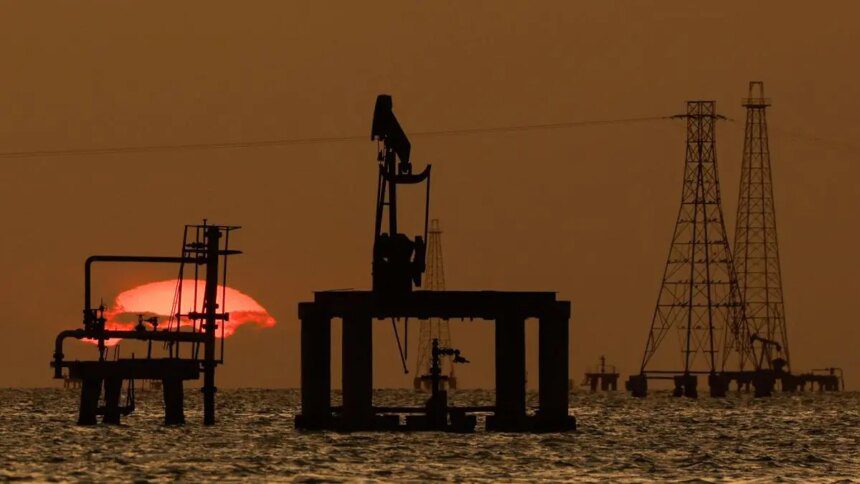

India is strategically increasing its crude oil imports from Venezuela as the U.S. eases sanctions, allowing Indian refiners an opportunity to diversify their supply sources. Venezuelan crude now accounts for a significant share of India’s imports, though logistical challenges and processing costs must be navigated carefully.
Venezuela’s Rising Importance in India’s Crude Supply
According to recent data, Venezuela emerged as India’s fourth largest supplier of crude oil in August 2026, with imports reaching approximately 444,000 barrels per day. This development is significant as it positions Venezuela ahead of other prominent sources such as Iraq and the United States. The easing of U.S. sanctions has opened avenues for Indian refiners, prompting them to explore purchasing options that were previously restricted due to geopolitical tensions.
In April this year, the U.S. relaxed sanctions on key Venezuelan financial institutions, providing a lifeline to the country’s oil trade. This change followed a tumultuous shift in Venezuelan leadership, which saw former President Nicolás Maduro being ousted. The relaxing of financial restrictions has allowed for improved access to U.S. dollars, making transactions smoother for countries like India looking to secure Venezuelan crude.
Logistical Challenges with Venezuelan Crude
While the prospect of importing crude from Venezuela is enticing, Indian refiners must weigh several logistical and economic factors. Venezuelan crude is characterized as particularly heavy, necessitating specialized refining capabilities that may not be readily available in all Indian refineries. The transportation route is also lengthy, taking around five to six weeks and requiring vessels to traverse the Atlantic, Mediterranean, and Suez Canal before arriving in India.
The cost of freight and processing must be considered when comparing Venezuelan crude to lighter grades from the Gulf and Iran. Heavy crude tends to yield a different extraction profile, resulting in a product slate that predominantly includes heavy fuel oil and bitumen, among other refined products. These factors can impact both the profitability and feasibility of sourcing from Venezuela.
Market Dynamics Amid Global Crises
Current geopolitical conditions, particularly related to the West Asia crisis, have prompted New Delhi to be cautious. A source familiar with the situation remarked, “New Delhi does not want to make many long-term strategies around crude sourcing from Venezuela because one does not know when the U.S. could reimpose sanctions.” This uncertainty leads Indian refiners to adopt a flexible approach, taking advantage of favorable situations as they arise.
As ongoing tensions in West Asia create volatility in oil markets, having access to Venezuelan crude can provide some insulation for India. The diversification of supply sources could become essential, particularly if reliance on traditional partners becomes untenable due to future geopolitical developments.
What This Means
The increasing imports from Venezuela mark a significant shift in India’s crude sourcing strategy, reflecting a broader capability to adapt to changing global circumstances. For Indian refiners, engaging with Venezuelan oil could mean new opportunities but also entails navigating complex challenges, particularly related to transportation and processing. Stakeholders in India’s oil market will need to continuously assess the economics of importing Venezuelan crude against other available options, especially given the inherent risks tied to fluctuating international relations.
Frequently Asked Questions
1. Why is India increasing crude imports from Venezuela?
The easing of U.S. sanctions has provided Indian refiners the opportunity to source crude from Venezuela, which has become an alternative amid rising geopolitical tensions in West Asia.
2. What are the challenges of processing Venezuelan crude?
Venezuelan crude is particularly heavy and requires specialized refining capabilities, which may necessitate modifications to existing refineries in India to process it efficiently.
3. How does transportation impact the economics of Venezuelan crude?
The long transportation route (about five to six weeks) increases logistical costs, including freight and processing expenses, which must be carefully calculated against the price of Venezuelan crude.
4. What is the current relationship between the U.S. and Venezuela regarding oil?
The U.S. has recently eased sanctions, allowing for a more favorable environment for oil trade, but there remains uncertainty regarding the future of these sanctions and their implications on countries like India.