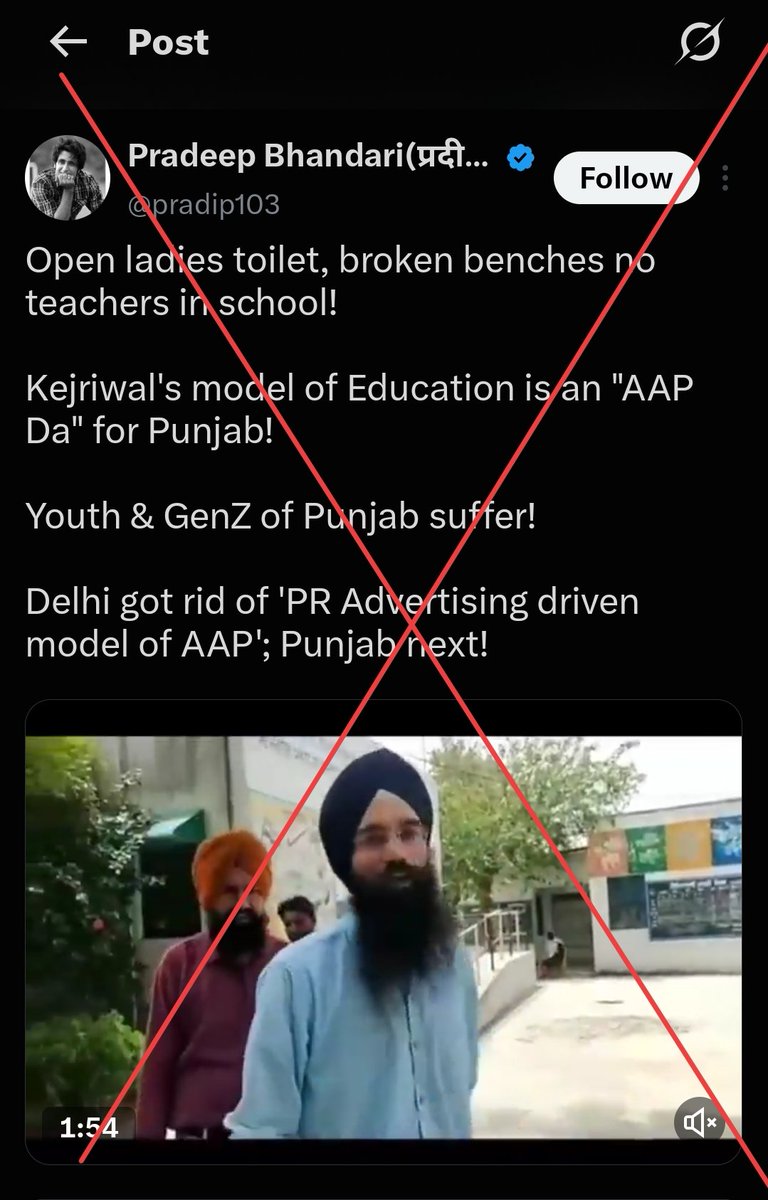

In a recent statement, Pradeep Bhandari, an Indian political commentator, criticized the education model implemented by Delhi Chief Minister Arvind Kejriwal, suggesting it has failed to benefit the youth of Punjab. He highlighted issues such as open ladies’ toilets, broken benches, and a lack of teachers in schools, labeling the situation as an “AAP Da” crisis for the state.
Addressing Educational Inefficiencies
Bhandari’s observations point to significant infrastructural failures within Punjab’s schools, emphasizing the poor state of facilities. The mention of open ladies’ toilets raises concerns about hygiene and safety for female students, which is particularly troubling in a state striving for gender equity in education. The broken benches and absence of teachers further underline the physical and administrative neglect of schools that should be nurturing the next generation. This scenario reflects a dire need for systemic reforms in educational governance.
Political Context of Kejriwal’s Leadership
Chief Minister Arvind Kejriwal’s political career has been marked by his vision to revolutionize education in India, originally making headlines for reforms in Delhi. However, as Bhandari pointed out, these reforms seem ineffective when applied to Punjab, suggesting that the models may not be universally applicable. The ongoing concerns with education in Punjab can be juxtaposed against the backdrop of Kejriwal’s promises. His focus on publicity-driven initiatives, critics argue, often overshadows the real, on-the-ground issues that need addressing.
The AAP’s Political Landscape
The Aam Aadmi Party (AAP), which Kejriwal leads, has been under scrutiny for its governance across various states. As the party aims to expand its influence beyond Delhi into Punjab, the education model serves as both an asset and a liability. Educational success is critical for any political party looking to establish itself as a force in Indian politics. Failure to address core issues may not only affect student outcomes but could also jeopardize the AAP’s political ambitions. As the youth of Punjab grapple with daily challenges, dissatisfaction with educational services could lead to significant electoral repercussions for the party.
Why This Matters
For Indian readers, and particularly voters in Punjab, Bhandari’s comments can resonate deeply. Education is often seen as the backbone of societal progress, and any erosion in quality can have cascading effects on employment, economic stability, and social mobility. This situation poses broader implications for political accountability, as citizens increasingly demand transparency and effective governance from their leaders. Awareness of these issues is crucial as state elections approach, positioning education not only as a policy matter but also as a key electoral issue.
Frequently Asked Questions
What specific issues with education in Punjab are being highlighted?
The key issues mentioned include open ladies’ toilets, broken benches, and a lack of teachers, indicating infrastructural and administrative neglect in schools.
How does this criticism affect Arvind Kejriwal’s political standing?
This criticism raises questions about Kejriwal’s governance strategies outside Delhi, potentially undermining his credibility and electoral prospects in Punjab.
What is the significance of the AAP’s educational model?
The educational model instituted by AAP aims to provide quality education, but its failure to deliver in Punjab suggests that what works in Delhi may not be effective elsewhere.
Why should Indian citizens care about these educational issues?
Education directly impacts the future of youth and the socio-economic fabric of society; citizens should care to hold their leaders accountable for the quality of education provided.