
Summary
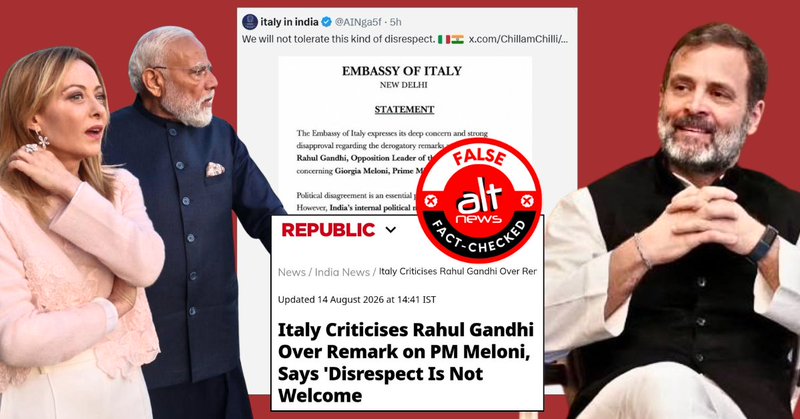
A parody account impersonating the Italian Embassy sparked confusion by releasing a fabricated statement criticizing Congress leader Rahul Gandhi for disrespecting Italian Prime Minister Giorgia Meloni. This falsehood was reported without verification by notable news outlets Republic and Gujarat Samachar, highlighting the dangers of misinformation in media.
Context of the Incident
The rise of social media has paved the way for unprecedented levels of misinformation, particularly in the realm of political discourse. The incident involving the fake Italian Embassy statement serves as a stark reminder of the challenges reporters face in distinguishing legitimate information from satire or outright falsehoods. Rahul Gandhi and other Congress leaders recently mocked Prime Minister Narendra Modi’s behavior during diplomatic engagements, particularly highlighting his tendency for physical displays of affection with foreign counterparts. This ongoing political rivalry set the stage for the false statement’s emergence.
The Role of Media in Misinformation
The rapid dissemination of news on social media platforms can sometimes outpace the verification processes followed by traditional media outlets. Republic and Gujarat Samachar, both reputable sources, fell victim to the fake statement, demonstrating a lapse in due diligence. Republic, known for its aggressive reporting style, published a 400-word article detailing the fictional criticisms directed at Gandhi. Gujarat Samachar followed suit, further propagating the misinformation. This incident calls into question the integrity and checks and balances that need to be instated within media organizations.
Repercussions of the Misinformation
The circulation of the fake Italian Embassy statement could have far-reaching effects on public perception and political discourse in India. As Rahul Gandhi and his supporters counter the claims made in the false statement, the narrative surrounding the Congress party could shift, potentially impacting voter sentiment as various political parties gear up for future elections. In this highly charged political environment, the consequences of misinformation can exacerbate divisions and alter the dynamics of political debates.
Why This Matters
The ability to discern credible information from misinformation is critical for an informed electorate. With the upcoming elections and a politically charged atmosphere, it is essential for voters to understand the potential manipulations at play. The failure of established media outlets to verify information before reporting it undermines journalistic integrity and erodes public trust in the news. As misinformation becomes increasingly prevalent, the responsibility lies not only with media organizations but also with consumers of news to seek out credible sources and use critical thinking to navigate complex political narratives.
Frequently Asked Questions
What was the fake statement about?
The fake statement falsely claimed that Italy had criticized Rahul Gandhi for disrespecting Prime Minister Giorgia Meloni, which was not true.
Which news outlets reported the misinformation?
Notable news outlets including Republic and Gujarat Samachar reported on the fictitious statement without verifying its authenticity.
What are the consequences of such misinformation?
The spread of misinformation can alter public perception, impact political narratives, and diminish trust in legitimate media outlets, potentially influencing voter behavior.
How can readers discern credible information?
Readers can maintain a skeptical approach by cross-referencing information with multiple reliable sources, verifying claims, and being aware of parody accounts and satire.