
Bangladesh to Host International Dialogue on Rohingya Genocide Recognition
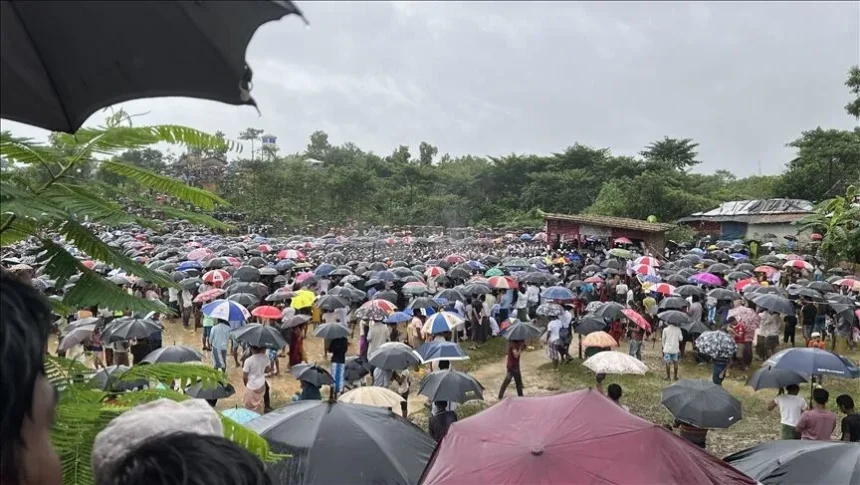
Bangladesh is set to host a pivotal international research and policy dialogue on September 27, aimed at reinforcing the Rohingya community’s quest for genocide recognition and justice. The event, occurring in Cox’s Bazar, will engage researchers and policy experts to explore why certain mass atrocities receive global acknowledgment while others do not, a critical issue for nearly a million Rohingya refugees facing ongoing displacement.
Investigating Global Disparities in Atrocity Recognition
The upcoming gathering is titled “Genocide Diplomacy and the Rohingya: Justice, Recognition and the Politics of International Response.” It seeks to analyze how global responses to genocides impact accountability efforts and the future of survivors. The discussions will especially focus on the gap between international recognition and the political calculus that often leads to denial or inaction regarding substantial atrocities.
Understanding these dynamics is crucial, as the lack of recognition can hinder efforts to secure justice for the Rohingya community, whose struggle has remained largely unaddressed on the world stage. By examining these issues, the dialogue aims to spotlight the importance of historical truth in fostering accountability and ensuring the rights of affected communities are prioritized.
Open-Access Research Volume to Support Advocacy Efforts
The event will also mark the release of an open-access research volume that delves into violence against the Rohingya people, exploring themes of genocide denial, identity, and recognition on international platforms. This freely available resource is designed to support Rohingya advocates, civil society groups, and researchers in their efforts to contest misinformation and pressure governments into taking action.
The publication, titled “Politics of Denial and Non-Recognition of Genocide: The Case of the Rohingya,” has been edited by academics with expertise in this area. Their research articulates how state sovereignty, geopolitical interests, and media narratives intersect to influence whether genocides are recognized globally, further emphasizing the real-world implications of such dynamics.
Keynote Address and Collaboration with Academic Institutions
Professor Imtiaz Ahmed, an established figure in the study of Rohingya affairs, will deliver the keynote address, adding academic weight to the discussions. The research project is the collective effort of several prominent institutions, including University College London, University of Chittagong, University of Dhaka, and University of South Wales, highlighting the collaborative nature of this initiative aimed at generating actionable insights.
Funded by the British Academy, this wider research project focuses on deriving recommendations for governments, international organizations, and civil society, underscoring the urgent need for a more concerted global response to the crises facing the Rohingya population.
Why It Matters
Efforts like the upcoming dialogue in Bangladesh are critical in fostering international understanding of genocide and related atrocities. By scrutinizing the interplay between recognition and action, stakeholders can better position themselves to advocate for marginalized communities. This work is essential in drawing global attention to issues of justice and accountability, which are often overshadowed by political interests and economic concerns. The findings from the dialogue and associated research can serve as a foundation for future advocacy efforts, enabling communities at risk to raise their voices more effectively on the global stage.
Frequently Asked Questions
Why is genocide recognition important for the Rohingya?
Genocide recognition is crucial for the Rohingya as it affirms their struggles and experiences, helps preserve historical truth, and fosters political pressure for accountability from global institutions.
What will the open-access research volume cover?
The research volume will explore violence against the Rohingya, looking at themes of genocide denial, identity, and international recognition to equip advocates with essential data and analysis for their campaigns.
When and where is the international dialogue taking place?
The dialogue is scheduled for September 27, 2023, in Cox’s Bazar, Bangladesh, a site heavily populated by Rohingya refugees.
Who is organizing the dialogue and supporting the research?
The Refugee and Migration Lab, in collaboration with multiple universities and funded by the British Academy, is behind the organization of the dialogue and the broader research initiative.