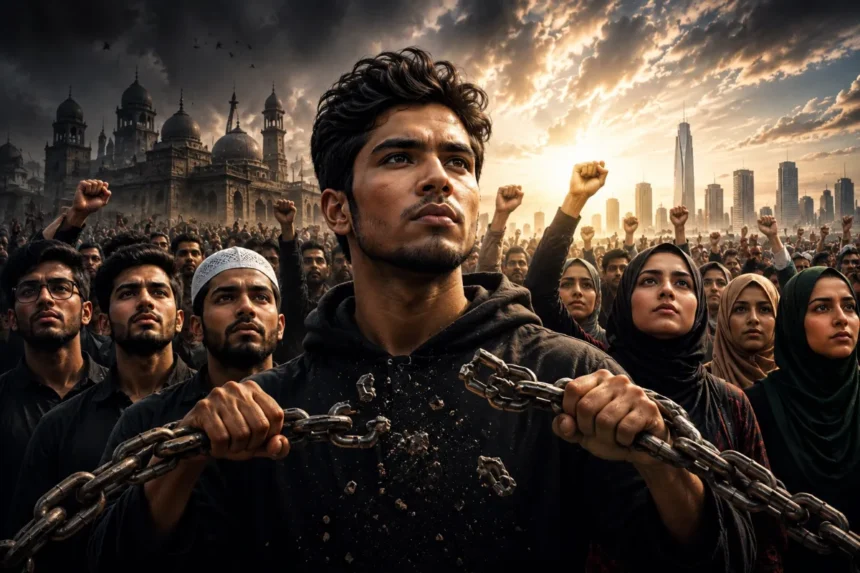

The socio-political landscape for Indian Muslims, particularly among the youth, is marked by a pressing need for accountability and vocal leadership in the face of persistent discrimination and marginalization. Amidst ongoing social exclusion and economic boycotts, the younger generation—Muslim Gen Z—must confront their leaders while advocating for their community’s dignity and rights.
Historical Context of Discrimination and Marginalization
Under the rule of the Bharatiya Janata Party (BJP) and its parent organization, the Sangh Parivar, India has witnessed increasing incidents of communal violence and discrimination against Muslims. Reports of mob lynchings, systemic demolitions of mosques, and the appropriation of Waqf properties highlight a troubling trend toward marginalization. Many Muslim-owned businesses face boycotts and harassment, further isolating them economically and socially. This systematic discrimination has created an environment where the rights and dignity of Muslims are consistently challenged, raising questions about the role of established leadership within the community.
The Silent Majority: Muslim Gen Z’s Accountability Dilemma
The recent Cockroach Janta Party (CJP) protests revealed a glaring absence of Muslim youth representation in its leadership. Despite the presence of significant issues affecting their community, such as mob lynchings and government crackdowns on activists, there remains a reluctance among Muslim youth to challenge established leaders. This is underscored by the fact that several have expressed fear for their careers and future by opposing these injustices. Yet, this silence fails to confront the grim reality of their community’s struggles and allows systemic oppression to go unchecked.
As Muslim Gen Z grapples with its identity and responsibilities, the challenge lies in breaking away from a culture of blind allegiance to leadership figures, many of whom have become stagnant voices in addressing pressing issues. The youth is not only a demographic force, estimated at around 60 million but also a potential catalyst for change that can compel leaders to action and demand accountability.
Case Studies of Leadership Silence
Muslim organizations have notably remained reticent in condemning various injustices that have impacted the community. For instance, the All India Muslim Personal Law Board (AIMPLB) did not publicly speak against the arrest of E. Abubakar, a founding member, nor did they voice opposition to the arrest of Maulana Tauqeer Raza or the crackdown on the Popular Front of India. This kind of silence raises serious concerns regarding the effectiveness and sincerity of Muslim leadership in advocating for their constituents during crises. Young Muslims must recognize this discrepancy and take it upon themselves to hold their leaders accountable.
Why It Matters
Understanding the dynamics of discrimination and marginalization within the Muslim community in India is crucial for global awareness and advocacy. As many continue to face economic and social exclusion, the need for informed dialogue and actionable leadership becomes increasingly pressing. The plight of Indian Muslims reflects broader trends of your Islamic communities worldwide who encounter similar issues of oppression and discrimination. Global civil society organizations, policy developers, and human rights advocates must consider these factors in their ongoing efforts to address and combat systemic inequality.
Frequently Asked Questions
What are the major issues faced by the Muslim community in India today?
Major issues include mob lynchings, economic boycotts, demolition of mosques and madrasas, and general discrimination in public spaces, contributing to a prevailing atmosphere of fear and vulnerability.
Why is the absence of Muslim youth in leadership roles concerning?
The absence of Muslim youth in leadership roles is concerning because it signifies a lack of representation in discussions crucial for their community’s future. Their participation is essential for voicing the concerns and aspirations of a generation that makes up a significant portion of the population.
How can Muslim Gen Z hold their leaders accountable?
Muslim Gen Z can hold their leaders accountable by demanding transparency, questioning their silence on critical issues, and involving themselves in active civil rights movements to bring about change and representation.
What role do NGO’s and civil society organizations play in advocating for Indian Muslims?
NGOs and civil society organizations can play a crucial role by providing platforms for representation, advocating for policy changes, and raising awareness about the challenges faced by the community, thus mobilizing support at local, national, and international levels.