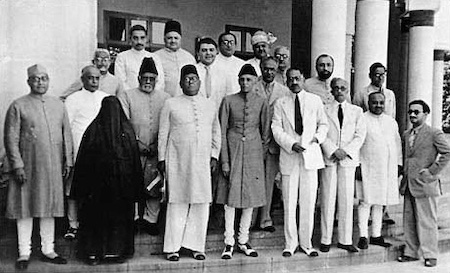

The Indian subcontinent’s history is complex and often revisited, particularly concerning the significant role of Bengali Muslims in the Pakistan Movement. Contrary to contemporary narratives suggesting that the creation of East Pakistan was imposed upon the people of East Bengal, historical evidence indicates that Bengali Muslims played a crucial role in the establishment and support of Pakistan in 1947.
Historical Context: The Rise of Bengali Political Leadership
Under British colonial rule, Bengal emerged as the largest Muslim-majority province in India, with Muslims making up about 54 percent of the province’s population according to the 1941 Census. This demographic status made Bengal a critical player in the political landscape of India. With the formation of the All-India Muslim League in Dhaka in 1906, under Nawab Sir Khwaja Salimullah Bahadur, Bengali Muslims sought to address their political grievances and economic underrepresentation. This effort marked the inception of an organized movement that would ultimately lead to the creation of Pakistan.
The Lahore Resolution and Electoral Mandate
A pivotal moment in the Pakistan Movement occurred on March 23, 1940, when the Lahore Resolution was introduced by A K Fazlul Huq, the then Premier of Bengal. The resolution proposed independent states in the Muslim-majority regions of India, laying the groundwork for Pakistan’s eventual formation. Following this, the 1946 provincial elections served as a critical referendum for the demand for Pakistan. The Muslim League won an astounding 95 percent of the Muslim-reserved seats in Bengal, underscoring a widespread mandate for the movement among Bengali Muslims.
Attempts at Unity and the Shift to Demand
While some Muslim leaders, including Muhammad Ali Jinnah and A K Fazlul Huq, initially advocated for Hindu-Muslim cooperation, the communal violence preceding Partition, notably the Calcutta riots of August 1946, forced many to reconsider their positions. The violence significantly impacted the belief among Bengali Muslims that their political rights and religious identity could only be secured through a separate homeland. This shift solidified support for the Two-Nation Theory, which posited that Hindus and Muslims constituted two distinct nations, each deserving of their political futures.
Why It Matters
Understanding the role of Bengali Muslims in the Pakistan Movement is crucial for recognizing the broader political evolution of South Asia. Their contributions to the creation of Pakistan and subsequent leadership roles highlight the importance of inclusive historical narratives that acknowledge diverse voices and perspectives. This is relevant not only for historians but also for policymakers and educators aiming to foster a more nuanced understanding of nationalist movements and communal identities in a rapidly globalizing world.
Frequently Asked Questions
What was the Lahore Resolution?
The Lahore Resolution, introduced on March 23, 1940, was a pivotal moment in the Pakistan Movement, advocating for independent states in Muslim-majority regions of India. It laid the foundation for the eventual establishment of Pakistan in 1947.
How did Bengali Muslims contribute to the Pakistan Movement?
Bengali Muslims played a significant role by forming the All-India Muslim League, supporting the Lahore Resolution, and securing a strong electoral mandate in the 1946 provincial elections, which demonstrated widespread support for the demand for Pakistan.
What caused the shift towards a separate homeland for Muslims?
Rising communal tensions and violence, particularly the Calcutta riots in 1946, led many Bengali Muslims to believe that their political rights and identity could only be safeguarded through a separate state, transforming their support from cooperation to the demand for independence.
What roles did East Bengali leaders take post-independence?
After the independence of Pakistan in 1947, several Bengali Muslims ascended to prominent positions, including four Prime Ministers and the first President, demonstrating their significant political influence in the new state during its early years.