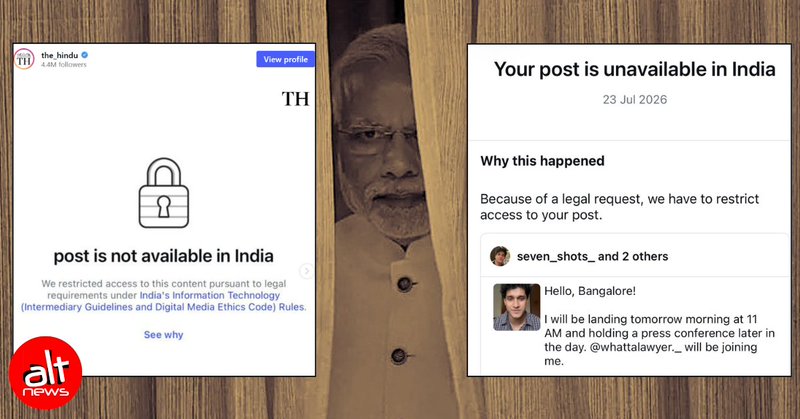

In the wake of recent protests led by the Campaign against the Unlawful Activities (CJP), the Indian government has initiated sweeping restrictions on Instagram accounts, particularly those of journalists, activists, and political commentators. This censorship appears to be not only a tactical response to curtail dissent but also reflects broader tactics employed by the state to silence critical voices and manage public narratives.
Context of the CJP Protests
The Campaign against the Unlawful Activities (CJP) recently mobilized significant protests against perceived governmental overreach and censorship. These protests underscored the growing unrest among citizens, particularly regarding issues of freedom of expression and civil liberties. As social media platforms like Instagram have become vital tools for sharing information and mobilizing support, the government’s subsequent crackdown on these platforms raises concerns about the health of democracy in India.
Details of the Censorship Drive
Reports from journalists and activists indicate that many Instagram accounts have faced sudden restrictions, leading to significant losses in follower counts and reduced visibility. Independent creators and news organizations have increasingly found their posts flagged or removed without clear justification. This wave of censorship aligns with governmental actions aimed at controlling narratives and limiting dissent, particularly in the context of politically sensitive events. Such restrictions are often justified on grounds of misinformation or public order, yet they raise alarms about the true intent behind the censorship.
Responses from the Affected Community
The backlash from journalists, activists, and political commentators has been substantial, with many calling attention to the broader implications of these actions. They argue that these restrictions undermine journalistic integrity and threaten the democratic process by stifling critical discourse. Various organizations have begun to monitor these developments, advocating for transparency in social media governance. Additionally, many individuals have taken to alternative platforms to express their views, seeking to circumvent government control and maintain open channels of communication.
Why This Matters
The censorship of Instagram accounts has deep political implications for Indian society. It represents a significant shift in how the government interacts with social media, directly affecting the landscape of public debate and dissent. As citizens increasingly rely on these platforms for news and engagement, the silencing of voices raises fundamental questions about the right to free speech and the resilience of democratic institutions. The situation also reflects a growing trend globally, where governments seek to exert control over digital spaces, an issue that warrants further scrutiny and public discourse in India.
Frequently Asked Questions
What is the CJP, and why were they protesting?
The Campaign against the Unlawful Activities (CJP) is an organization that advocates for civil liberties and human rights in India. Recent protests arose in response to perceived governmental repression of dissent and freedom of expression.
What kind of censorship is being observed on Instagram?
Many Instagram accounts of journalists, activists, and news organizations have faced restrictions, leading to diminished visibility and follower engagement. Posts are often flagged or removed without clear explanations from the platform.
What are the implications of this censorship for democracy in India?
The censorship actions may undermine the health of democracy by limiting critical discourse and stifling public debate. This can create an environment where dissenting voices are silenced, affecting overall citizen engagement in the democratic process.
What steps can individuals take to combat censorship?
Individuals can explore alternative platforms for sharing information, advocate for transparency in social media policies, and join collective actions with organizations that support free speech to defend democratic principles.