
The rise of Islamophobia appears to be a growing trend among Republican politicians in the U.S., leveraging discriminatory rhetoric to galvanize their support base ahead of the midterm elections. Amidst a climate of tension and discontent, political figures are increasingly utilizing Muslims as scapegoats to appeal to constituents driven by fear.
Political Rhetoric and Legislative Actions
As the midterm elections approach, experts note that Islamophobic rhetoric is becoming more pronounced in U.S. political discourse. Reports indicate significant increases in such rhetoric and the introduction of specific legislative measures aimed at restricting the rights of Muslims. For instance, a recent committee hearing led by Senator Ted Cruz focused on “countering the Muslim Brotherhood’s influence” in the U.S. This hearing was boycotted by Democratic members, leaving the stage open for Cruz to draw links between the Brotherhood and rising political figures, including Michigan’s Abdul El-Sayed.
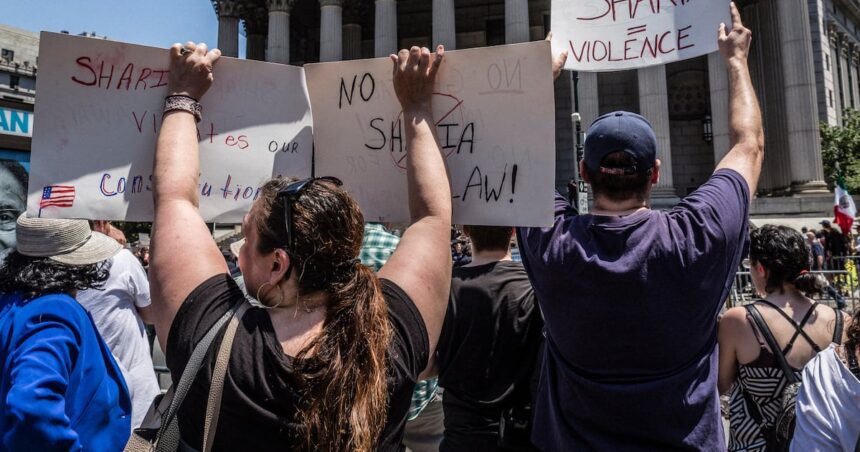
A notable coalition, the Sharia-Free America Caucus, was founded by a group of Congress members, with Texas Representative Keith Self labeling “extreme” Islamic law as one of the “greatest threats” to the nation. This caucus currently boasts nearly 70 members, which underscores a concerted Republican effort to stigmatize Muslims and incite fear regarding Sharia law.
Community Impact and Responses
With rising Islamophobia, American Muslims are increasingly faced with discrimination and threats to their civil rights. According to research from the Institute for Social Policy and Understanding (ISPU), 63% of Muslims reported experiencing religious discrimination in the last year—the highest rate among all religious groups. This climate of fear and exclusion has tangible consequences for Muslim communities, impacting their political engagement and social inclusion.
In Texas, rhetoric against Muslims has escalated, prompting some Republicans to advocate for measures such as banning the hijab. Politicians have also targeted community initiatives, such as a residential project led by the East Plano Islamic Centre, aiming to establish a mosque and an Islamic school. Those opposed to the project, including Mr. Self and Congressman Chip Roy, have challenged its legality and labeled it a “Sharia-adjacent enclave.”
Historical Context and Patterns of Discrimination
Islamophobic sentiment in the U.S. is not new. In the aftermath of the September 11 attacks, Muslims were often scapegoated as terrorists attempting to infiltrate American society. This pattern of using Muslims as a political tool has persisted over the years, resurfacing particularly during moments of national distress, such as rising economic uncertainty. Experts highlight that voting for former President Donald Trump correlates highly with harboring Islamophobic sentiments.
The discriminative policies seen today echo broader historical trends, revealing a systemic effort to exclude Muslims from the societal mainstream. Since 2010, over 230 bills targeting Muslims have been introduced across various state legislatures, driven by the same narratives employed by prominent political figures. This legislative hostility adds a layer of complexity to the social challenges faced by Indian Muslims, similar to those experienced by Muslims in the U.S.
Why It Matters
The current wave of Islamophobia in American politics highlights the vulnerabilities of marginalized communities and serves as a cautionary tale for the AI industry. Bias against certain groups can seep into algorithmic design, which may perpetuate stereotypes or stigmatize communities. Understanding these dynamics is crucial for developers aiming to create technologies that genuinely promote inclusivity and do not reinforce existing inequalities.
Frequently Asked Questions
What is the Sharia-Free America Caucus?
The Sharia-Free America Caucus is a group of Republican Congress members advocating against Islamic law, claiming it poses a threat to American values. It has almost 70 members and was founded to mobilize against perceived Islamic influences.
How has Islamophobia affected American Muslims’ rights?
Islamophobia has led to significant discrimination against American Muslims, with reports stating that 63% have experienced religious discrimination in the last year, the highest of any group surveyed. This environment fosters social exclusion and limits their civil rights.
What are some legislative measures against Muslims in the U.S.?
Since 2010, over 230 bills targeting Muslims have been introduced in state legislatures, including measures aimed at banning “foreign laws” and stigmatizing Islamic practices. These laws institutionalize discrimination and further marginalize Muslim communities.
What can be done to counteract Islamophobia?
Community advocacy, education, and inclusive policymaking are essential steps in counteracting Islamophobia. Engaging in dialogue that elevates understanding can help dismantle stereotypes and promote social cohesion among diverse communities.