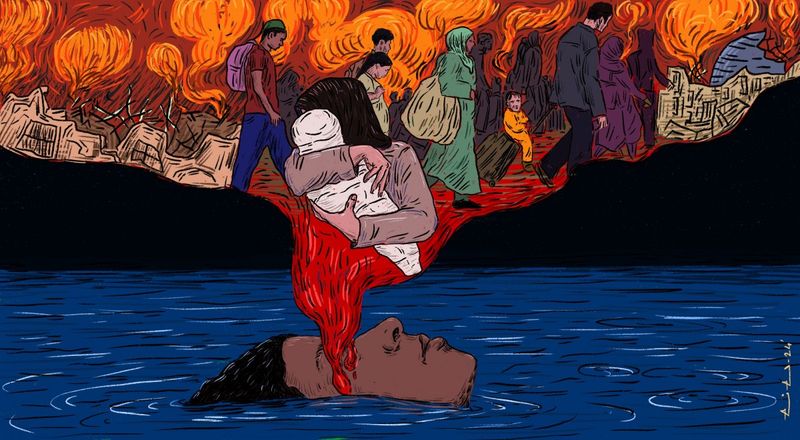

Recent developments have highlighted deepening concerns among Indian Muslims regarding systemic discrimination and marginalization. A significant meeting held on July 24, 2026, at the Constitution Club in New Delhi sought to address these issues, uniting prominent figures from various spheres of society to voice shared grievances about injustices faced by the community.
Diverse Voices Unite for Change
The gathering on July 24 brought together a eclectic mix of religious scholars, former judges, politicians, business leaders, social workers, academics, and intellectuals, reflecting the diverse fabric of Indian Muslim society. This collective assembly signaled a growing alarm over the perceived injustices and the urgent need for dialogue. Resolutions were passed urging both the President of India and the Chief Justice of India to recognize what many in the community believe to be grave injustices affecting them.
Among the resolutions was a commitment to engage with citizens in states like Uttarakhand, Assam, and Uttar Pradesh, areas where the community has faced increasing scrutiny and alienation. Participants expressed concerns over various issues, including unauthorized demolitions of homes, mosques, and madrasas, and the removal of names from electoral rolls, ostensibly under the pretext of identifying illegal immigrants.
Justice Denied: The Cost of Wrongful Incarceration
The criminal justice system also came under scrutiny during the meeting. Numerous instances have surfaced where individuals accused of terrorism have spent up to a decade or more in prison before being exonerated due to lack of evidence. The gathering underscored that the acquittal of wrongfully incarcerated individuals should not just lead to celebrations but also to accountability and systemic reform.
This raises pertinent questions: Should law enforcement be evaluated solely on the volume of arrests, or should the quality of investigations and the legitimacy of charges be prioritized? The collective demand for accountability echoed the necessity of mechanisms that investigate failures in the justice process and address wrongful arrests, particularly for marginalized communities like Indian Muslims.
A Call for Equality, Not Privilege
The essence of the demands articulated on July 24 centers around equality under the law rather than special privileges. The participants called on constitutional authorities to affirm that every citizen, regardless of religion, is entitled to equal protection and dignity. This call for justice emphasizes the importance of seeking redress through constitutional mechanisms as a fundamental aspect of democratic engagement.
Despite receiving limited media coverage, the meeting represented a pivotal moment for many in the Muslim community, who have faced growing anxiety about their societal status. This appeal for constitutional justice is not an act of dissent but a genuine endeavor to secure equality and acknowledgment in a diverse nation.
Why It Matters
Understanding the ongoing discrimination faced by Indian Muslims is crucial, not only for social equity but for the stability of Indian democracy. Exclusionary practices threaten the very foundation of coexistence that India prides itself on. An equitable approach to governance and law enforcement bolsters public trust and ensures that diverse communities feel secure and invested in the country’s future. The implications extend beyond immediate community relations; they affect national unity, development, and ultimately India’s global standing as a pluralistic democracy.
Frequently Asked Questions
What concerns were raised during the meeting on July 24, 2026?
Participants raised concerns about unauthorized demolitions of homes and places of worship, as well as the removal of voters from electoral rolls on allegations of illegal immigration, reflecting a rising perception of marginalization within the community.
How does the issue of wrongful incarceration impact the Muslim community?
Wrongful incarceration contributes to a cycle of distrust between the Muslim community and law enforcement agencies. Many individuals have spent years imprisoned before being acquitted, raising questions about the integrity of the investigative process and the justice system.
Is the call for equality under the law anti-national?
No, advocating for equal treatment under the law is fundamental to democratic citizenship. Seeking justice through constitutional means aligns with the core tenets of Indian democracy.
Why is it important for different sections of society to unite on these issues?
Unity across diverse sectors—religious, political, and social—can amplify the voices advocating for justice, leading to more effective dialogue with authorities and a stronger push for systemic reforms that ensure equality for all citizens.