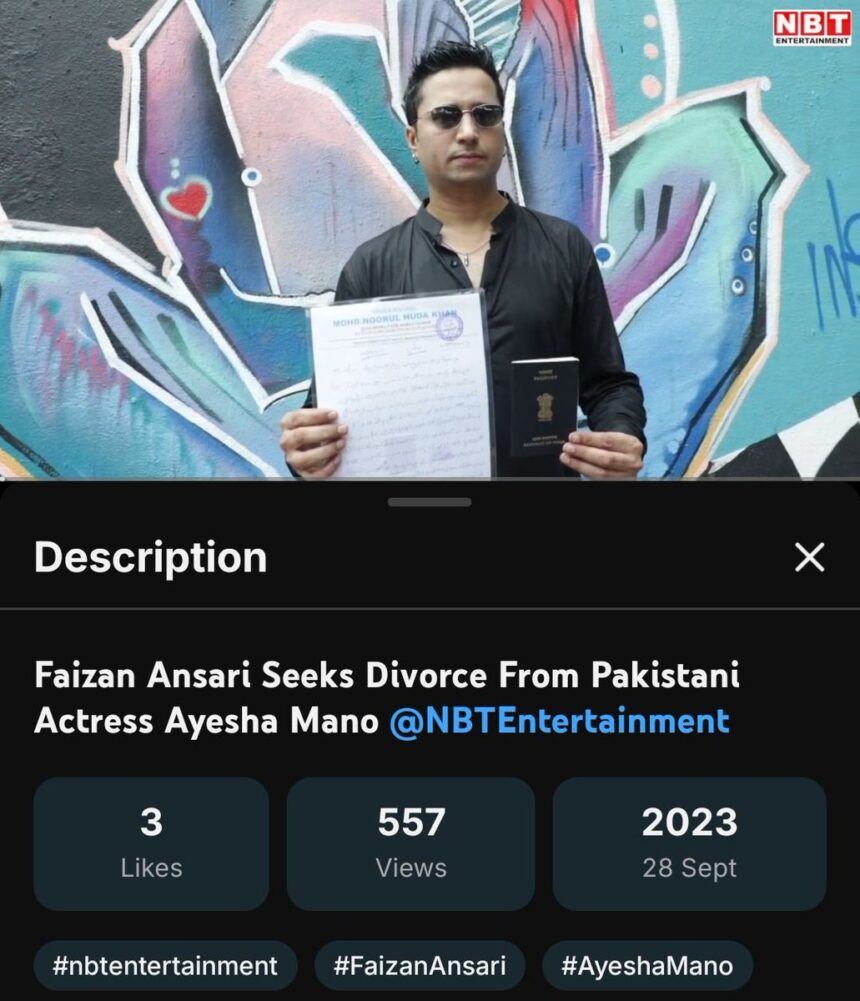

Faizan Ansari, a social media influencer, recently made claims regarding his marriage to a Pakistani woman, raising questions about his identity and credibility. His allegations against Abhijeet Dipke, founder of the CJP party, have drawn considerable attention as Ansari filed a police complaint citing assaults he experienced in Pune and Aurangabad.
Faizan Ansari’s Claims and Complaints
Faizan Ansari has come forward to file a police complaint against Abhijeet Dipke, alleging that Dipke’s associates attacked him. In his statement to the media, Ansari claimed, “Today, I have filed a written complaint against Abhijeet Dipke… because I have proof that his men attacked me.” This statement underscores the risks he feels he faces and positions him as a victim in a contentious political landscape. His mention of previous attacks in Pune and Aurangabad further adds to the urgency of his situation.
The Context of the Allegations
The accusations and subsequent police complaint by Ansari are emblematic of the increasing tensions surrounding social media influencers in India. With political affiliations often influencing public perception, figures like Ansari find themselves in the crosshairs of both supporters and detractors. His claims about being married to a Pakistani brings additional scrutiny, tapping into sensitive national discourses about loyalty and identity that resonate deeply within Indian society.
Public Reactions and Political Ramifications
The public and political reaction to Ansari’s allegations has been notable. Many see this incident as part of a broader narrative concerning allegations of political violence and the role of social media in today’s India. The attention drawn by Ansari’s mixed claims, from personal grievances to national identity concerns, has created a ripple effect, prompting discussions about freedom of expression and the safety of individuals in politically charged environments.
Why This Matters
This incident reflects the complexities of political life in India, where social media influencers wield considerable power while often navigating dangerous waters. Faizan Ansari’s claims and complaints highlight not just the fragility of personal security in public life but also the urgent need for discussions around identity and community loyalty. As a society, it raises critical questions about how individuals are perceived based on their associations and how such perceptions can lead to real-world violence.
Frequently Asked Questions
Who is Faizan Ansari?
Faizan Ansari is a social media influencer who has been vocal about various political issues in India. He has recently attracted attention for filing a police complaint alleging assaults against him.
What is the nature of the allegations against Abhijeet Dipke?
Ansari alleges that Abhijeet Dipke’s associates attacked him, leading him to file a police complaint. He claims to have evidence supporting his accusations.
Why did Faizan Ansari mention his marriage to a Pakistani woman?
This claim adds another layer to his narrative, intertwining personal identity with broader national discussions about loyalty and affiliations in politically charged times.
What implications do these events have for social media influencers in India?
These incidents highlight the risks that social media influencers face, including threats to their safety and the societal pressures tied to their public personas and affiliations.